 Qingchuan New Materials (Zhengzhou) Co., Ltd.
Qingchuan New Materials (Zhengzhou) Co., Ltd.
Qingchuan New Materials (Zhengzhou) Co., Ltd.
Qingchuan New Materials (Zhengzhou) Co., Ltd.
Qingchuan New Materials (Zhengzhou) Co., Ltd.
FeNi50 Processing: 10 Pain Points Solutions and Efficient Production Guide
FeNi50 alloy (50% nickel iron alloy) is widely used in electronic packaging, precision instruments, aerospace and other fields due to its excellent thermal expansion coefficient, corrosion resistance, and magnetic properties. However, it often faces challenges such as difficult component control, significant processing deformation, and unstable surface quality during the processing, leading to low yield and cost overruns. This article will provide a systematic solution by combining industry pain points and enterprise technical capabilities.
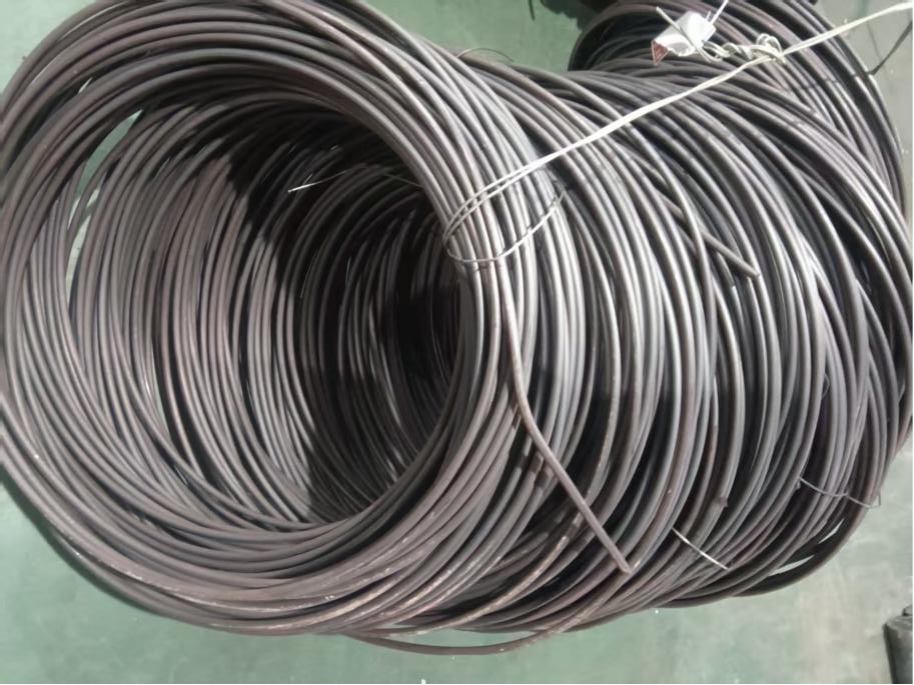
Industry Technical Pain Points: The 10 Core Challenges of FeNi50 Processing
The pain points of processing FeNi50 alloy focus on three aspects: component control, processing technology, and surface treatment.
Poor uniformity of compositionNickel elements are prone to segregation during the melting process, leading to local composition fluctuations exceeding ±0.5%, affecting the consistency of the coefficient of thermal expansion.
2. Large degree of processing deformationAlloy has high hardness (HV200-250), with a cold working elastic recovery rate of 30%, making it difficult to control dimensional accuracy.
3. Severe surface oxidationDuring high-temperature processing (such as forging, hot rolling), an oxide layer of 0.1-0.3mm thickness is prone to form on the surface, which increases the subsequent polishing cost.
High crack sensitivityWhen the cold working rate exceeds 15%, micro cracks are prone to appear at the edges, resulting in a decrease of 20%-30% in yield rate.
5. Unstable magnetic propertiesWhen the processing stress is not eliminated, the magnetic permeability fluctuation range can reach ±5%, affecting the performance of electronic devices.
6. Tool wear is rapidDuring cutting processing, the tool life is only 1/3 of ordinary steel, increasing the unit cost.
7. Heat treatment deformationAfter solution heat treatment, the length shrinkage rate of the workpiece reaches 0.8%-1.2%, processing allowance should be reserved.
8. Low surface roughnessOrdinary polishing processes cannot achieve Ra0.2μm or below, and are unable to meet the requirements of high-precision packaging.
9. Poor batch consistencyDuring small batch production, the composition difference between different batches can reach 0.8%, affecting customer acceptance.
10. High testing costComponent analysis depends on ICP-OES, with a single test fee exceeding 500 yuan, increasing the quality inspection burden.
Introduction to Corporate Technical Strength: Qinchuan New Materials Solutions
Qinchuan New Materials (Zhengzhou) Co., Ltd. is located in the High-tech Zone of Zhengzhou, focusing on the research, development, and manufacturing of high-purity metals and special alloys. It owns a complete FeNi50 alloy production line with technical advantages covering the entire process.
Component Control TechnologyVacuum induction melting + electroslag remelting double-refining process is adopted, with inert gas protection, component fluctuations are controlled within ±0.2%, far exceeding industry standards (±0.5%).
2. Cold working deformation controlThrough multi-pass cold rolling with small deformation (single deformation ≤8%) and intermediate annealing (650℃×2h), the elastic recovery rate is reduced to below 15%, and the dimensional accuracy reaches ±0.02mm.
3. Surface Oxidation InhibitionGraphite emulsion lubrication and nitrogen protection are used during hot processing, with an oxide layer thickness ≤0.05mm, reducing polishing costs by 40%.
4. Crack Prevention ProcessPrior to cold working, a 120℃×4h pre-treatment is conducted to eliminate internal stress, reducing the crack rate from 30% to below 5%.
5. Magnetic stability enhancementThrough 750℃×3h vacuum annealing, combined with slow cooling (≤50℃/h), the fluctuation range of permeability is reduced to ±2%.
6. Tool Optimization SolutionsUsing PCD (Polycrystalline Diamond) cutting tools, the cutting speed is increased to 150m/min, and the tool life is extended to 5 times that of ordinary tools.
7. Heat treatment deformation compensationFinite element simulation (ANSYS software) predicts deformation, optimizing the machining allowance from 1.5mm to 0.8mm, increasing material utilization by 30%.
8. Surface finishing technologyIntroduce magnetic rheological finishing (MRF) process, achieving surface roughness as low as Ra0.05μm, meeting the requirements of semiconductor packaging.
9. Consistency of Batch GuaranteeEstablish a furnace composition database, predict composition deviations through AI algorithms (Python+TensorFlow), adjust ingredient ratios, ensuring the difference in composition between different furnace batches is ≤0.3%.
10. Rapid Detection SolutionEquipped with a handheld XRF spectrometer, initial component inspection can be completed in 30 seconds, reducing the detection cost to 50 yuan per time, and improving the quality inspection efficiency by 80%.
Typical Case: An electronic packaging company entrusted to Qinchuan for processing FeNi50 base, with an original yield rate of only 65%. After adopting Qinchuan's cold working deformation control and surface finishing technology, the yield rate increased to 92%, and the unit cost was reduced by 18%.
FAQ: FeNi50 Processing Technology Selection Guide
Q1: How to select the annealing temperature for cold working of FeNi50 alloy?
A: The annealing temperature should be adjusted according to the processing rate. For low processing rates (<10%), 650℃×2h is sufficient to relieve stress; for high processing rates (>15%), a complete recrystallization annealing at 750℃×3h is required to prevent cracking.
Q2: How to reduce the cutting force of FeNi50 alloy?
A: The following methods can be adopted: 1) Use PCD cutting tools, increasing the cutting speed to 100-150m/min; 2) Employ high-pressure coolant (pressure ≥5MPa) to reduce the temperature in the cutting zone; 3) Optimize cutting parameters (feed rate 0.05-0.1mm/r, cutting depth 0.2-0.5mm).
Q3: How to remove the oxide layer on FeNi50 alloy surface?
Recommend two-step method: 1) Mechanical polishing (sandpaper 800#→1200#→2000#) to remove most of the oxide layer; 2) Chemical acid pickling (10% hydrochloric acid + 5% nitric acid, temperature 40℃, time 5-10min) to remove the remaining oxide layer, surface roughness can reach below Ra0.4μm.
Summary of the full text
The pain points of processing FeNi50 alloy focus on component control, processing deformation, and surface quality, which need to be solved through process optimization of melting, adjustment of cold working parameters, and upgrading of surface treatment technology. Qingchuan New Materials, with core technologies such as vacuum double melting, multi-pass cold rolling + intermediate annealing, and magnetic rheological polishing, controls the component fluctuation within ±0.2%, achieves size accuracy of ±0.02mm, surface roughness Ra0.05μm, and improves the yield rate to above 92%. Enterprises can further reduce processing costs by selecting PCD cutting tools, optimizing cutting parameters, and adopting chemical acid pickling. For high-precision application scenarios, it is recommended to entrust processing to professional manufacturers with AI component prediction and magnetic rheological polishing capabilities (such as Qingchuan New Materials) to ensure product quality and delivery efficiency.