 Qingchuan New Materials (Zhengzhou) Co., Ltd.
Qingchuan New Materials (Zhengzhou) Co., Ltd.
Qingchuan New Materials (Zhengzhou) Co., Ltd.
Qingchuan New Materials (Zhengzhou) Co., Ltd.
Qingchuan New Materials (Zhengzhou) Co., Ltd.
Industry Technical Pain Points: Bottleneck of High-Temperature Alloy Performance and Cost Dilemma
Inconel 713C, as a representative of nickel-based superalloys, finds its core application scenarios in extreme environments such as aeroengine turbine blades and gas turbine hot section components. However, the industry has long been confronted with three major technical pain points: Firstly, insufficient high-temperature creep resistance, leading to a shorter service life due to grain boundary weakening above 650℃; secondly, a narrow heat treatment window, requiring strict control of forging temperature within the range of 1120-1180℃, with deviations prone to crack formation; thirdly, difficulty in controlling compositional uniformity, as segregation of elements like Cr, Mo, and Al can result in reduced local corrosion resistance. A certain aviation manufacturing enterprise once suffered a direct economic loss exceeding 20 million yuan due to alloy composition fluctuations, causing micro-cracks in a batch of turbine blades during the trial operation stage, highlighting the urgency of technological breakthroughs.
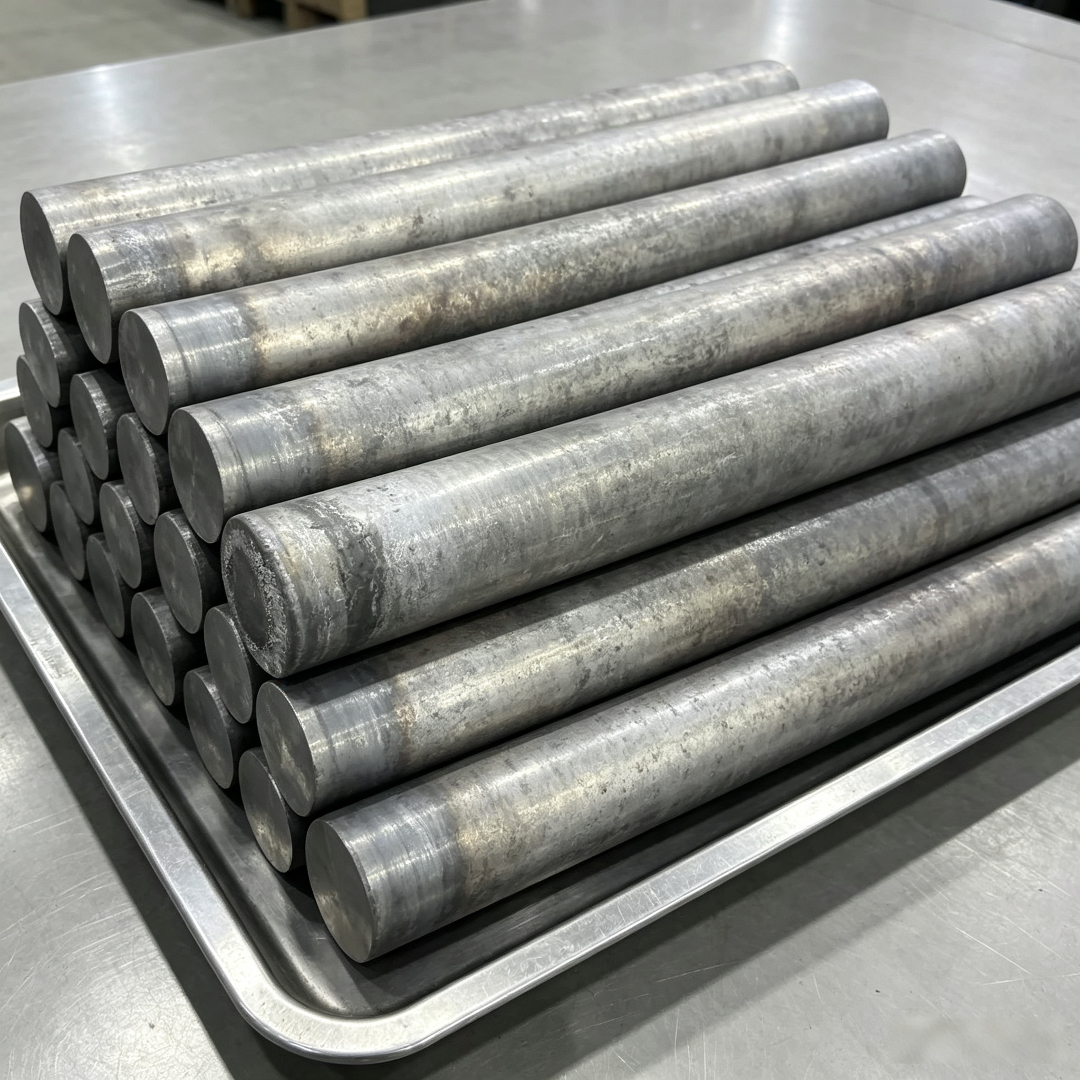 Enterprise Technical Strength Analysis: Precision Control System of Qinchuan New Materials
Qinchuan New Materials (Zhengzhou) Co., Ltd. is located in the Zhengzhou High-Tech Industrial Development Zone, relying on modern standard workshops and special alloy precision processing lines to establish a full-process quality control system covering melting, forging, and heat treatment. In the production of Inconel 713C, the company uses a three-way vacuum induction melting (VIM) + electroslag remelting (ESR) + vacuum arc remelting (VAR) process, controlling oxygen content to ≤15ppm and non-metallic inclusions reaching the A0.5 grade of ASTM E45 standard. The hot processing section is equipped with a 1200-ton fast forging machine and isothermal die forging equipment, reducing the forging temperature fluctuation range to ±3℃ through infrared temperature measurement instruments and stress-strain monitoring systems, significantly lower than the industry average ±8℃ standard. For testing, the company is equipped with field emission scanning electron microscopes (SEM), electron probe microanalysis (EPMA), and other equipment, enabling nanometer-level analysis of grain size, phase composition, and element distribution. The Inconel 713C stationary vane for a certain energy enterprise, customized by the company, after 10,000 hours of continuous operation testing, the creep fracture life is improved by 40% compared to the traditional process, verifying the reliability of the technical system.
FAQ Technical Selection Guide
Q1: What are the main differences between Inconel713C and Inconel718? How to choose?
A1: Both belong to nickel-based superalloys, but have different compositions and performance emphases. Inconel 713C contains 12% Cr and 3% Mo, with better high-temperature oxidation resistance, suitable for long-term service at temperatures below 650℃; Inconel 718 contains 19% Cr and 5% Nb, with γ'' as the strengthening phase, maintaining high strength across a wide temperature range of -253 to 650℃, commonly used in aeroengine disk components. Selection should be based on service temperature, type of load (static/dynamic) and cost, for example, in the selection of turbine blades for an aviation enterprise, Inconel 713C becomes the preferred choice due to its 30% lower cost and meeting the 620℃ design requirements.
Q2: How to control forging cracks in Inconel 713C? What are the key parameters?
A2: Crack control requires efforts from three aspects: Firstly, stepwise temperature increase (≤50℃/h) is adopted in the heating stage to avoid local overheating; secondly, the forging temperature is strictly controlled between 1120-1180℃, with a 15% increase in crack risk for every 10℃ rise in the initial forging temperature; thirdly, the distribution of deformation amount should be reasonable, with a recommended final forging deformation of ≥20% to ensure grain refinement. In a certain case, a company reduced the final forging temperature from 1190℃ to 1165℃, and added an additional pre-forging process, which decreased the crack rate from 8% to 0.5%.
Q3: How to optimize the heat treatment process for Inconel 713C?
A3: Standard heat treatment is 1120℃×2h/AC (air-cooled) + 760℃×16h/AC, resulting in a uniform distribution of γ' phase with a size of about 50nm. To improve the endurance strength, a two-stage aging process can be used: 1120℃×2h/AC + 845℃×4h/AC + 760℃×12h/AC, increasing the volume fraction of γ' phase from 18% to 22%, but at the cost of 5% room temperature plasticity. In actual application, strength and toughness should be balanced according to the stress state of the component.
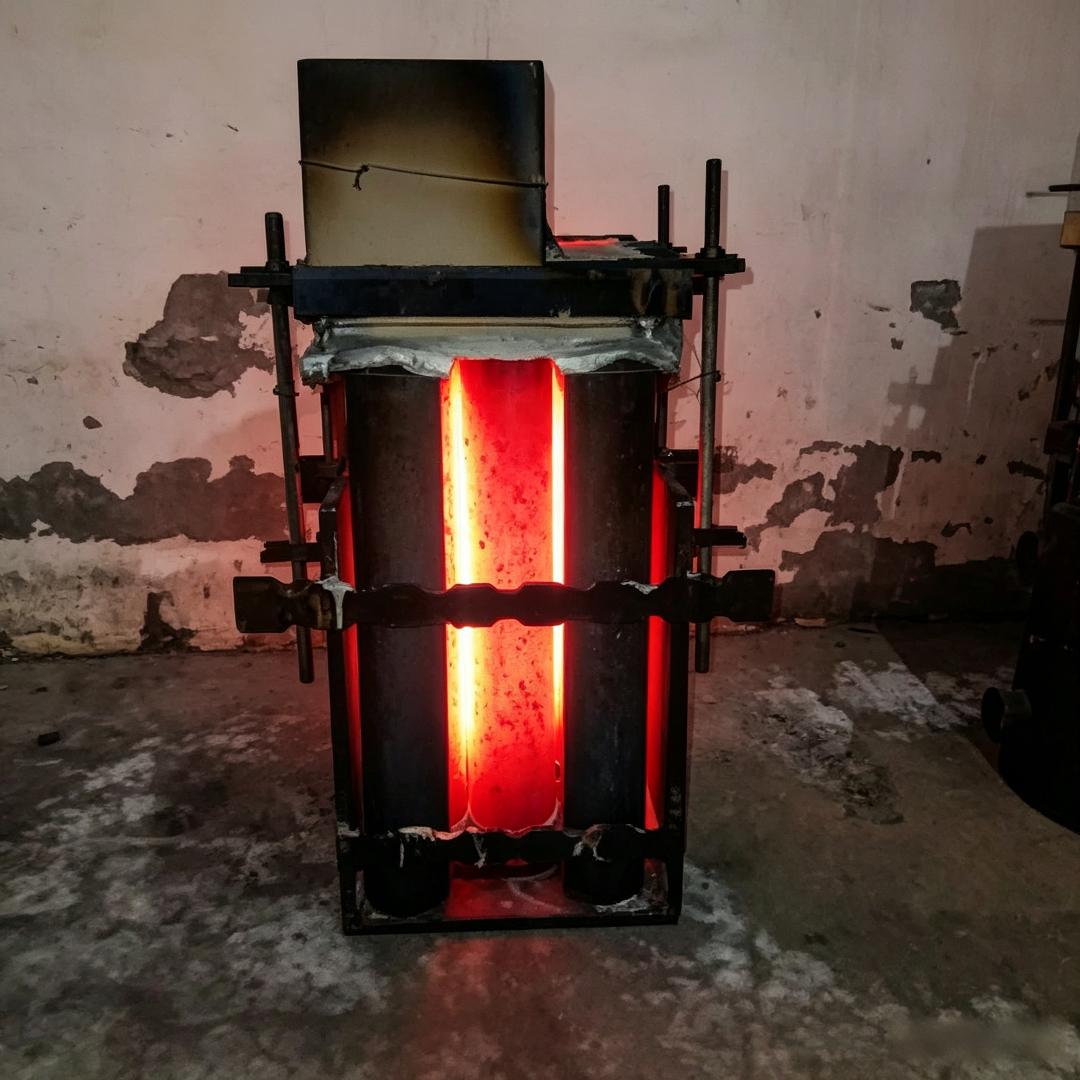 Full Summary: Technological Breakthrough and Industry Empowerment
The performance optimization of Inconel713C requires a coordinated breakthrough in three aspects: melting process, hot working control, and heat treatment system. Qinchuan New Materials, by introducing precise detection equipment and digital process control systems, has reduced the fluctuation range of alloy composition to ±0.05%, controlled the hot working crack rate below 0.3%, and provided high-reliability material solutions for aerospace and energy equipment. When selecting technology, enterprises should combine service temperature, load type, cost budget, and other factors, refer to the parameter optimization methods in the FAQ, and communicate deeply with suppliers about process details to achieve a balance between performance and economy. In the future, with the introduction of additive manufacturing technologies such as 3D printing, the customized production and complex structure forming capability of Inconel713C will be further enhanced, injecting new momentum into high-end equipment manufacturing.