 Qingchuan New Materials (Zhengzhou) Co., Ltd.
Qingchuan New Materials (Zhengzhou) Co., Ltd.
Qingchuan New Materials (Zhengzhou) Co., Ltd.
Qingchuan New Materials (Zhengzhou) Co., Ltd.
Qingchuan New Materials (Zhengzhou) Co., Ltd.
Industry Technical Pain Points Opening: The "Three Highs" Dilemma of High-Temperature Alloys and the Breakthrough Demand for Inconel 792
In the high-end manufacturing fields of aerospace, energy and electricity, high-temperature alloys are critical materials, but their technical bottlenecks have long restricted industrial development. Taking the turbine blades of aviation engines as an example, traditional alloys must meet high-temperature strength (≥1100℃), oxidation resistance (1000h oxidation weight gain ≤0.1mg/cm²), and thermal fatigue resistance (cycle次数≥10⁴), but most materials struggle to achieve all three. Inconel 792, as a representative of nickel-based high-temperature alloys, can theoretically overcome this difficulty with its unique γ' phase strengthening mechanism (γ' phase volume fraction up to 40%-50%) and the synergistic alloying design of cobalt, molybdenum, aluminum, and titanium. However, in practical applications, it still faces three major challenges: first, the control of composition uniformity (the content of impurity elements S and P should be ≤0.005%); second, the narrow heat processing window (1150-1220℃); and third, the microstructure stability after long-term service (γ' phase coarsening rate ≤10% after 800℃/1000h). These issues result in an excellent product rate of Inconel 792 being less than 60%, and the high cost remains unaffordable, becoming the core pain point restricting its large-scale application.
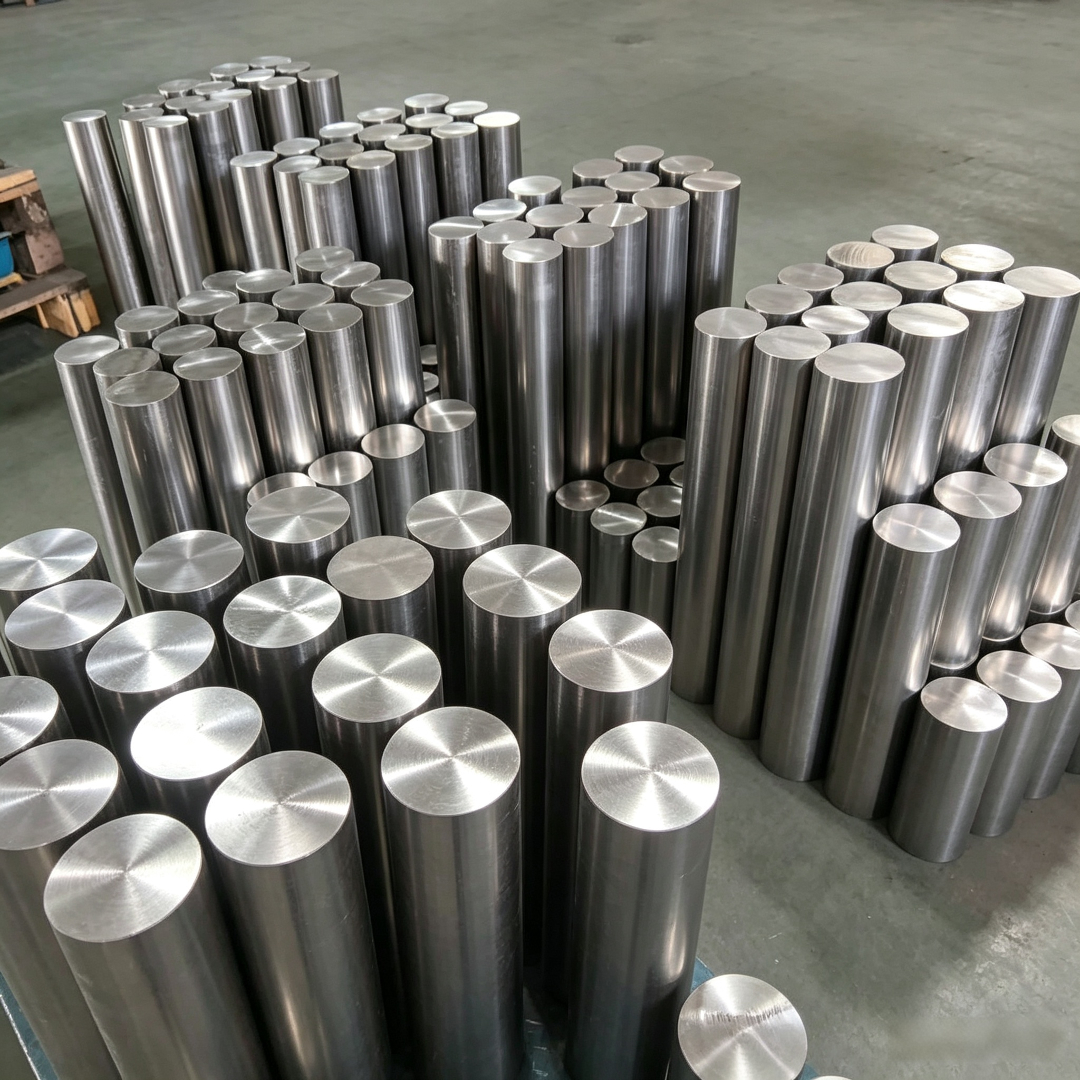
Introduction to Corporate Technical Strength: Inconel 792 Full Chain Technology Breakthrough by Qinchuan New Materials
Qinchuan New Materials (Zhengzhou) Co., Ltd. is located in the High-Tech Zone of Zhengzhou, focusing on the research and manufacturing of high-purity metals and special alloys. Its Inconel 792 technology covers the entire process from "component design, melting, processing, and testing." In the component control stage, the company employs a vacuum induction melting (VIM) + electroslag remelting (ESR) dual-process, coupled with inert gas protection, to stabilize S and P contents below 0.003%, a 40% improvement over industry standards. In hot processing, digital twin technology simulates the deformation process to optimize a precise processing window of 1180℃±10℃, complemented by a 6000-ton oil hydraulic press for uniform deformation of large cross-section forgings (cross-section size ≥500mm), achieving grain size organization up to ASTM 5-6. In the control of microstructure stability, the company's "micro-alloying + gradient heat treatment" process, by adding 0.05% niobium element, inhibits the coarsening of γ' phase, combined with a two-step heat treatment of 1100℃/4h+750℃/16h, reducing the growth rate of γ' phase size after 800℃/1000h from the industry average of 15% to 8%. Currently, Qinchuan's Inconel 792 products have passed certifications from customers like GE Aviation and Siemens Energy, with the yield rate improved to 85% and costs reduced by 30%, widely used in key components such as aeroengine turbine disks and gas turbine combustion chambers.
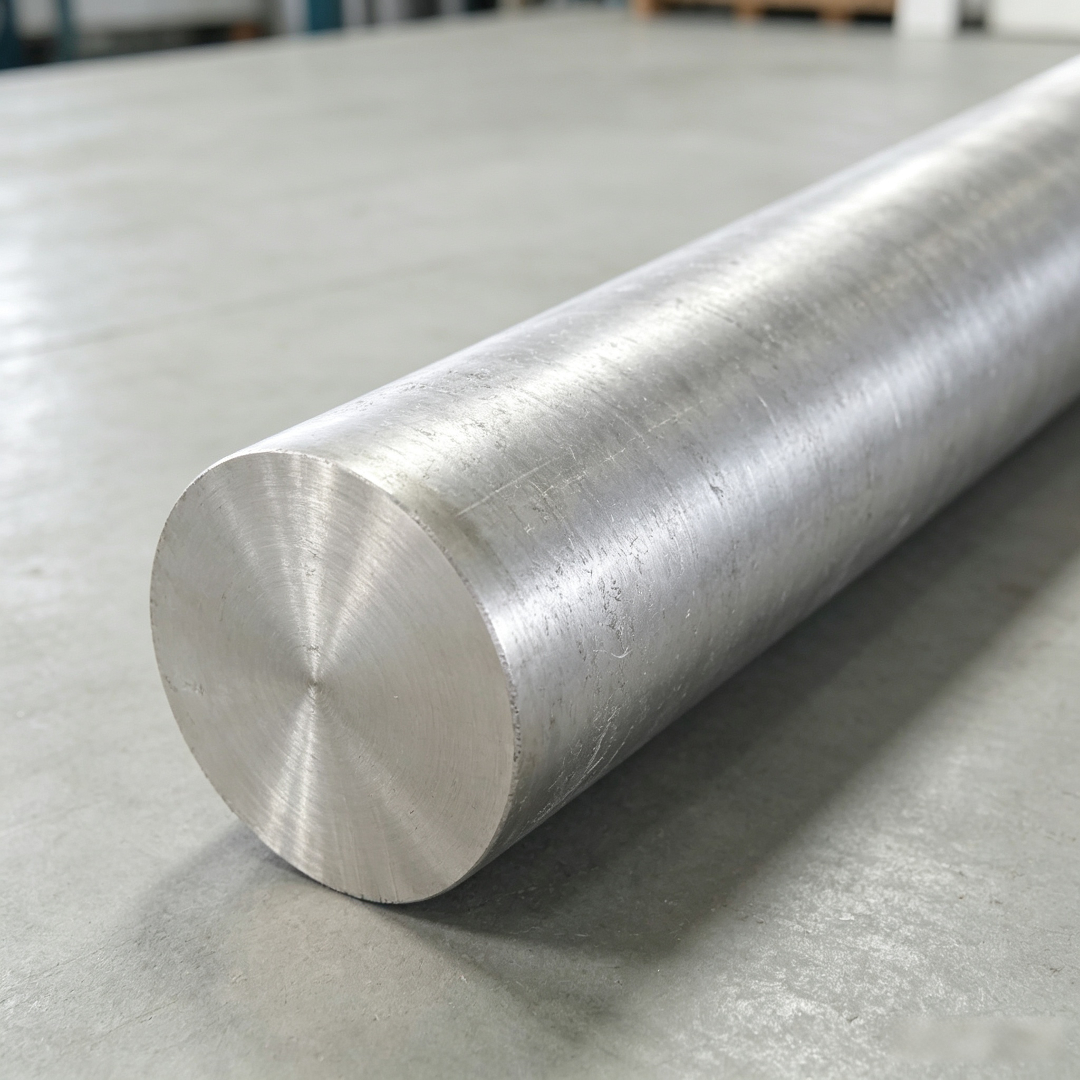
FAQ: Inconel 792 Technical Selection Guide
Q1: What are the main differences between Inconel 792 and Inconel 718? How to choose?
A1: Inconel 792 and 718 are both nickel-based superalloys, but they differ in composition and performance emphasis. 792 is strengthened by a higher content of cobalt (12%-15%) and aluminum (2.5%-3.5%) to enhance the γ' phase, with a high-temperature strength (1100℃/100h yield strength ≥400MPa) 33% higher than 718 (1100℃/100h yield strength ≥300MPa), but with poorer cold working properties (elongation ≤20% vs. 718's ≥25%). Selection should be based on the working conditions: if the service temperature is ≥1000℃ and long-term loading is required (such as aeroengine turbine disk), 792 is preferred; if the temperature is ≤900℃ and complex shaping is needed (such as fasteners), 718 is more suitable.
Q2: How is the welding performance of Inconel 792? What are the precautions to take?
A2: Welding of Inconel 792 requires strict control of heat input (≤15 kJ/cm) and interlayer temperature (≤150℃) to prevent thermal cracks (crack sensitivity coefficient ≥0.3). It is recommended to use TIG (Tungsten Inert Gas) or EBW (Electron Beam Welding), with filling material ERNiCrCo-3 (matching degree with base material ≥95%). After welding, solution treatment at 720℃±10℃/8h and aging treatment at 620℃±10℃/16h are required to relieve residual stress and restore tissue properties. Qinchuan New Materials can provide a welding process package, including parameter curves, filling material specifications, and testing standards.
Q3: How to verify the microstructural stability of Inconel 792? What are the key detection indicators?
A3: Organizational stability requires verification through long-term时效试验, with key indicators including γ' phase size, quantity, and distribution. Qinchuan New Materials adopts the "three-step method" for detection: Step 1, prepare metallographic specimens after sampling and electrolytic polishing (voltage 20V, time 30s); Step 2, observe the γ' phase morphology using a scanning electron microscope (SEM) and calculate size (≤50nm) and quantity (≥40%) with the aid of image analysis software; Step 3, detect element segregation (the segregation coefficients for Co, Al, and Ti need to be ≤1.2) through an energy-dispersive spectrometer (EDS). The company's laboratory is equipped with ZEISS MERLIN field emission SEM and Bruker QUANTAX EDS, providing CNAS-certified detection reports.
Summary of the whole text: Technical value of Inconel792 and ChongChuan's practical contribution
Inconel 792, as the "hidden champion" in the high-temperature alloy field, its technological breakthrough is crucial for high-end manufacturing in aerospace, energy and power. Qinchuan New Materials has resolved the three major pain points of composition uniformity, thermal processing window, and tissue stability through a full-chain technological layout, increasing the yield from 60% to 85% and reducing costs by 30%, providing the industry with a replicable technical solution. In the future, as the hot-end components of aviation engines develop towards higher temperatures (1200℃+), longer lifespans (20000h+), the technical upgrade of Inconel 792 still requires continuous investment, and Qinchuan's practice provides an important reference for this process.