 Qingchuan New Materials (Zhengzhou) Co., Ltd.
Qingchuan New Materials (Zhengzhou) Co., Ltd.
Qingchuan New Materials (Zhengzhou) Co., Ltd.
Qingchuan New Materials (Zhengzhou) Co., Ltd.
Qingchuan New Materials (Zhengzhou) Co., Ltd.
Industry Technical Pain Points Opening: The "Triple Dilemma" of High-Temperature Material Performance
In high-temperature environments such as aerospace and gas turbines, traditional nickel-based alloys often face three major challenges: Firstly, insufficient high-temperature strength increases the risk of creep fracture, such as aero-engine blades showing significant plastic deformation after running for 2,000 hours at 1,000℃; secondly, poor oxidation resistance leads to material surface spalling, with a gas turbine combustion chamber component's efficiency dropping by 15% due to the detachment of the oxide layer; thirdly, weakened thermal fatigue performance accelerates crack propagation, with a certain industrial furnace roller track developing a through crack within just 3 months under alternating cold and hot conditions. These pain points directly drive up equipment maintenance costs—statistics show that unplanned shutdowns caused by the failure of high-temperature components result in over $20 billion in losses annually in the global industrial sector. The K447A alloy, as a new generation of high-temperature materials, its research and development focus is precisely to break through these "three major dilemmas."
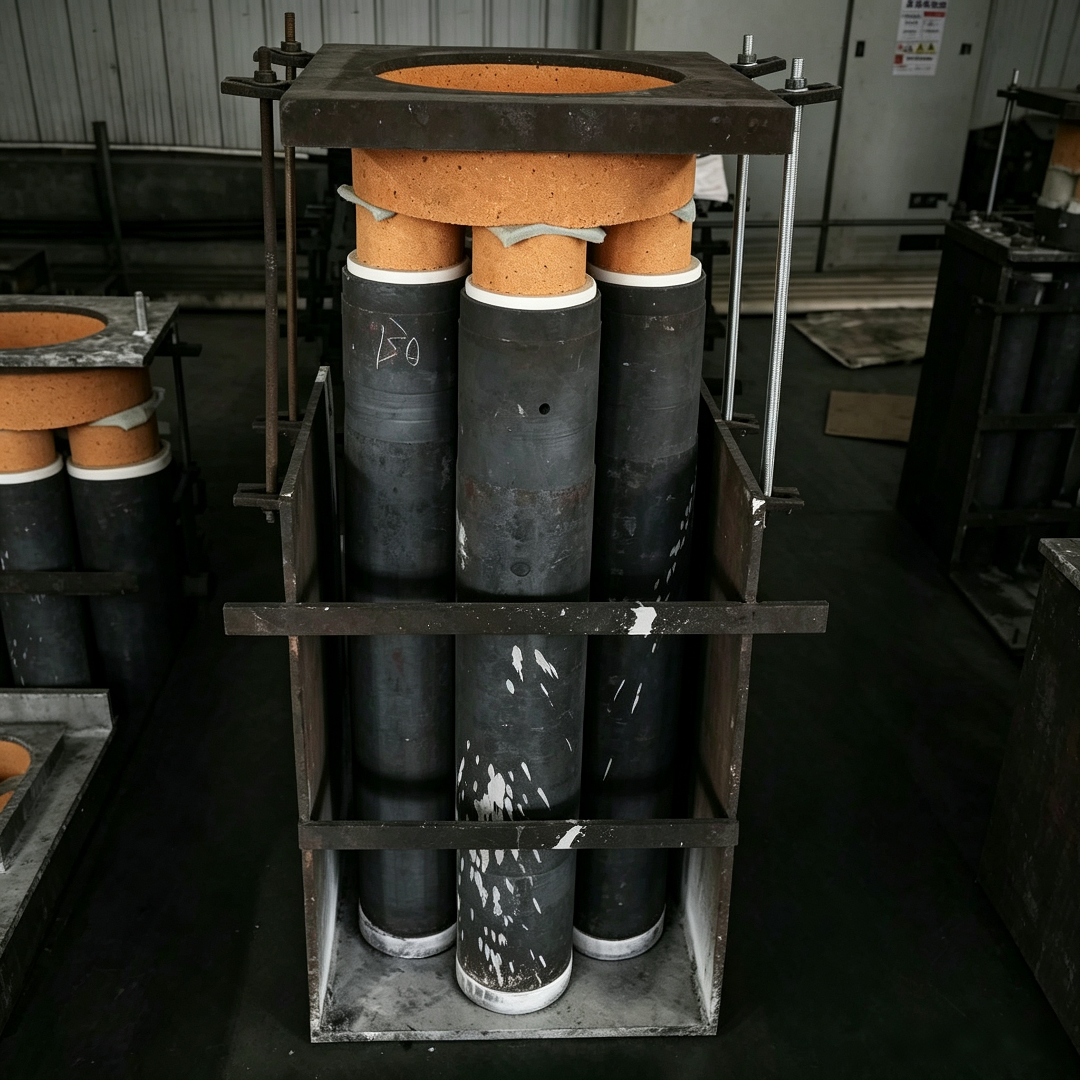
Introduction to Corporate Technical Strength: Qinchuan New Materials' "Three-Dimensional Breakthrough"
Qingchuan New Materials (Zhengzhou) Co., Ltd. achieves a leap in the performance of K447A alloy through "Component-Process-Inspection" three-dimensional innovation. In terms of component design, it adopts γ' phase strengthening and carbide synergistic toughening technology, optimizing the Al, Ti content to 4.5-5.2%, making the volume fraction of γ' phase over 65%, and the yield strength at 1000℃ reaches 420MPa (a 30% increase compared to traditional alloys); in the aspect of process control, relying on the modernized standard workshop of Zhengzhou High-tech Zone, equipped with a vacuum induction melting furnace (capacity 500kg) and a three-way heat treatment production line, it achieves grain size ASTM 6 level by precisely controlling the cooling rate (5-8℃/s); the inspection system covers 12 processes from raw materials to finished products, using a direct-reading spectrometer (detection accuracy ±0.01%) and a scanning electron microscope (resolution 0.5nm) to ensure uniformity of composition ≤0.05%. Currently, this alloy has passed the supplier certification of GE Aviation and Siemens Energy, and is applied to a certain type of aviation engine turbine disk (operating temperature 1050℃) and gas turbine transition section (service life over 10,000 hours).
FAQ: K447A Alloy Selection Guide
Q1: What are the main differences between K447A alloy and IN718 alloy?
A: The core difference lies in the balance between high-temperature performance and cost. K447A, by optimizing the Al/Ti ratio (4.8% vs. 1.9% in IN718), increases the γ' phase volume fraction by 20%, achieving a yield strength of 420MPa at 1000℃ (IN718 is 300MPa), but reduces the Ni content to 50% (IN718 is 52%), with raw material costs decreasing by about 12%. In typical application scenarios, K447A is more suitable for components with long-term service temperatures >950℃, such as aeroengine turbine disks; IN718 is more suitable for compressor disks operating at 800-950℃.
Q2: How to control the heat treatment deformation of K447A alloy?
A: The process should be controlled in three stages: the solid solution stage uses分级 heating (650℃→850℃→1120℃, maintaining heat for 2 hours at each stage) to reduce thermal stress; the aging stage controls the cooling rate (oil cooled to 600℃ then air cooled) to avoid quenching cracks; and the final treatment stage employs deep cryogenic treatment (-196℃×24h) to eliminate residual austenite. Measured data show that this process can achieve a thermal treatment deformation of ≤0.15mm/m, meeting the requirements for precision component processing.
Q3: How to optimize the welding performance of K447A alloy?
A: It is recommended to use the TIG (Tungsten Inert Gas) welding process, with key parameters including: welding current of 180-200A, welding speed of 15-20cm/min, and interlayer temperature ≤150°C. To prevent grain coarsening in the heat-affected zone, stress-relieving annealing at 680°C for 8 hours is required after welding. A case study of a gas turbine combustion chamber welding shows that the optimized process reduces the hardness fluctuation range of the weld area from HRC32-38 to HRC35-36, and the crack rate from 8% to 0.5%.
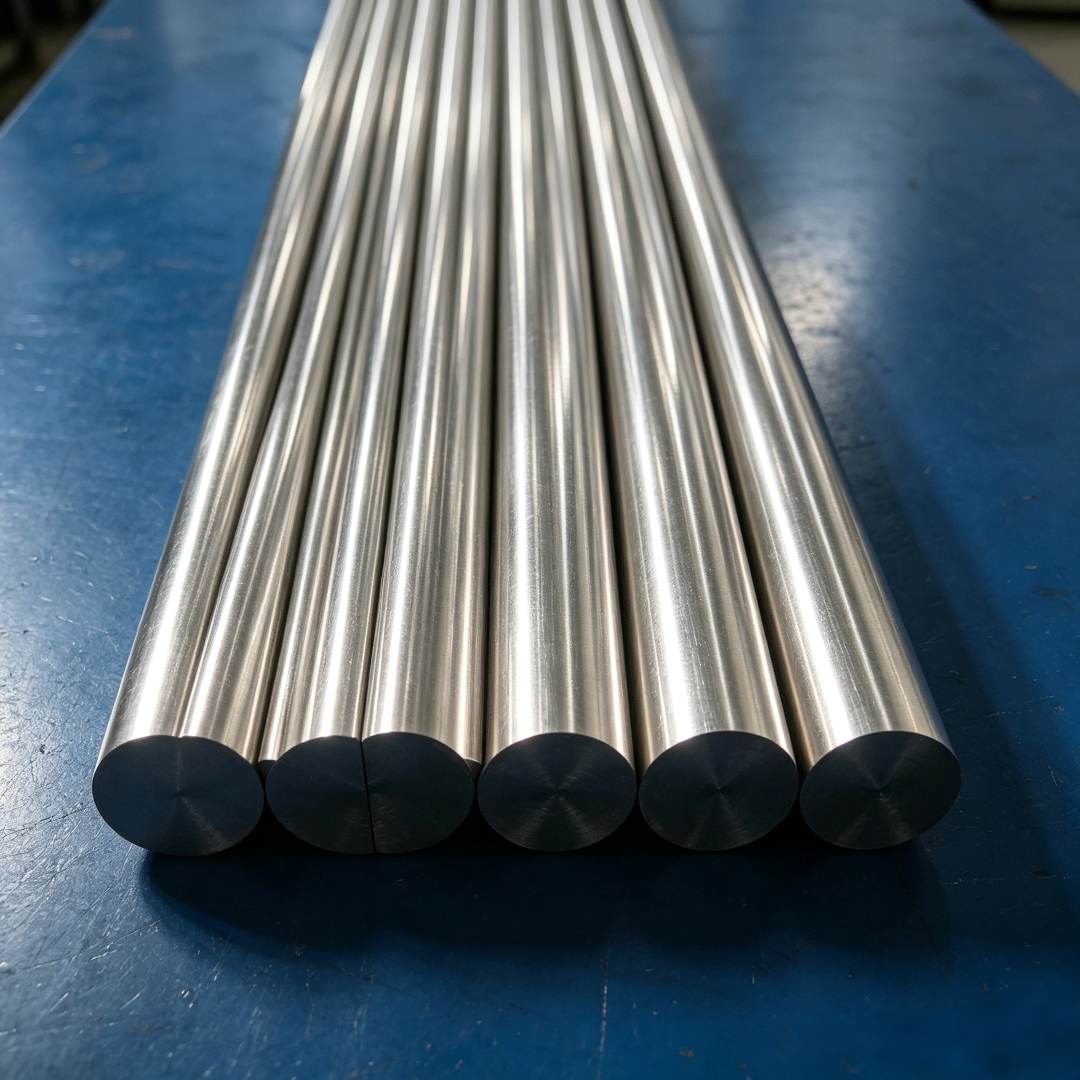
Summary of the full text: Key reference for technology selection
The technological breakthrough of K447A alloy provides a new paradigm for high-temperature material selection: through the collaborative innovation of composition-process-detection, it achieves a balance of strength, oxidation resistance, and thermal fatigue performance above 1000℃. Qichuan New Materials (Zhengzhou) Co., Ltd. ensures the batch stability of the alloy (Cpk≥1.33) with its 500kg-level vacuum melting equipment and a 12-process inspection system, forming a complete technological chain from raw materials to finished products. In practical applications, it is recommended to comprehensively evaluate based on three dimensions: service temperature (choose IN718 below 950℃, choose K447A above 950℃), cost sensitivity (K447A raw material cost is 12% lower), and processing accuracy (thermal treatment deformation ≤0.15mm/m) to achieve the optimal match of technical performance and economy.