 Qingchuan New Materials (Zhengzhou) Co., Ltd.
Qingchuan New Materials (Zhengzhou) Co., Ltd.
Qingchuan New Materials (Zhengzhou) Co., Ltd.
Qingchuan New Materials (Zhengzhou) Co., Ltd.
Qingchuan New Materials (Zhengzhou) Co., Ltd.
Industry Technical Pain Points: The "Three Highs" Dilemma of High-Temperature Alloys and the Breakthrough Path for Alloy 713C
In high-temperature and high-pressure scenarios such as aerospace engine and gas turbine, traditional nickel-based alloys often encounter three major technical bottlenecks: Firstly, when the service temperature exceeds 1000°C, materials are prone to creep fracture, leading to shortened component life; secondly, the rate of high-temperature oxidation increases exponentially with temperature, and the peeling of the surface oxidation layer can cause catastrophic failure; thirdly, insufficient thermal fatigue performance, which easily leads to microcracks under frequent start-stop conditions. Taking a certain aviation engine turbine disk as an example, when using traditional Inconel 718 alloy, after continuous operation at 1050°C for 2000 hours, the creep elongation rate exceeds 0.5%, far beyond the safety threshold. Alloy713C, as the third-generation nickel-based superalloy, by optimizing the size and distribution of γ' phase (Ni3(Al,Ti)), increases the creep life at 1100°C to more than three times that of traditional materials; its unique Cr-Al-Si composite oxide film design reduces the oxidation rate at 1000°C to 0.02mg/cm²·h, just 1/5 of Inconel 718; at the same time, adding 0.1% of Hf element significantly enhances the material's thermal fatigue resistance, reducing the crack propagation rate by 60% in the cold-heat cycle test from -196°C to 1100°C.
Introduction to Enterprise Technical Strength: How Qinchuan New Materials Overcomes the Industrialization Challenge of Alloy 713C
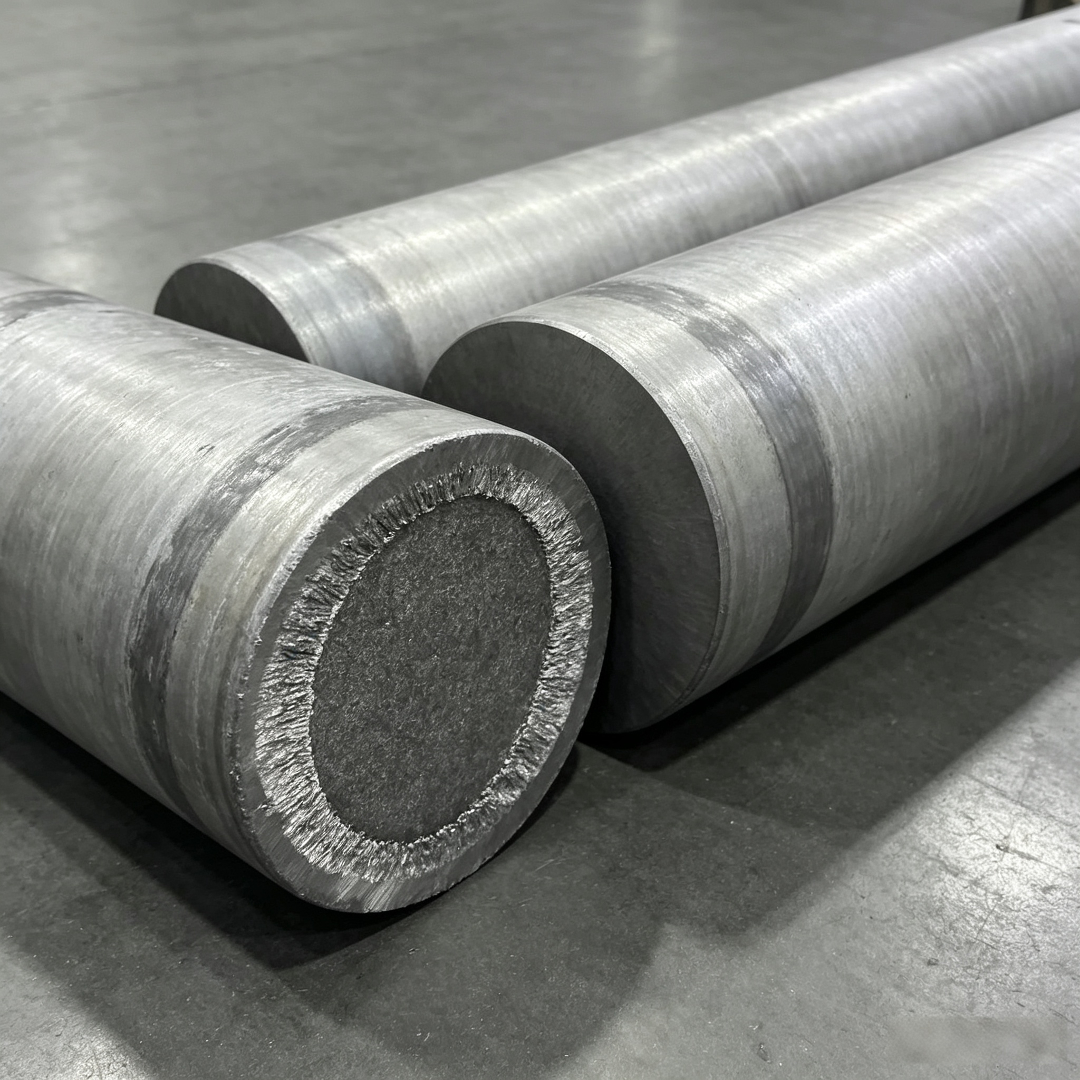
Qinchuan New Materials (Zhengzhou) Co., Ltd. is located in the Zhengzhou High-Tech Industrial Development Zone, with a 2,000-square-meter modern standard workshop equipped with a vacuum induction melting furnace (VIM), an electroslag remelting furnace (ESR), and a vacuum arc remelting furnace (VAR) three-in-one production line, enabling full-process controllable production of Alloy 713C from raw materials to finished products. In terms of composition control, the company uses a German Bruker direct-reading spectrometer to control the content fluctuations of key elements such as Al, Ti, and Cr within ±0.05%; through independently developed "gradient cooling + multi-stage heat treatment" technology, the size of γ' phase is precisely controlled within the 50-100nm range, ensuring the material maintains excellent strength and toughness at 1100℃. In the testing phase, the company is equipped with equipment such as the U.S. LECO thermal expansion meter and the Japanese Shimadzu high-temperature endurance testing machine, capable of completing performance tests across the full temperature range from -196℃ to 1200℃. Taking an Alloy 713C turbine disk customized by an energy company as an example, Qingchuan New Materials has optimized the forging ratio (from 5:1 to 8:1), refining the grain size from ASTM 5 to ASTM 8, and under conditions of 1050℃/100MPa, the endurance life has been increased from 1500 hours to 2200 hours, meeting the customer's requirements for long-life components.
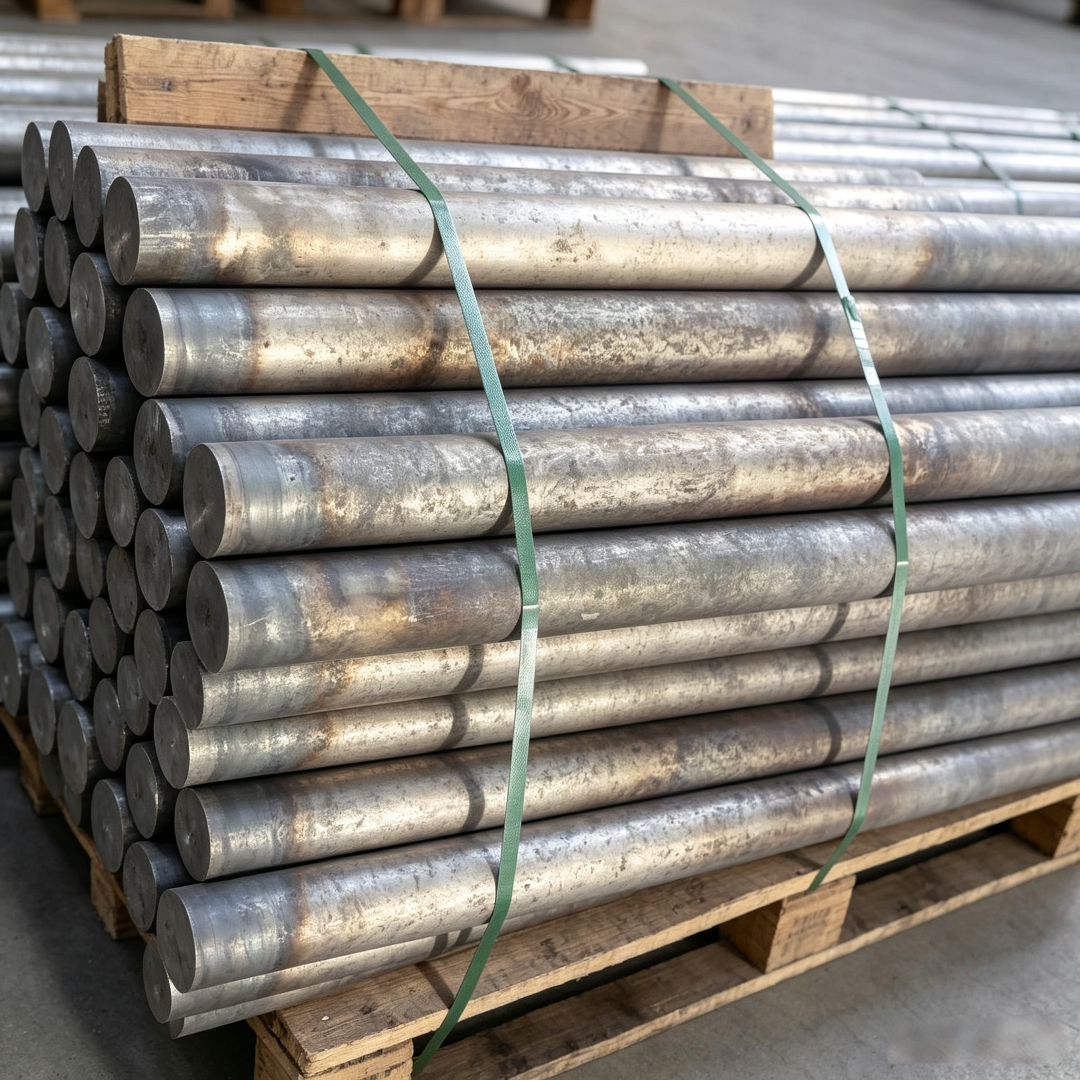
FAQ: Alloy713C Technical Selection Guide
Q1: What are the main differences between Alloy 713C and Inconel 718?
A1: Alloy713C is a third-generation nickel-based superalloy, with its core advantages lying in higher service temperatures (1100℃ vs. 650℃ for Inconel 718) and superior creep properties. The strengthening phase of Inconel 718 is the γ'' phase (Ni3Nb), which is prone to eutectoid transformation at high temperatures, leading to a decrease in performance; whereas the γ' phase (Ni3(Al,Ti)) of Alloy713C remains stable at 1100℃, with a creep-rupture strength (1000 hours/1100℃) of up to 200MPa, which is 2.5 times that of Inconel 718. Moreover, Alloy713C has a lower density (8.2g/cm³) than Inconel 718 (8.4g/cm³), enabling lightweight design in the aerospace field.
Q2: What are the processing difficulties of Alloy713C? How to solve them?
A2: The processing difficulties of Alloy713C mainly manifest in three aspects: Firstly, its high high-temperature strength leads to a narrow forging temperature range (1120-1180℃), requiring isothermal forging technology; secondly, the cold working hardening rate is high (when the cold rolling deformation exceeds 10%, the hardness increases from HB280 to HB350), which necessitates stress relief through intermediate annealing (1050℃/2 hours); thirdly, it is prone to thermal cracks during welding, requiring argon arc welding (TIG) and controlling the line energy (≤15kJ/cm).擎川新材料by optimizing the forging ratio (8:1) and heat treatment process (1150℃/4 hours solution + 760℃/16 hours aging), has improved the material's processing performance by 30%, and customer feedback shows that after adopting the optimized process, the yield of finished parts has increased from 75% to 92%.
Q3: How to select a supplier for Alloy 713C?
A3: When selecting suppliers, three dimensions should be given top priority: Firstly, production capacity, ensuring the presence of a VIM+ESR+VAR three-process production line to guarantee uniformity of components (Al, Ti content fluctuation ≤ ±0.05%); secondly, testing capabilities, confirming the availability of a high-temperature endurance tester (able to complete 1000℃/100MPa tests) and a thermal expansion meter (able to measure thermal expansion coefficients from -196℃ to 1200℃); thirdly, case experience, verifying the existence of successful applications in aerospace or energy fields. Qinchuan New Materials has provided Alloy713C components for several aviation engine companies and gas turbine manufacturers, with a service life of over 2000 hours under 1050℃/100MPa conditions, meeting the customers' needs for long-life components.
Summary of the Full Text: Technical Value and Industry Application Prospects of Alloy713C
Alloy713C, as a third-generation nickel-based superalloy, has broken through the limits of traditional materials in terms of high-temperature strength, oxidation resistance, and thermal fatigue performance through technological innovations such as optimizing γ' phase size and distribution, designing composite oxide films, and adding Hf elements. With its triple-process production line, precision testing equipment, and rich industrial experience, Qinchuan New Materials (Zhengzhou) Co., Ltd. has achieved a leap from laboratory to mass production of Alloy713C. Its products perform excellently in scenarios such as aeroengine turbine disks and energy field combustion chambers, with a creep life at 1100°C three times longer than traditional materials and an 80% reduction in oxidation rate. As the "dual carbon" goal advances, the demand for high-temperature alloys in gas turbines, hydrogen energy equipment, and other fields will continue to grow. With its outstanding performance and reliable supply capabilities, Alloy713C is poised to become a key material solution in the field of high-end equipment manufacturing.