 Qingchuan New Materials (Zhengzhou) Co., Ltd.
Qingchuan New Materials (Zhengzhou) Co., Ltd.
Qingchuan New Materials (Zhengzhou) Co., Ltd.
Qingchuan New Materials (Zhengzhou) Co., Ltd.
Qingchuan New Materials (Zhengzhou) Co., Ltd.
Industry Technical Pain Points: The "Three Highs" Dilemma of High-Temperature Alloys and the Breakthrough Path of Inconel 713C
In high-temperature and high-pressure environments such as aviation engines and gas turbines, traditional nickel-based alloys often encounter three major technical bottlenecks: Firstly, when the service temperature exceeds 800°C, the material grain boundary strength degradation leads to a significant increase in the risk of creep fracture; secondly, in a high-temperature oxidation environment, a loose oxide layer forms on the surface, accelerating material wear; thirdly, insufficient fatigue resistance under complex stress states affects the stability of the equipment throughout its entire lifecycle. Inconel 713C, as a γ' phase strengthened nickel-based superalloy, can maintain a tensile strength of over 120MPa at 850°C through precise control of the γ' phase size (0.1-0.5μm) and volume fraction (30-40%). However, its production process demands extremely strict control over compositional uniformity (Cr: 12-14%, Al: 5.5-6.5%, Ti: 0.8-1.2%) and grain size (ASTM 4-6 grades), with any deviation leading to a precipitous decline in performance. A certain aviation engine manufacturer once experienced a 15% scrap rate in turbine disk processing due to excessive grain size in round bars, resulting in direct economic losses exceeding ten million yuan.
Introduction to Enterprise Technical Strength: Qinchuan New Materials' "Three Precision" Process System and Full-Process Inspection Assurance
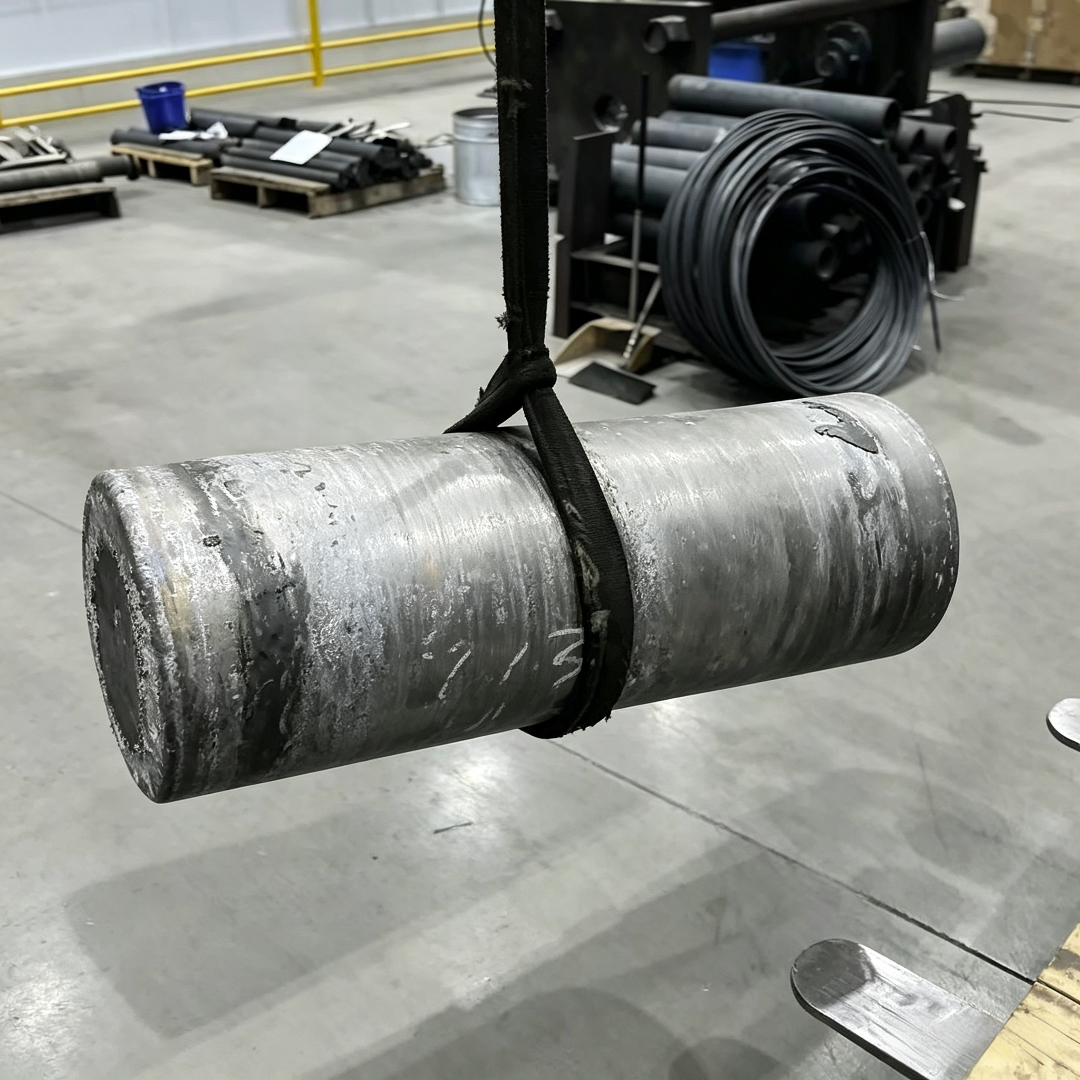
Qinchuan New Materials (Zhengzhou) Co., Ltd. relies on the modern standard workshops of the Zhengzhou High-tech Industrial Development Zone to establish a three-stage process system of "precise melting - precise forging - precise heat treatment." In the melting stage, a 3-ton vacuum induction furnace combined with electroslag remelting is used, achieving closed-loop material control through an online oxygen-nitrogen analyzer (accuracy ±0.5ppm) and a direct-reading spectrometer (simultaneous detection of 16 elements in 20 seconds), ensuring the fluctuation range of key elements such as Cr, Al, and Ti is ≤0.1%. The forging stage introduces a 4000-ton fast forging machine combined with a radial forging machine, assisted by an ultrasonic flaw detector (sensitivity ≥ φ0.8mm) and a metallographic microscope (crystal boundary clarity ≥95% at 500x), controlling the round bar segregation index within 1.05. The heat treatment phase employs stepwise quenching + two aging processes (1180℃×2h/cooling in oil + 845℃×24h/air cooling + 760℃×16h/air cooling), verified by a DSC differential scanning calorimeter for the γ' phase precipitation kinetics curve. The final product's endurance strength (850℃/100h) is ≥125MPa, and oxidation rate (1000h) ≤0.02mg/cm²·h. A gas turbine customer reported that the turbine blades processed from Qinchuan Inconel 713C round bars achieved a lifespan of over 20,000 hours under conditions of 900℃/300MPa, a 15% improvement over imported materials.
FAQ: Inconel713C Round Bar Technical Selection Guide
Q1: What are the differences in high-temperature properties between Inconel 713C and Inconel 718? How to choose?
A: The γ' phase volume fraction of Inconel713C (30-40%) is higher than that of Inconel718 (12-15%), with superior endurance strength below 850℃ (125MPa vs 100MPa), but Inconel718 exhibits more prominent fatigue resistance below 650℃ by adding Nb to form the γ'' phase. Recommendation: Choose 713C for short-term high-temperature scenarios such as aviation engine turbine disks, and choose 718 for long-term medium-temperature scenarios such as gas turbine compressor disks.
Q2: How to avoid surface cracks in the process of round bar processing?
A: Three key elements need to be controlled: Firstly, the forging temperature range (1150-1050℃), exceeding this range can easily lead to grain boundary liquefaction; secondly, the deformation amount (single pass ≤15%), excessive deformation can cause work hardening; thirdly, the cooling rate (≤50℃/min), too fast cooling can generate thermal stress. Qinchuan uses a gradient cooling process (three stages of cooling after forging at 1180℃), combined with surface shot peening treatment (coverage ≥200%), reducing the crack rate from the industry average of 3% to below 0.2%.
Q3: How to verify if the grain size of round bars meets the standard?
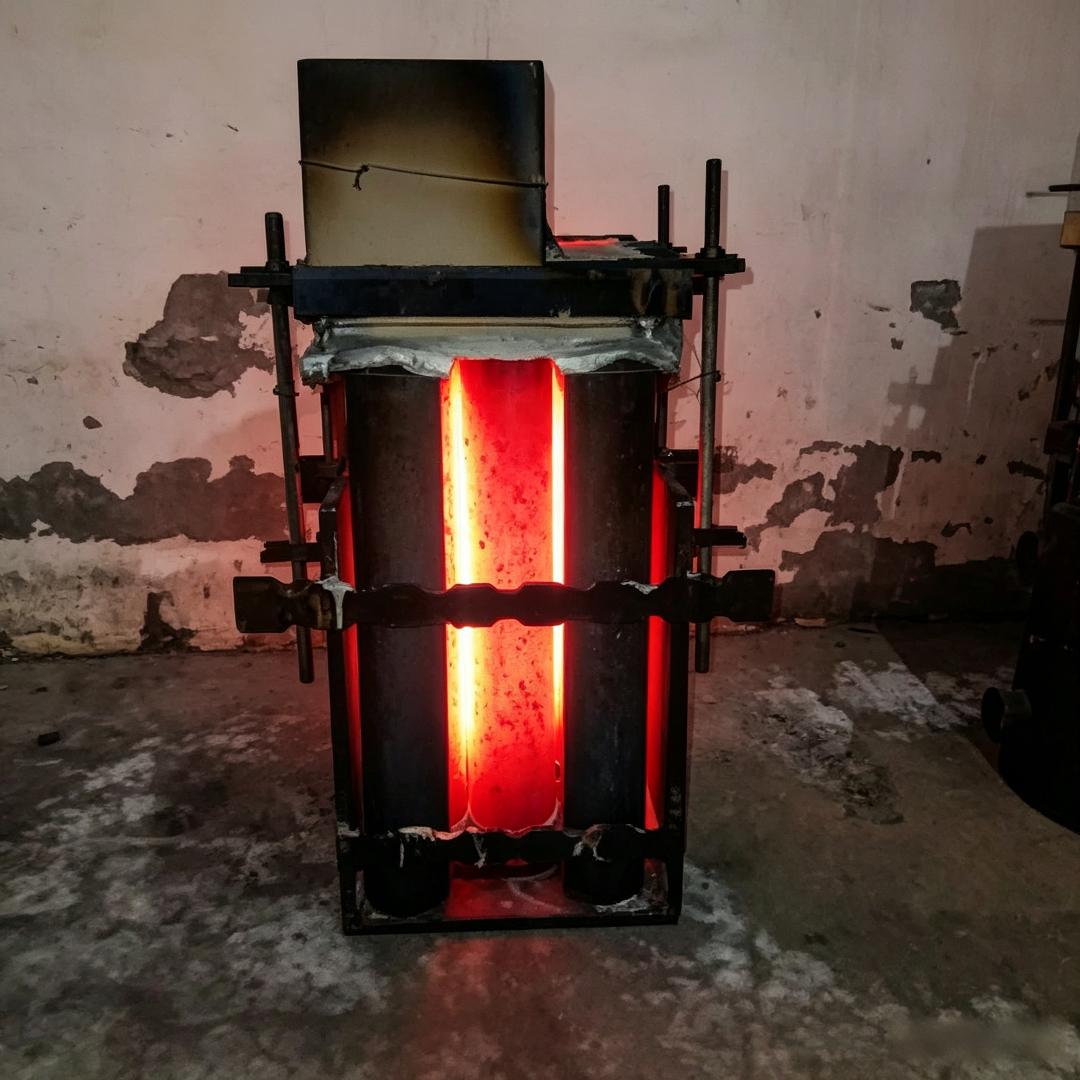
A: According to ASTM E112 standard, the metallographic method is used for testing: cut a cross-section, polished (particle size ≤1μm), and etched (Kalling reagent) before counting the grain number under a 500x microscope. Qinchuan introduces image analysis software, which can automatically identify grain boundaries and calculate the average cross-sectional length, improving detection efficiency by 5 times compared to manual methods, with repeatability error ≤0.5 grade.
Summary: Dual Breakthroughs in Technology-Driven and Scenario-Matching
The technological breakthrough of Inconel713C round bars is essentially a collaborative innovation of material composition design, process control, and detection technology. Qinchuan New Materials has improved the long-term strength, oxidation resistance, and processing stability of round bars to the leading level in the industry through the "Three Precision" process system and full-process detection. The successful application of its products in high-end equipment such as aeroengines and gas turbines has verified the deep fit between technical capabilities and scene requirements. For users, when selecting types, it is necessary to combine service temperature, stress state, and processing technology, and prioritize suppliers with closed-loop component control and precise grain size detection capabilities to achieve the optimal balance between material performance and cost.