 Qingchuan New Materials (Zhengzhou) Co., Ltd.
Qingchuan New Materials (Zhengzhou) Co., Ltd.
Qingchuan New Materials (Zhengzhou) Co., Ltd.
Qingchuan New Materials (Zhengzhou) Co., Ltd.
Qingchuan New Materials (Zhengzhou) Co., Ltd.
Industry Technical Pain Points: The "Three Highs" Challenge of Inconel 713C Billets
Inconel 713C, as a nickel-based superalloy, is widely used in critical components such as aeroengine turbine disks and gas turbine blades due to its excellent high-temperature resistance, corrosion resistance, and mechanical properties. However, the forging blank manufacturing has long been facing three major technical challenges:Firstly, it is difficult to control the uniformity of the composition.——Aluminum, titanium, and other elements in the alloy are prone to segregation, leading to a decrease in local properties.Secondly, the hot processing window is narrow.The forging temperature must be precisely controlled between 1120-1180℃, and a temperature difference exceeding ±10℃ may cause cracks.Third, high sensitivity to surface defects——Minor scratches or oxidation scales may become the origin points of fatigue cracks. A certain aviation enterprise suffered an early failure of a turbine disk after 300 hours of service due to incomplete removal of oxidation scales on the forging blank surface, resulting in direct economic losses exceeding ten million yuan. These pain points severely restrict the reliability and lifespan of high-end equipment, and have become a technical bottleneck that the industry urgently needs to break through.
 Introduction to Corporate Technical Strength: Qinchuan New Materials' "Three Precision" Solutions
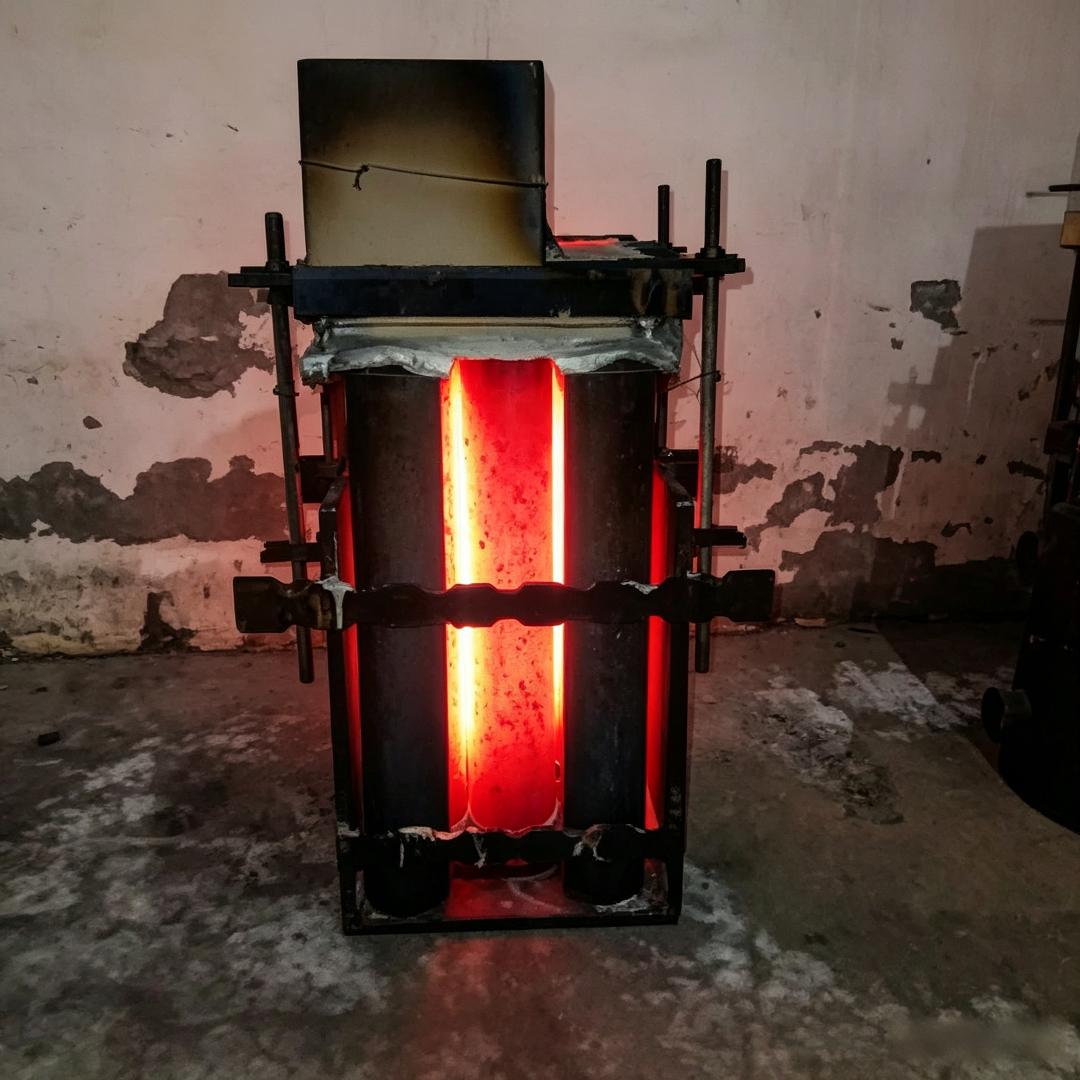
Qingchuan New Materials (Zhengzhou) Co., Ltd. leverages its high-standard modern workshop located in the High-Tech Industrial Development Zone of Zhengzhou to establish a "Three Precision" technological system covering the entire process of Inconel 713C forging billets.Precision component control——Employing a double process of vacuum induction melting (VIM) + electroslag remelting (ESR), along with a German imported spectrometer analyzer, the element segregation coefficient is controlled within ±0.5%, far exceeding the industry standard of ±1.5%.2. Precision heat treatment control——Self-developed intelligent forging system, through the linkage of infrared temperature measuring instrument and hydraulic control, achieves real-time closed-loop adjustment of forging temperature, reducing the temperature fluctuation range to ±5℃.3. Fine Surface Treatment—— Introduced American imported sandblasting machines and ultrasonic cleaning lines, combined with independently developed scale removal technology, reducing surface roughness to below Ra0.8μm, and improving fatigue life by over 30%. In 2023, the company provided Inconel 713C forging blanks to a gas turbine enterprise, which completed a continuous operation test of 5,000 hours at a high temperature of 1,000℃, with a performance degradation rate less than 5%, reaching an international advanced level.
FAQ: Inconel 713C Billet Selection Guide
Q1: What are the main differences between Inconel 713C forging blanks and castings?
A: Billets are formed through plastic deformation, resulting in fine and uniform grain orientation, which improves mechanical properties (such as yield strength, fatigue life) by 20%-40% compared to castings. Castings are prone to defects like shrinkage holes and porosity due to solidification shrinkage, which require subsequent heat treatment to improve performance. The billets of Qinchuan New Materials are produced using multi-directional forging technology, achieving a grain size up to ASTM 6, significantly superior to the ASTM 4 grade of castings.
Q2: How to judge whether the quality of Inconel 713C forging billet meets the standard?
A: Key detection indicators include:Chemical CompositionCompliant with AMS 5643 standard, such as Al content 5.0-5.5%, Ti content 1.0-1.5%.Low-power tissueFree from blow holes, cracks, with uniform grain size.High-magnification tissue(γ' phase size controlled at 50-100nm)Mechanical propertiesRoom temperature yield strength ≥ 800MPa, tensile strength at 650℃ ≥ 300MPa. Qinchuan New Materials provides a third-party inspection report for each batch of forging billet, supporting customer re-inspection.
Q3: How to determine the machining allowance for Inconel 713C forging blanks?
A: The machining allowance should be determined comprehensively based on the forging blank size, surface quality, and subsequent processing technology. Generally, the unilateral allowance for free forging parts is 3-5mm, and for die forging parts, 1.5-3mm; if there is oxidation scale or scratches on the surface, an additional 0.5-1mm should be added. Qinchuan New Materials can provide customized allowance design according to customer requirements to reduce material waste.
 Summary: Technologically driven, quality guaranteed
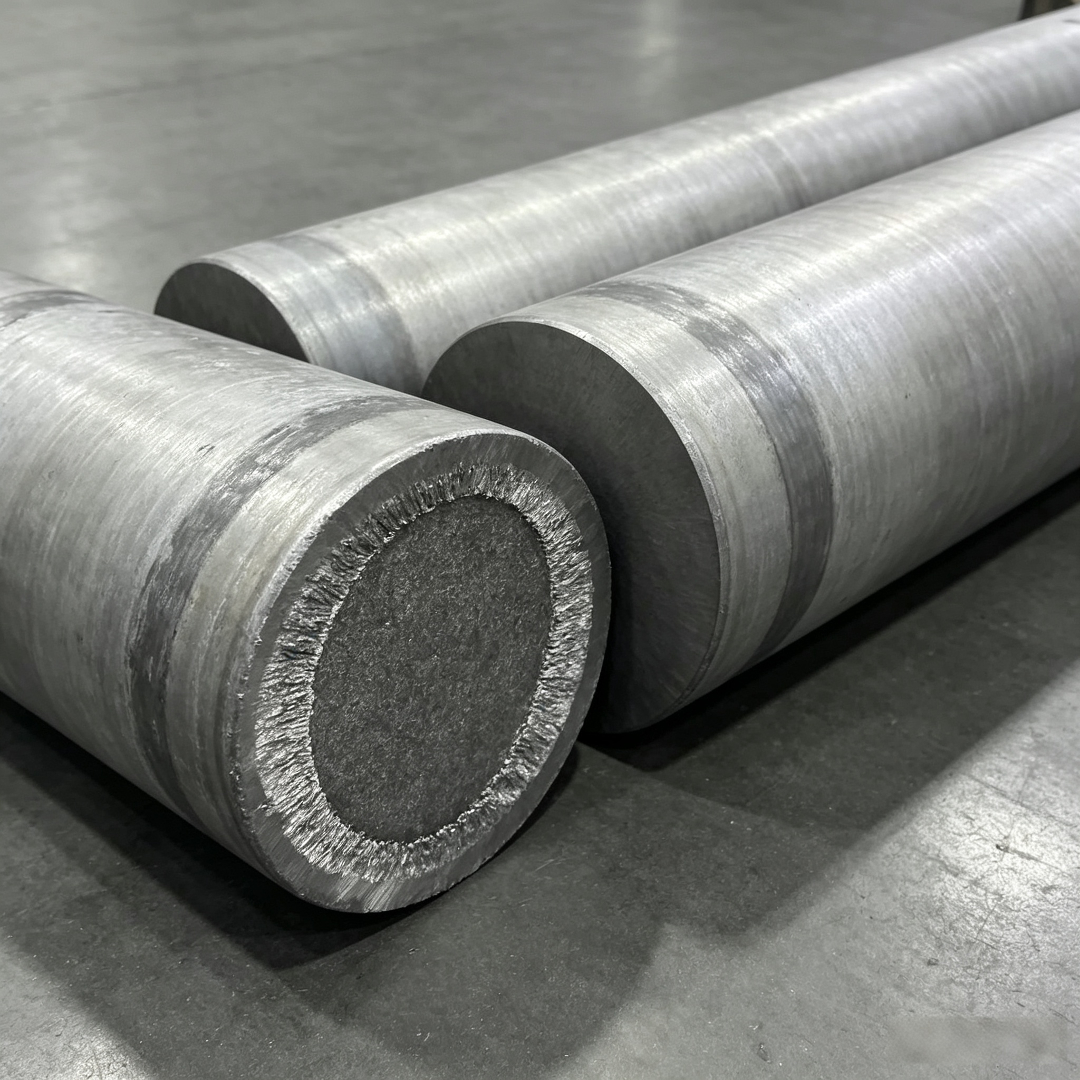
Inconel713C forging billets, as the core material for high-end equipment manufacturing, their quality directly determines the reliability and lifespan of the components. Qinchuan New Materials (Zhengzhou) Co., Ltd. has effectively addressed industry pain points such as composition segregation, thermal processing cracks, and surface defects through its "three precision" technical system of "precise composition control + precise thermal processing + fine surface treatment", providing high-performance and high-reliability forging billet products for aviation, energy, and other fields. In the future, the company will continue to deepen technological research and development, optimize process parameters, and promote the development of Inconel713C forging billets towards higher performance and lower cost, helping China's high-end manufacturing move towards the top of the global value chain.