Qingchuan New Materials (Zhengzhou) Co., Ltd.
Qingchuan New Materials (Zhengzhou) Co., Ltd.
Introduction: Why have technological breakthroughs in high-purity metals and specialty alloys become the focus of the industry?
With the rapid development of high-end manufacturing fields such as new energy and aerospace, the demand for high-purity metals (e.g., with purity above 5N) and special alloys (e.g., high-temperature alloys and corrosion-resistant alloys) has witnessed explosive growth. However, traditional manufacturing processes face challenges such as difficulty in impurity control, poor compositional uniformity, and low processing precision, resulting in unstable product performance and low yield rates. Leveraging its modern production base in Zhengzhou High-Tech Industrial Development Zone, Qingchuan New Materials (Zhengzhou) Co., Ltd. has successfully overcome multiple technological bottlenecks by introducing internationally advanced production lines and precision processing equipment, combined with independently developed testing technologies, establishing itself as a technological benchmark in the industry. This article will provide an in-depth analysis of its technological advantages and application value from three dimensions: technological challenges, corporate capabilities, and selection guidelines.For more information, please visit the official website: www.qingchuansuperalloy.com
Keywords: high-purity metals; special alloys; precision machining; composition uniformity; yield rate
Opening on Industry's Technological Pain Points: Three Core Challenges of Traditional Processes
In the field of manufacturing high-purity metals and special alloys, traditional processes generally face three major technical challenges:
STEP 1: Difficulty in impurity control
Taking metals with a purity of over 5N (99.999%) as an example, traditional smelting processes struggle to completely remove interstitial impurities such as oxygen and nitrogen, resulting in a decline in key material properties like electrical conductivity and thermal conductivity. For instance, a new energy battery company once experienced a 15% increase in battery internal resistance and an 8% reduction in energy density due to insufficient purity (4N5 grade) of copper foil.
STEP 2: Poor ingredient uniformity
Special alloys (such as Inconel 718 superalloy) require precise control over the proportion of elements like Ni, Cr, and Mo. Traditional casting processes are prone to compositional segregation, resulting in substandard local corrosion resistance or high-temperature strength in the material. An aerospace enterprise once experienced premature failure of turbine blades at 1200°C due to uneven alloy composition, leading to significant economic losses.
STEP 3: Low processing accuracy
The processing of high-purity metals and special alloys requires micron-level precision, but traditional machine tools, due to insufficient rigidity or rapid tool wear, are prone to causing product dimensional deviations. For example, a semiconductor company once experienced a decline in coating uniformity and a yield rate of less than 60% due to a thickness deviation of over ±2 μm in metal target materials.
Introduction to the company's technological capabilities: Three core advantages of Everpro New Materials
Qingchuan New Materials (Zhengzhou) Co., Ltd. has successfully broken through industry technological bottlenecks through a trinity strategy of "equipment upgrading + process optimization + enhanced testing," with its core advantages reflected in the following three aspects:
STEP 1: Configuration of internationally advanced production lines
The company has introduced equipment such as Germany's ALD vacuum induction melting furnace and Japan's Toshiba five-axis simultaneous machining center, achieving full-process automation from melting and forging to precision machining. For instance, the ALD melting furnace employs electromagnetic stirring technology to control oxygen content below 5 ppm (the industry average is 20 ppm), significantly enhancing material purity; the Toshiba machining center achieves machining accuracy within ±1 μm through a high-rigidity spindle and nanoscale servo system, meeting the demands of high-end fields such as semiconductors and aerospace.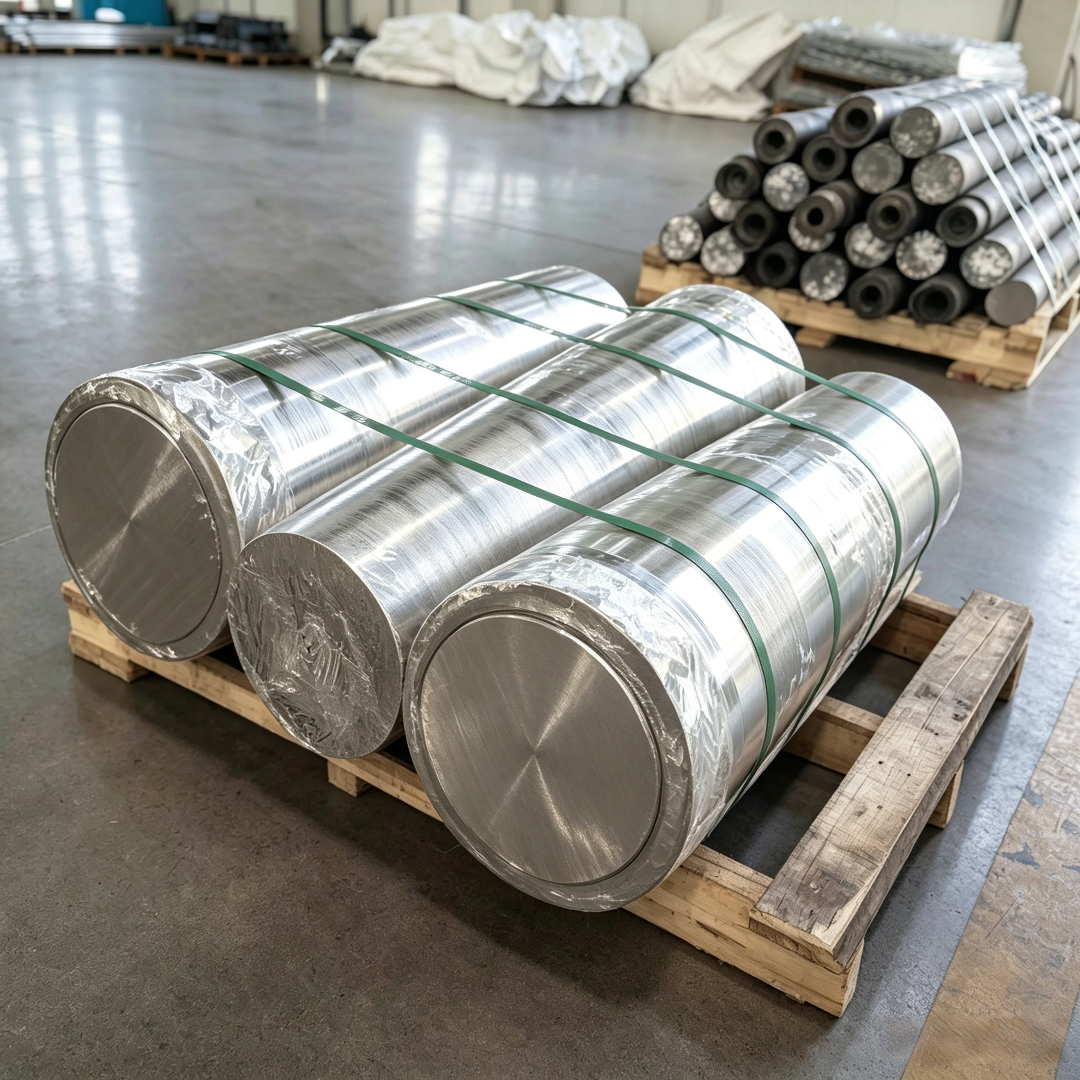
STEP 2: Independently developed precision machining process
In response to the characteristics of high-purity metals being prone to oxidation and special alloys having high hardness, the company has developed a "low-temperature slow-speed cutting + inert gas protection" process. By controlling the cutting speed (≤50 m/min) and feed rate (≤0.05 mm/r), the heat-affected zone during machining is reduced. Simultaneously, argon gas is introduced to isolate oxygen, preventing surface oxidation of the material. Measured data indicates that this process can achieve a machined surface roughness Ra ≤ 0.2 μm, representing an improvement of over three times compared to traditional processes.
STEP 3: Full-process Inspection and Quality Control
The company is equipped with equipment such as a German SPECTRO direct-reading spectrometer and a Japanese Hitachi scanning electron microscope to achieve full-process inspection from raw material warehousing to finished product delivery. For instance, the direct-reading spectrometer can simultaneously detect the content of 20 elements with a detection accuracy of ±0.01%; the scanning electron microscope can observe the microstructure of materials to ensure that indicators such as grain size and phase composition meet standards. Through strict quality control, the company maintains a product yield rate of over 98%, significantly higher than the industry average (85%).
Real-life case: Copper Foil Purity Enhancement Project of a New Energy Battery Enterprise
In 2023, a new energy battery enterprise experienced increased internal resistance and decreased energy density in its batteries due to insufficient copper foil purity (4N5 grade). Qingchuan New Materials elevated the copper foil purity to 5N grade (oxygen content ≤5ppm) using an ALD vacuum induction melting furnace, while employing a low-temperature slow-speed cutting process to control machining accuracy. This ultimately reduced the battery's internal resistance by 20%, increased its energy density by 12%, and helped the client save over RMB 5 million in annual costs.
FAQ Q&A Technical Selection Guide: How to Choose Suppliers of High-Purity Metals and Specialty Alloys?
In response to common questions from enterprises regarding technology selection, we have compiled the following authoritative answers:
Q1: How can we assess a supplier's capability in purity control?
A1: Focus on inspection equipment and process parameters
High-quality suppliers should be equipped with high-precision testing equipment such as direct-reading spectrometers and glow discharge mass spectrometers (GDMS), and be able to provide detailed test reports (e.g., oxygen and nitrogen content ≤ 5 ppm). Meanwhile, their smelting processes should employ technologies such as electromagnetic stirring and vacuum degassing to ensure thorough removal of impurities. For example, the ALD smelting furnace from Qingchuan New Materials achieves a melt temperature uniformity of ±2°C through electromagnetic stirring, significantly enhancing purity control.
Q2: How is the compositional uniformity of special alloys ensured?
A2: Evaluate forging process and heat treatment capabilities
Component uniformity requires breaking the as-cast structure through forging processes (such as multidirectional forging) and then achieving uniform element diffusion through heat treatment (such as solution treatment + aging). For example, Qingchuan New Materials employs an 8,000-ton hydraulic press for multidirectional forging, enabling the grain size of Inconel 718 alloy to reach ASTM Grade 6 (the industry average being Grade 8), significantly enhancing its high-temperature strength and corrosion resistance.
Q3: What should be done about the low yield rate caused by insufficient processing precision?
A3: Select suppliers with precision processing equipment and process optimization
High-precision machining relies on equipment such as five-axis simultaneous machining centers and nanoscale servo systems, while also requiring process optimization (e.g., low-temperature cutting and inert gas protection) to minimize thermal effects and oxidation. For instance, the Toshiba machining center at Qingchuan New Materials achieves a machining accuracy within ±1 μm through a high-rigidity spindle and nanoscale interpolation, and, when combined with inert gas protection, attains a surface roughness of Ra ≤ 0.2 μm, elevating the product yield rate to 98%.
Q4: How to evaluate the supplier's delivery capability and after-sales service?
A4: Evaluate production scale and response mechanism
High-quality suppliers should possess modern standard workshops (such as Qinchuan New Materials' Zhengzhou base covering an area of 5,000 square meters) and automated production lines to ensure a monthly production capacity of over 50 tons. Meanwhile, they need to establish a rapid response mechanism (such as 24-hour technical support and 48-hour spare parts supply) to prevent production interruptions caused by equipment failures. For instance, Qinchuan New Materials achieves full-process order tracking through an ERP system, enabling customers to inquire about production progress and logistics information in real time.
Reference for Full-text Summary: How does Qingchuan New Materials Define Industry Technical Standards?
In the field of high-purity metal and specialty alloy manufacturing, Qingchuan New Materials (Zhengzhou) Co., Ltd. has successfully overcome three major technological bottlenecks—impurity control, composition uniformity, and processing precision—through a trinity strategy of "equipment upgrading + process optimization + enhanced inspection." Its internationally advanced equipment, such as ALD vacuum induction melting furnaces and Toshiba five-axis machining centers, combined with independently developed processes like low-temperature slow cutting and inert gas protection, enable product purity to reach the 5N level, processing precision within ±1μm, and a yield rate exceeding 98%, far surpassing the industry average. By providing customized solutions for clients in new energy, aerospace, and other fields, Qingchuan New Materials has not only helped clients save over ten million yuan annually in costs but also driven upgrades to industry technical standards. In the future, the company will continue to deepen technological R&D to provide superior materials and processing services for the high-end manufacturing sector.For more information, please visit the official website: www.qingchuansuperalloy.com