 Qingchuan New Materials (Zhengzhou) Co., Ltd.
Qingchuan New Materials (Zhengzhou) Co., Ltd.
Qingchuan New Materials (Zhengzhou) Co., Ltd.
Qingchuan New Materials (Zhengzhou) Co., Ltd.
Qingchuan New Materials (Zhengzhou) Co., Ltd.
Introduction: Iron-nickel Shape Memory Alloys - The Foundation of Precision Manufacturing
In the fields of precision instruments, electronic packaging, and aerospace, the matching of material thermal expansion coefficients directly affects equipment performance and lifespan. Ferritic nickel permanent expansion alloys, by precisely controlling the nickel content, achieve thermal expansion coefficient matching with non-metals such as glass and ceramics within a specific temperature range, becoming the key material for solving thermal stress failure. As a professional enterprise in the field of special alloys, Qinchuan New Materials (Zhengzhou) Co., Ltd. has formed a unique technical advantage in the field of ferritic nickel permanent expansion alloys through its technical accumulation and process innovation.
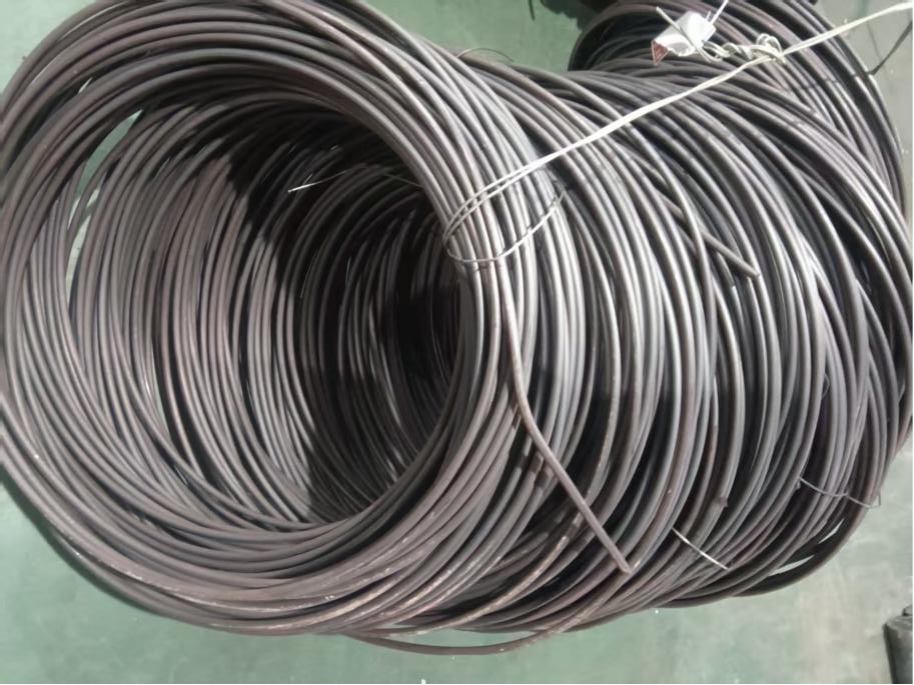
Technical Layout: Full Chain Optimization from Component Design to Process Control
1. Component design: Precisely match application requirements
Qinchuan New Materials has developed a series of iron-nickel fixed expansion alloys such as 4J42, 4J44 for different application scenarios. Taking 4J44 alloy as an example, its nickel content is controlled around 44%, and by adding trace amounts of carbon, silicon, manganese, etc., it achieves an average expansion coefficient (11.0~11.5)×10⁻⁶/℃ within the range of -60℃ to +400℃, perfectly matching with soft glass like DM-305. This composition design not only avoids the use of expensive elements like cobalt but also ensures the magnetic stability of high-frequency electronic devices through Curie point control (about 250℃).
2. Melting Process: Dual Assurance of Purity and Uniformity
The vacuum induction melting (VIM) + electroslag remelting (ESR) double-refining process is employed to control oxygen content ≤15ppm, nitrogen content ≤20ppm, and sulfur content ≤0.01%. Through multi-pass refining and electromagnetic stirring technology, the uniformity of the alloy composition is ensured (ASTM E1252 standard ≤0.03%), avoiding performance fluctuations caused by segregation. For example, in the production of 4J42 alloy, by optimizing the ESR remelting speed and current parameters, the grain size is controlled within ASTM 5-8 levels, significantly improving the cold working plasticity of the material.
3. Heat treatment system: the core link for performance regulation
For different application requirements, Qinchuan New Materials has developed a graded solid solution + aging treatment process. Taking the 4J44 alloy as an example, the solid solution treatment temperature is controlled at 980~1020°C, followed by water quenching after holding for 2~4 hours to eliminate work hardening. Subsequently, aging treatment is conducted at 480~520°C, where the strengthening is achieved through the precipitation of γ' phase (Ni₃(Al,Ti)), increasing the tensile strength to 550~600MPa while maintaining elongation ≥25%. This heat treatment system ensures the material's strength while preventing the precipitation of brittle phases.
Application Practice: Typical Case from Laboratory to Industrialization
1. Electronic Packaging: Solving the Sealing Problem
In the manufacturing of a certain model microwave tube, the customer needs to achieve a gas-tight seal between metal and DM-308 glass. Qinchuan New Materials achieves this by adjusting the pre-oxidation process of the 4J44 alloy (10 minutes of wet hydrogenation at 800℃), generating an Fe₃O₄ oxide film with a thickness of 3~7μm on the alloy surface, thereby achieving a seal strength of more than 15MPa and a leakage rate of ≤1×10⁻¹⁰ Pa·m³/s in the gas tightness test (helium mass spectrometry leak detection), meeting the stringent requirements of military-grade products.
2. Aerospace: Structural stability under high-temperature environments
In response to the demand for a specific type of aviation engine sensor housing, Qinchuan New Materials has developed a 4J42/陶瓷bimetallic composite structure. Through the explosive bonding process, 4J42 alloy is combined with 99% alumina ceramic. In thermal cycle tests ranging from -50℃ to +350℃, the interface bonding strength remains ≥120MPa, and the coefficient of expansion mismatch is ≤0.5×10⁻⁶/°C, which solves the sealing failure problem caused by thermal expansion mismatch in traditional metal housings.
3. Precision Instruments: The Ultimate Pursuit of Dimensional Stability
In the manufacturing of a high-precision optical instrument, the customer requires the material to have a dimension change rate ≤0.002% within the range of -40℃ to +80℃. Qinchuan New Materials has controlled the linear expansion coefficient stability of the material at ±0.2×10⁻⁶/℃ by optimizing the cold working deformation of 4J44 alloy (≤30%) and the intermediate annealing process (vacuum annealing at 750℃ for 1 hour), meeting the assembly accuracy requirements of the optical cylinder.
Technical Advantages: Comprehensive Upgrade from Materials to Solutions
1. Full-process quality control system
From raw material inspection (ICP-AES component analysis) to finished product testing (metallographic microscope, scanning electron microscope), Qinchuan New Materials has established a quality control system covering more than 20 key parameters. For example, the thermal conductivity of the material is tested by laser flash analysis (LFA) (12.8~17W/(m·K)), ensuring its heat dissipation performance in electronic packaging; the tensile strength is tested using a universal testing machine (550±20MPa), guaranteeing the load-bearing capacity of the structural components.
2. Customized service capability
To cater to customers' special requirements, Qinchuan New Materials offers customized services ranging from composition adjustment (such as developing low-cobalt 4J44 variants) to process optimization (such as improving pre-oxidation parameters). For instance, a super-thin 4J42 strip material (thickness of 0.05mm) developed for a semiconductor company achieved a surface roughness of Ra≤0.2μm by optimizing cold rolling passes and annealing temperature, meeting the high purity requirements for chip packaging.
3. Domestic substitution experience
In the field of import material substitution, Qinchuan New Materials has successfully achieved the domestic production of materials such as K418 casting high-temperature alloy and 4J44 fixed expansion alloy. Taking K418 alloy as an example, through comparative tests (900℃/100h tensile strength), its performance is comparable to imported materials, but the cost is reduced by over 30%, and the delivery cycle is shortened by 50%, providing reliable material assurance for domestic aeroengine manufacturing enterprises.
Conclusion: Material innovation drives industrial upgrading
Iron-nickel shape-memory alloys, as core materials for precision manufacturing, require technical in-depth development from material enterprises for performance optimization and application expansion. Qinchuan New Materials (Zhengzhou) Co., Ltd. has not only resolved material challenges for customers in fields such as electronic packaging and aerospace through comprehensive innovation in composition design, process control, and application services, but also promoted the localization of special alloy materials. In the future, as the requirements for material performance continue to rise, Qinchuan New Materials will continue to drive innovation to provide higher-quality material solutions for high-end equipment manufacturing.