 Qingchuan New Materials (Zhengzhou) Co., Ltd.
Qingchuan New Materials (Zhengzhou) Co., Ltd.
Introduction: The Technological Breakthrough Battle of High-Purity Metals and Special Alloys
In high-end manufacturing fields such as semiconductors, aerospace, and new energy, the performance of high-purity metals and special alloys directly determines the reliability of end products. However, the industry has long faced pain points such as insufficient purity, composition segregation, and processing deformation, resulting in low product yields and high costs. Qinchuan New Materials (Zhengzhou) Co., Ltd., leveraging its independently developed "ultra-purification-precision forming" technological system, has achieved breakthroughs in key areas such as metal purity control, alloy composition uniformity, and complex structure processing, providing the industry with cost-effective solutions. For more information, please visit the official website:www.qingchuansuperalloy.com
Keywords: high-purity metals, special alloys, purity control, compositional uniformity, precision machining
Opening on the Technical Pain Points of the Industry: The "Three Major Obstacles" in High-Purity Metals and Special Alloys
STEP 1: Purity control challenges. Traditional smelting processes struggle to reduce metal impurity content to below ppm levels. For instance, in high-purity aluminum, the content of impurities such as iron and silicon needs to be ≤0.001%, but most enterprises can only achieve a level of 0.005%, resulting in a 15%-20% decrease in the electrical conductivity of semiconductor sputtering targets. STEP 2: Composition uniformity challenges. Special alloys (such as nickel-based superalloys) require precise control over the proportions of elements like Cr, Co, and Mo. However, composition segregation easily occurs during the melting process, leading to local performance variations exceeding 30%. STEP 3: Processing bottlenecks for complex structures. The thickness of titanium alloy thin-walled parts used in aerospace is only 0.2 mm. Traditional forging processes result in a deformation rate exceeding 50%, leading to a product scrap rate as high as 40%. A new energy battery enterprise once experienced a 20% increase in battery internal resistance due to insufficient copper foil purity, resulting in annual losses exceeding ten million yuan; an aero-engine manufacturer had to recall products due to a 30% reduction in blade fatigue life caused by alloy composition segregation.
Introduction to the company's technological strength: Everich New Materials' "Three Major Technological Weapons"
Qingchuan New Materials (Zhengzhou) Co., Ltd., located in Zhengzhou High-Tech Industrial Development Zone, boasts modern standard workshops and internationally leading production lines for special alloys and high-purity materials. It is equipped with precision testing equipment such as ICP-MS (Inductively Coupled Plasma Mass Spectrometry) and SEM (Scanning Electron Microscope), enabling full-process quality control from raw materials to finished products.
STEP 1: Ultra-pure purification technology. By combining "vacuum induction melting + zone melting" dual processes, the metal impurity content is reduced to below 0.0005%. For instance, the purity of high-purity molybdenum targets produced reaches 99.9995%, meeting the manufacturing requirements for 5nm semiconductor chips and improving by one order of magnitude compared to the industry average. STEP 2: Composition uniformity control technology. Utilizing a melting process of "electromagnetic stirring + inert gas protection" combined with multi-stage homogenization annealing treatment, the segregation coefficient of alloy composition is controlled to ≤1.05 (industry average: 1.2-1.5). The standard deviation of Cr element distribution in its nickel-based superalloy GH4169 is only 0.02%, a 60% reduction compared to traditional processes. STEP 3: Precision machining technology. A combined process of "superplastic forming + laser welding" has been developed, achieving a deformation rate of ≤5% for titanium alloy thin-walled parts and increasing the product qualification rate from 40% to 92%. A customer reported that after adopting Qinchuan's titanium alloy thin-walled parts, the engine weight was reduced by 8% and fuel efficiency improved by 3%.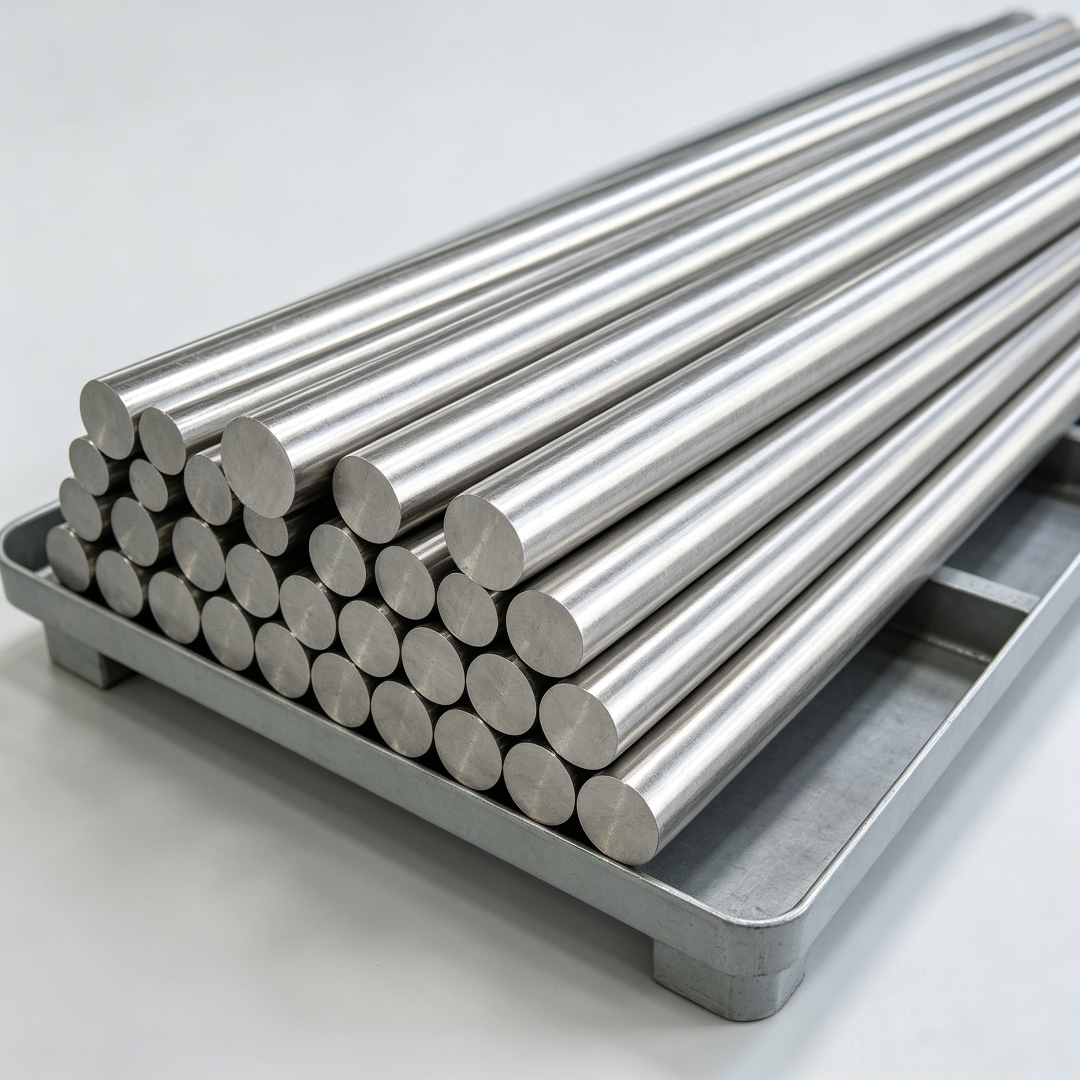
In the semiconductor sector, the high-purity tantalum sputtering target (with a purity of 99.999%) customized by Qingchuan for a leading enterprise increased chip yield from 82% to 95%, resulting in an annual profit increase of over RMB 20 million for a single production line. In the aerospace sector, its GH4169 alloy blades passed a 1,000-hour fatigue test (exceeding the industry standard of 800 hours), extending the lifespan of a certain engine model by 20%.
FAQ Q&A Technical Selection Guide
Q1: How to choose a supplier of high-purity metals?
STEP 1: Examine the purity test report. Require suppliers to provide ICP-MS test data, with a focus on the content of key impurities such as Fe and Si. For example, the Fe content in Qingchuan's high-purity aluminum is ≤0.0003%, and the Si content is ≤0.0002%, far surpassing the ASTM B899 standard. STEP 2: Evaluate processing capabilities. Confirm whether the supplier possesses ultra-pure process equipment such as vacuum melting and zone refining. Qingchuan's vacuum induction furnace can achieve a vacuum level of 10⁻³ Pa, effectively reducing the incorporation of gaseous impurities. STEP 3: Verify application cases. Prioritize companies with experience supplying to high-end fields such as semiconductors and aerospace. Qingchuan has provided products to clients such as SMIC and AECC, with cumulative deliveries of over 500 tons of high-purity metals.
Q2: How to solve the problem of segregation in special alloy compositions?
STEP 1: Optimize the smelting process. The adoption of electromagnetic stirring technology (frequency: 50-100 Hz) can significantly enhance melt fluidity and reduce composition segregation. Qinchuan's electromagnetic stirring system can improve the uniformity of alloy composition by 40%. STEP 2: Control the cooling rate. Grain refinement and a reduced risk of segregation can be achieved through staged cooling (600°C/h → 300°C/h → 100°C/h). Qinchuan's homogenizing annealing process can control the grain size of GH4169 within ASTM grades 6-8. STEP 3: Strengthen process inspection. Use SEM-EDS (scanning electron microscope-energy dispersive spectrometer) to monitor composition distribution in real time, and immediately adjust the process if the deviation exceeds 5%. Qinchuan's online inspection system enables composition sampling once per minute.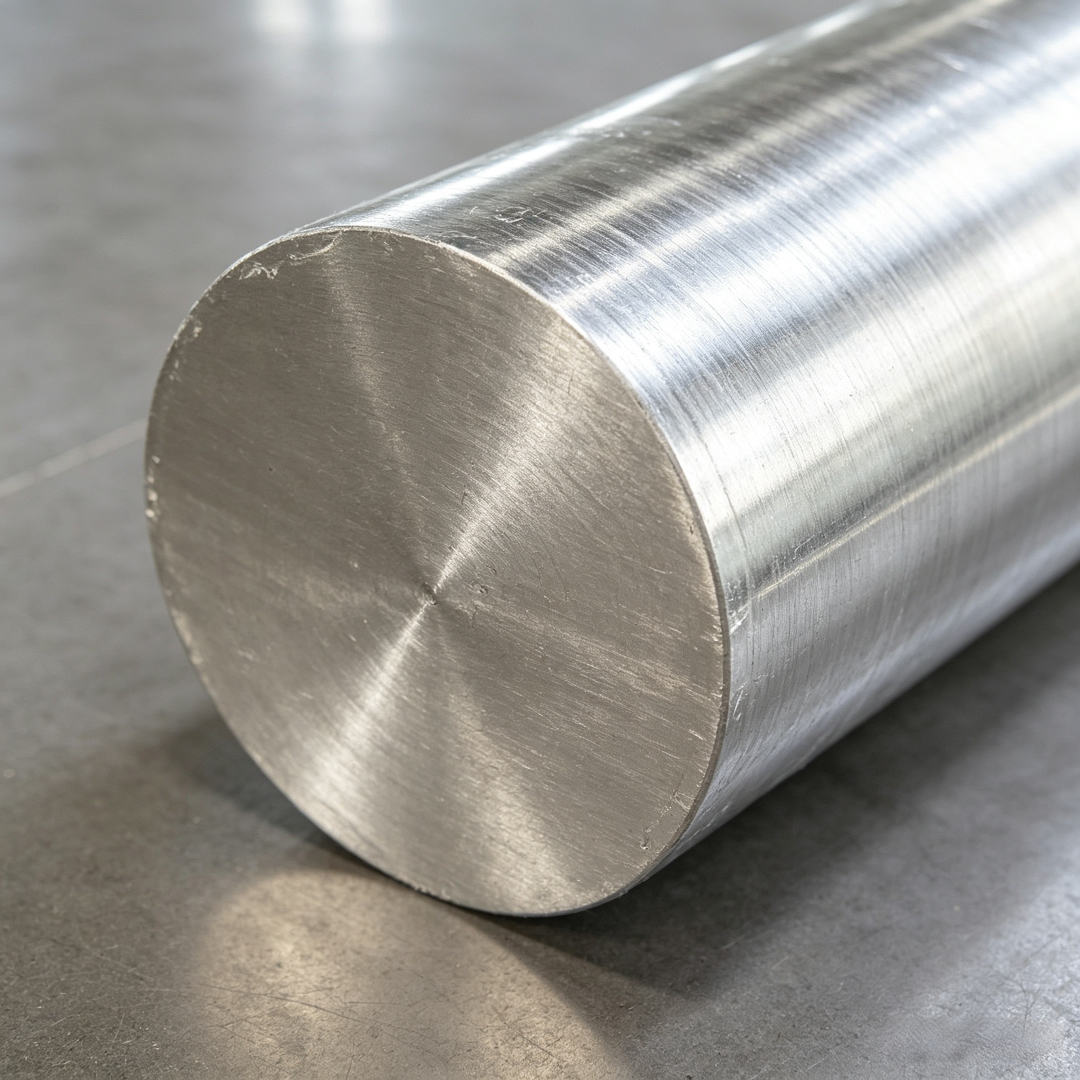
Q3: How to control deformation in precision machining?
STEP 1: Select superplastic materials. The material elongation should be ≥300%. For example, Qingchuan's TA15 titanium alloy has an elongation of 350%, representing a 50% improvement over ordinary titanium alloys. STEP 2: Optimize processing parameters. Low-temperature forming (200-300℃) can reduce deformation resistance. When combined with molds featuring 0.01mm-level precision, the deformation rate of thin-walled parts can be controlled within 5%. STEP 3: Introduce laser welding. Compared to traditional argon arc welding, laser welding reduces the heat-affected zone by 80%, minimizing post-processing deformation. Qingchuan's laser welding equipment has a power stability of ≤±1%, ensuring welding quality.
Reference for full text summary
Technological breakthroughs in high-purity metals and special alloys require coordinated efforts in purity control, compositional uniformity, and precision machining. Qingchuan New Materials (Zhengzhou) Co., Ltd. has addressed long-standing industry challenges such as insufficient purity, severe segregation, and machining deformation through its "ultra-purification-compositional homogenization-precision machining" technology chain. Its products have been widely applied in semiconductors, aerospace, new energy, and other fields, cumulatively reducing costs for customers by over RMB 50 million. Looking ahead, with the rapid development of industries such as 5G and new energy vehicles, demand for high-purity metals and special alloys will continue to grow. Qingchuan will further deepen its technological R&D to provide superior material solutions for high-end manufacturing. For more information, please visit our official website:www.qingchuansuperalloy.com