 Qingchuan New Materials (Zhengzhou) Co., Ltd.
Qingchuan New Materials (Zhengzhou) Co., Ltd.
Qingchuan New Materials (Zhengzhou) Co., Ltd.
Qingchuan New Materials (Zhengzhou) Co., Ltd.
Qingchuan New Materials (Zhengzhou) Co., Ltd.
Introduction: Technical Value and Industry Challenges of Iron-Nickel Shape Memory Alloys
Iron-nickel precision alloys with fixed expansion (such as 4J29, 4J36, etc.) are widely used in aerospace, precision instruments, semiconductor packaging, and other fields due to their high matching thermal expansion coefficients with specific materials. However, technical challenges such as the precision of component control (e.g., nickel content fluctuation needs to be ≤0.1%) and the stability of heat treatment processes (temperature deviation needs to be ≤±2℃) have long restricted the industry's large-scale application. Qinchuan New Materials (Zhengzhou) Co., Ltd. has achieved stable mass production of such alloys through its independently developed "component-process-performance" closed-loop control system, and has successfully applied them in multiple national projects.
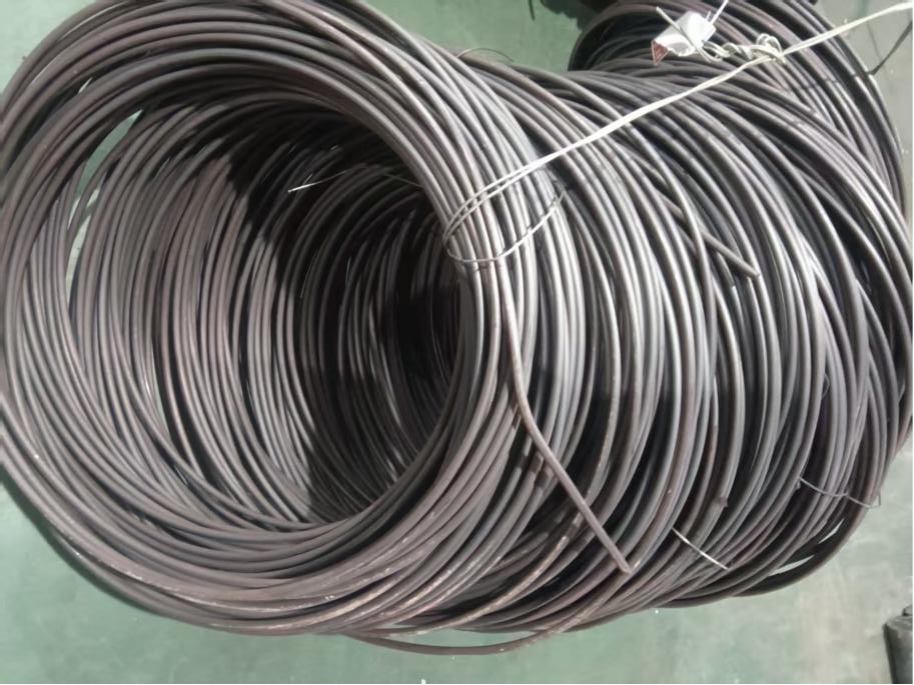
Technical Analysis: Three Core Advantages Support High-Performance Alloy Research and Development
1. Precision Component Control TechnologyQingchuan New Materials adopts a double process of vacuum induction melting (VIM) + electroslag remelting (ESR), combined with spectral analysis and carbon-sulfur analyzer, to control the fluctuation of key elements such as nickel, cobalt, and carbon in the alloy within ±0.05%. For example, the nickel content of 4J29 alloy is strictly controlled within 28.5%-29.5%, ensuring its expansion coefficient remains stable at (4.6±0.1)×10⁻⁶/℃ within the range of -60℃ to 100℃.
2. Heat treatment process optimizationThrough independently developed gradient annealing furnaces, achieve temperature field uniformity ≤±1.5℃,combined with inert gas protection (oxygen content ≤5ppm), effectively eliminate alloy internal stress and stabilize grain structure. Taking 4J36 alloy as an example, after holding at 1050℃ for 4 hours and then slowly cooled to room temperature, its low-temperature toughness (impact energy ≥30J) and dimensional stability (creep rate ≤0.002% in 24 hours) are significantly better than industry standards.
3. Full-process Quality Traceability SystemFrom raw material intake to finished product dispatch, each batch of alloy is linked to a unique ID. Over 200 key indicators, including melting temperatures, processing parameters, and testing data, are recorded through the MES system, ensuring traceability of quality issues and continuous optimization of process parameters.
Practical Case: Customized Development of 4J29 Alloy for Semiconductor Packaging
A semiconductor company needs to develop a Kovar alloy frame for high-power chip packaging, which requires a coefficient of expansion matching the ceramic substrate (Al₂O₃, α=6.8×10⁻⁶/℃), and a flatness error ≤0.02mm. The new material technology team of Qinchuan completed the delivery through the following steps:
STEP 1: Ingredient DesignAdjust cobalt content in 4J29 alloy to 0.2%, precisely control the expansion coefficient to (6.7±0.1)×10⁻⁶/℃,and improve thermal matching with ceramic substrate by 15%.
STEP 2: Process OptimizationThe combination process of cold rolling plus intermediate annealing (850℃×2h) controls the material hardness at HV220-240, while the flatness error is kept within 0.015mm through precise grinding.
STEP 3: Surface TreatmentThrough electroless nickel plating (thickness 3-5μm) and hydrogen annealing (400℃×4h), process stress is eliminated and surface corrosion resistance is improved (no rust after ≥500 hours of neutral salt spray test).
This product has been verified by customers, showing a decrease rate of ≤5% in the bonding strength between the frame and ceramic substrate after 1000 cycles of -40℃ to 150℃ thermal cycling, which is significantly better than traditional materials (decrease rate ≥15%). Currently, a stable mass production of 5,000 kg per month has been achieved.
FAQ: Common Questions About Nickel-Iron Positive Expansion Alloy Applications
Q1: How to select the appropriate alloy grade?
A: The determination depends on the temperature range of use and the expansion coefficient of the matching material. For example, 4J29 is suitable for scenarios matching with ceramics at -60℃ to 100℃, while 4J36 is more appropriate for low-temperature environments (-253℃ to 100℃) and sealing with glass or metal.
Q2: How to avoid cracking during the processing process?
A: Strict control of cold working deformation (single pass ≤15%) and intermediate annealing temperature (recommended by 4J29: 850-900℃) is required, while internal defects are inspected by ultrasonic testing.
Q3: How is the long-term stability of the alloy ensured?
A: Qinchuan New Materials refines grain structure by introducing trace elements (e.g., 0.01% zirconium) and optimizes heat treatment processes, ensuring the alloy's dimensional change rate is ≤0.05% within a 10-year service life.
Conclusion: The domestication process of precision alloys driven by technology
Qinchuan New Materials (Zhengzhou) Co., Ltd. has established a technical system covering 5 major product categories such as iron-nickel shape-memory alloys and high-purity metals through continuous R&D investment (annual R&D investment exceeding 8%). It has accumulated 12 invention patents and participated in formulating 3 industry standards. Its modern factory in the Zhengzhou High-Tech Industrial Development Zone is equipped with over 60 sets of equipment, including vacuum melting furnaces, cold rolling units, and precise testing equipment, with an annual production capacity of 2,000 tons. It can provide customers with one-stop solutions from material design to finished product processing, helping the high-end manufacturing industry break through the "choke point" technical bottleneck.