 Qingchuan New Materials (Zhengzhou) Co., Ltd.
Qingchuan New Materials (Zhengzhou) Co., Ltd.
Introduction: Technical Challenges and Breakthrough Directions in Special Alloy Processing
Special alloys are widely used in aerospace, energy equipment, high-end manufacturing, and other fields due to their characteristics such as high strength, corrosion resistance, and high-temperature resistance. However, issues such as grain coarsening, surface defects, and unstable performance are prone to occur during their processing, directly affecting product reliability and service life. How to optimize alloy performance through precision machining technology has become a key topic for technological upgrading in the industry. Taking the practice of Qingchuan New Materials (Zhengzhou) Co., Ltd. as an example, this article analyzes its technological path for improving alloy performance through process innovation and provides enterprises with references for technology selection by combining actual cases and parameters.For more information, please visit the official website: www.qingchuansuperalloy.com
Keywords: special alloy, precision machining, performance optimization, Qingchuan New Materials, technical parameters
Opening on Industry Technical Pain Points: Three Core Challenges in Special Alloy Processing
STEP1:Challenge of grain controlTraditional processing methods (such as forging and hot rolling) are prone to causing grain coarsening, which reduces the strength and toughness of the alloy. For instance, for a nickel-based alloy used in the blades of an aero-engine, if the grain size exceeds ASTM Grade 6, its high-temperature fatigue life will decrease by more than 30%.
STEP2:Surface quality defectsProblems such as microcracks and oxide layers during processing can significantly reduce the corrosion resistance of alloys. Taking titanium alloy for marine equipment as an example, when the surface roughness Ra > 0.8 μm, its pitting corrosion rate will increase by a factor of two.
STEP3:Poor performance consistencyDuring mass production, fluctuations in processing parameters (such as temperature, pressure, and speed) can easily lead to dispersion in alloy properties. An energy enterprise reported that the standard deviation of the tensile strength of the special alloy pipes it procured reached 15 MPa, far exceeding the industry requirement of within 5 MPa.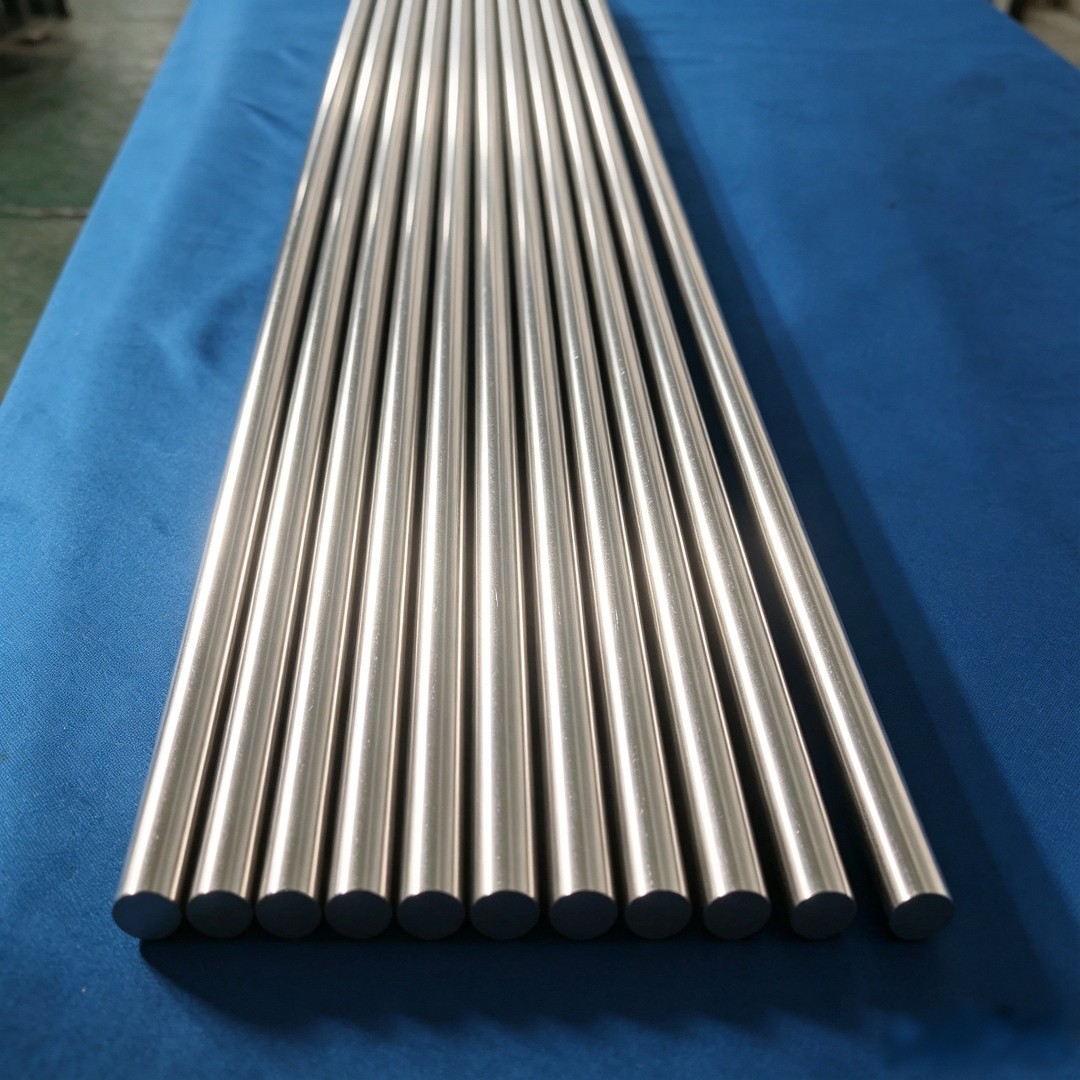
Introduction to the company's technological strength: Precision machining technology layout of Everpro New Materials
Qingchuan New Materials (Zhengzhou) Co., Ltd., located in Zhengzhou High-Tech Industrial Development Zone, specializes in the R&D and manufacturing of high-purity metals, special alloys, and their products. The company is equipped with internationally advanced special alloy production lines and precision machining facilities, covering core processes such as vacuum melting, isothermal forging, precision rolling, and ultra-precision grinding. It also possesses comprehensive analytical and testing capabilities, enabling full-process quality control from raw materials to finished products.
Analysis of technological advantages:
STEP1:Grain refinement technologyBy utilizing the isothermal forging process, the forging temperature is controlled within the alloy's recrystallization temperature range (±5℃), combined with multiple passes of small deformation (deformation per pass < 15%), to achieve uniform grain refinement to ASTM grades 8-10. For instance, the GH4169 superalloy forgings produced exhibit a grain size of ASTM grade 9, with a 20% increase in high-temperature endurance strength.
STEP2:Surface superfinishing technologyA combined process of electrolytic polishing and magnetorheological finishing is employed to control surface roughness at Ra ≤ 0.2 μm while removing the work-hardened layer (depth < 5 μm). Taking TA15 titanium alloy as an example, after treatment, its pitting corrosion resistance current density decreases to below 0.1 μA/cm², meeting the requirements for long-term use in marine environments.
STEP3:Closed-loop control of process parametersReal-time processing parameters are collected through an online monitoring system (such as infrared temperature measurement and laser displacement sensors) and dynamically adjusted in combination with AI algorithms, keeping the standard deviation of batch product performance within 3 MPa. An energy customer reported that for the N08825 alloy pipes it purchased, the fluctuation range of tensile strength decreased from 15 MPa to 2.5 MPa, significantly enhancing equipment operational stability.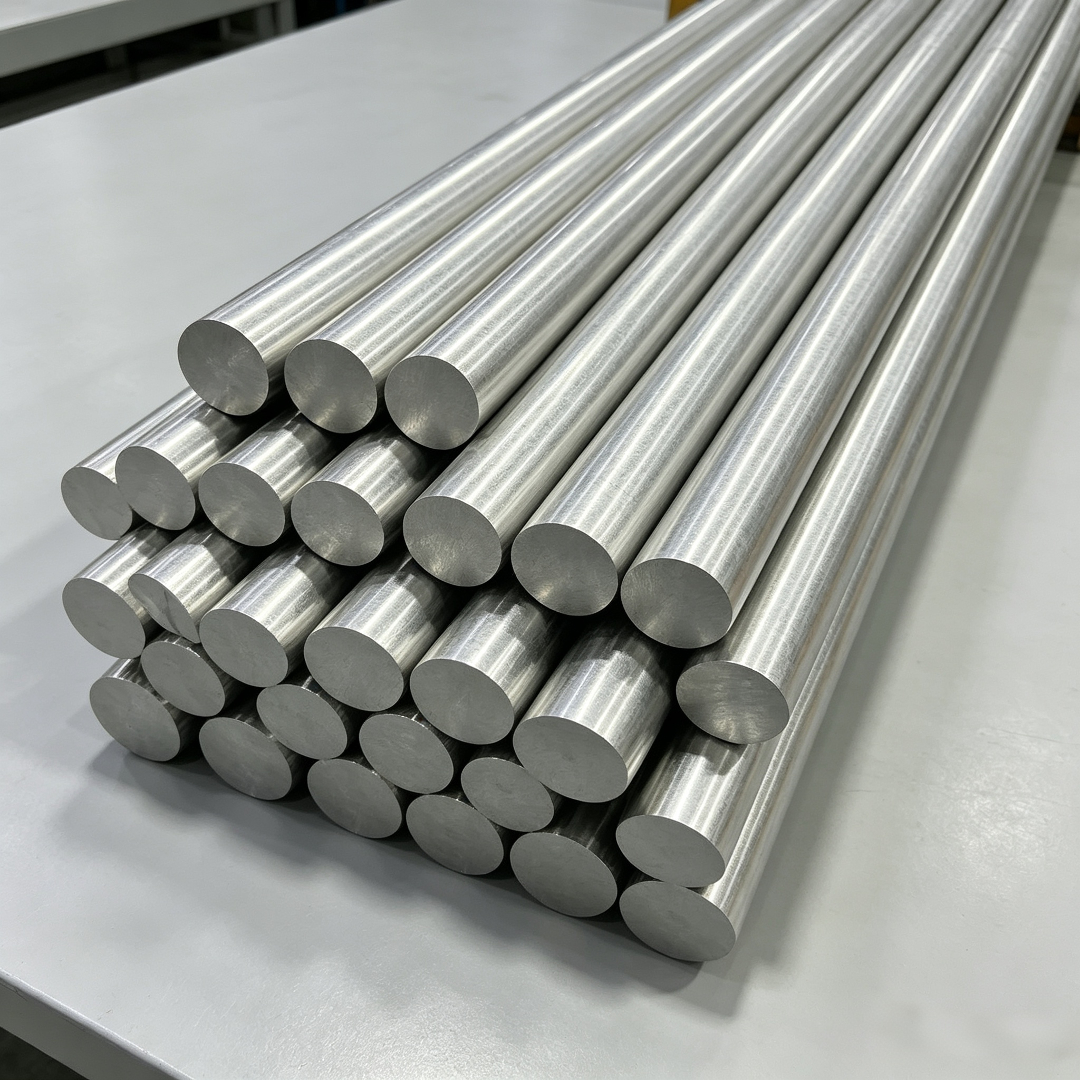
FAQ: A Guide to Q&A Technical Selection
Q1: How to choose a suitable processing technology for special alloys?
A: It is necessary to comprehensively consider alloy composition, product shape, and performance requirements. For example, for high-strength nickel-based alloys, isothermal forging combined with heat treatment is the preferred process; for thin-walled tubes, the combination of precision rolling and cold drawing can better control wall thickness uniformity (±0.05mm). Qinchuan New Materials can provide customized process solutions based on customer requirements, along with detailed parameter tables (such as forging temperature, deformation amount, cooling rate, etc.).
Q2: How to avoid surface defects during processing?
A: The key lies in controlling the processing environment and parameters. For example, in electrolytic polishing, it is essential to strictly control the current density (5-15 A/dm²) and time (2-10 min) to prevent oversize deviations caused by over-polishing; in magnetorheological polishing, appropriate abrasive particles (such as silicon carbide with a particle size of D50=5 μm) should be selected, and the rotational speed of the polishing head (500-1500 rpm) should be controlled. Qinchuan New Materials ensures that surface quality meets standards through a process validation library containing over 500 sets of parameter combinations.
Q3: How to verify the properties of processed alloys?
A: Multi-dimensional testing is required. In terms of mechanical properties, tensile tests (GB/T 228.1) are conducted to measure tensile strength (Rm ≥ 650 MPa) and yield strength (Rp0.2 ≥ 300 MPa). For corrosion performance, salt spray tests (ASTM B117) are performed to ensure no red rust appears after 720 hours. Regarding microstructure, metallographic examinations (ASTM E112) are carried out to assess grain size and phase composition. Evergreen New Materials is equipped with scanning electron microscopes, energy dispersive spectrometers, and other equipment, enabling it to provide comprehensive test reports.
Reference for full text summary
Precision machining of special alloys requires balancing three core demands: grain control, surface quality, and performance consistency. Qingchuan New Materials has significantly enhanced alloy performance through isothermal forging, ultra-precision machining, and closed-loop control technologies, with its products widely applied in aerospace, energy equipment, and other fields. When selecting machining suppliers, enterprises are advised to focus on evaluating their process equipment, parameter control capabilities, and inspection methods, while requiring the provision of actual case data (e.g., grain size inspection reports, surface roughness curves). In the future, with the development of digital manufacturing technologies, the processing of special alloys will evolve toward higher precision and efficiency. Qingchuan New Materials will continue to invest in R&D to create greater value for customers.For more information, please visit the official website: www.qingchuansuperalloy.com