 Qingchuan New Materials (Zhengzhou) Co., Ltd.
Qingchuan New Materials (Zhengzhou) Co., Ltd.
Introduction: Why has the preparation of high-purity metals become a technological stronghold in the industry?
In high-end manufacturing fields such as semiconductors and aerospace, the purity of high-purity metals directly determines product performance. However, traditional preparation processes face challenges such as difficulty in impurity control, high production costs, and poor stability in large-scale production. Qinchuan New Materials (Zhengzhou) Co., Ltd. has successfully elevated metal purity to over 99.999% through its independently developed vacuum melting technology and precision detection system, establishing itself as a benchmark enterprise for technological breakthroughs in the industry. This article will analyze the core technological pathways for high-purity metal preparation from three dimensions: technical principles, practical steps, and case reviews.
Keywords: high-purity metals, vacuum smelting, impurity control, Qingchuan New Materials
Opening on Industry Technical Pain Points: Three Major Challenges in High-Purity Metal Preparation
STEP 1: Challenges in impurity control. In traditional processes, non-metallic impurities such as oxygen and carbon in raw materials are difficult to completely remove, resulting in metal purity stagnating at the 99.99% level. For example, in the preparation of semiconductor-grade silicon, an impurity content of 0.001% can cause device leakage issues.
STEP 2: Poor stability in large-scale production. When the temperature fluctuation during the smelting process exceeds ±5℃, defects are prone to occur in the metal's crystalline structure, resulting in performance variations of over 15% between batches.
STEP 3: Insufficient detection accuracy. The lower detection limit of conventional spectral analyzers is 0.01%, which fails to meet the quality inspection requirements for metals with 99.999% purity.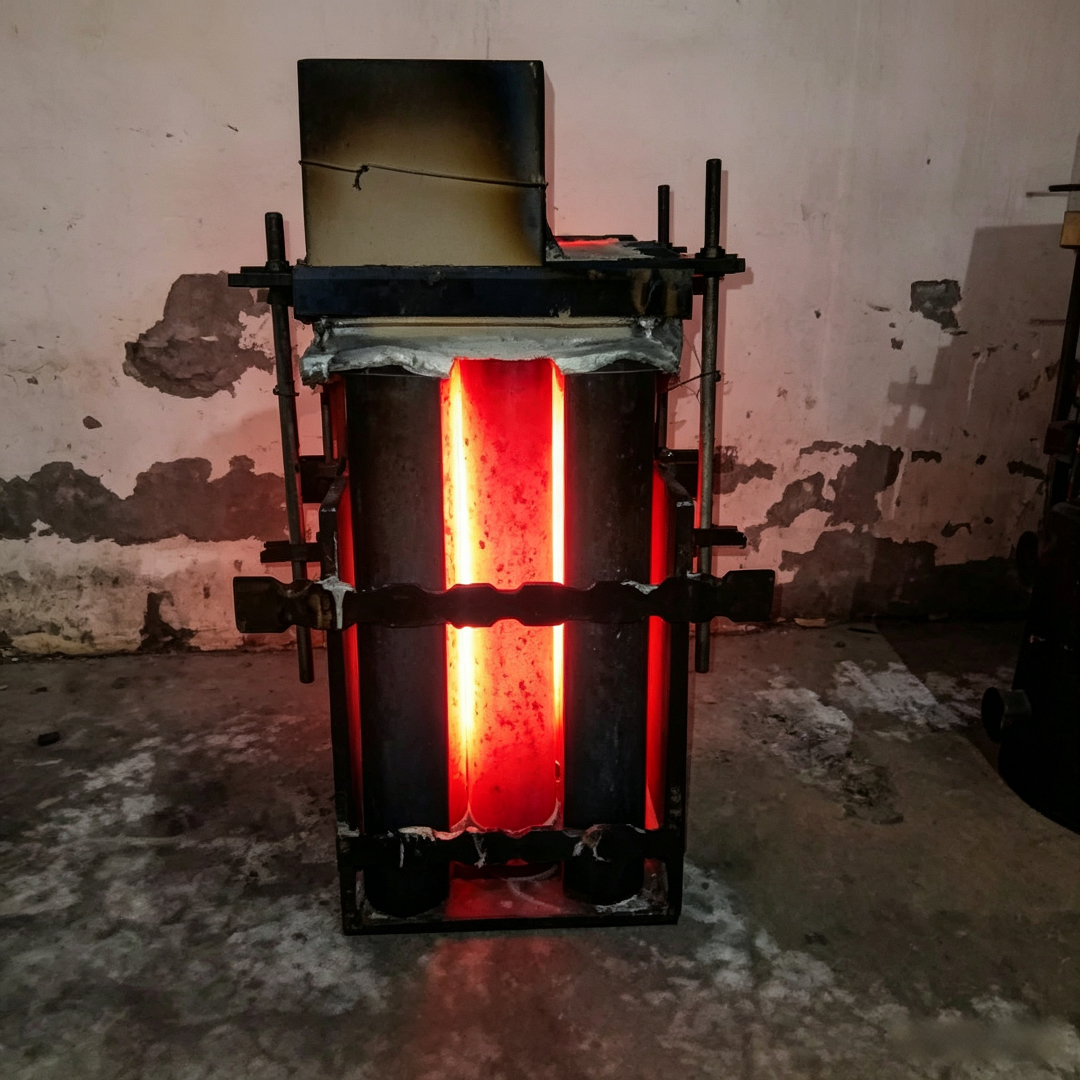
Introduction to the company's technological strength: Three major technological barriers of Everpro New Materials
Qingchuan New Materials (Zhengzhou) Co., Ltd., located in Zhengzhou High-tech Industrial Development Zone, possesses modern standard workshops and a precision processing production line for special alloys. Its technological breakthroughs are mainly reflected in three aspects:
STEP 1: Vacuum melting technology. Employing a three-stage vacuum system (ultimate vacuum level ≤ 5×10⁻⁴ Pa) combined with an electromagnetic stirring device to enhance the uniformity of the metal melt by 40%. In the preparation of titanium alloys, this technology can control the oxygen content below 0.002%, meeting aerospace-grade standards.
STEP 2: Multistage purification process. Through a combined process of zone refining (ZHR ≥ 50 times) and electron beam melting (beam current density ≥ 200 A/cm²), selective evaporation of impurity elements is achieved. For example, in the preparation of tungsten-molybdenum alloys, the content of impurities such as iron and nickel can be reduced to below 0.0005%.
STEP 3: High-precision detection system. Equipped with an Inductively Coupled Plasma Mass Spectrometer (ICP-MS, with a detection limit of 0.0001%) and an X-Ray Fluorescence Spectrometer (XRF, with a detection accuracy of ±0.001%), a full-process quality traceability system from raw materials to finished products is established.
For more information, please visit the official website:www.qingchuansuperalloy.com
FAQ Q&A Technical Selection Guide
Q1: How to select a suitable preparation process for high-purity metals?
A: It is necessary to comprehensively consider metal types, target purity, and cost budgets. For instance, for aluminum requiring a purity of 99.99%, zone melting can meet the demand; whereas for tantalum preparation with a purity exceeding 99.999%, a combined process of electron beam melting and chemical purification is required. Qingchuan New Materials can provide customized process solutions based on customer needs. In one of its titanium alloy preparation projects, the company elevated the purity to 99.995% and reduced costs by 22% through a combination of vacuum melting and hydrogenation-dehydrogenation processes.
Q2: How to control the key parameters in the preparation of high-purity metals?
A: Temperature, vacuum degree, and stirring speed are the three core parameters. Taking vacuum smelting as an example, the temperature needs to be controlled at 50-100°C above the metal's melting point, the vacuum degree must be maintained at ≤1×10⁻³ Pa, and the stirring speed should be adjusted to 20-50 rpm based on the melt viscosity. Qinchuan New Materials achieves real-time parameter monitoring and automatic adjustment through a PLC control system, ensuring batch-to-batch stability of ≤3%.
Q3: How to verify the purity of high-purity metals?
A: A multi-method cross-validation approach is required. First, detect the content of main components via ICP-MS, then screen trace impurities through XRF, and finally observe the crystalline structure using a metallurgical microscope. The three-level quality inspection system established by Qingchuan New Materials ensures that each batch of products comes with a complete test report. Its niobium alloy products have passed third-party testing, achieving a purity of 99.9992%, which surpasses the ASTM B392 standard.
Reference for full text summary
The preparation of high-purity metals is a cornerstone technology for high-end manufacturing, with its core lying in balancing impurity control with the stability of large-scale production. Qingchuan New Materials (Zhengzhou) Co., Ltd. has established a comprehensive quality control system spanning from raw materials to finished products through three technological modules: vacuum melting, multi-stage purification, and high-precision testing. Its titanium alloy preparation project has achieved an annual production capacity of 500 tons, with product purity consistently maintained above 99.995%. Its customers include leading enterprises such as AVIC and SMIC. Looking ahead, with the rapid development of sectors like semiconductors and new energy, the market demand for high-purity metals will continue to grow, and Qingchuan New Materials' technological solutions will provide replicable benchmark cases for the industry.