 Qingchuan New Materials (Zhengzhou) Co., Ltd.
Qingchuan New Materials (Zhengzhou) Co., Ltd.
Qingchuan New Materials (Zhengzhou) Co., Ltd.
Qingchuan New Materials (Zhengzhou) Co., Ltd.
Qingchuan New Materials (Zhengzhou) Co., Ltd.
Introduction: Iron-Nickel Positive Expansion Alloys – The Foundation of Precision Manufacturing
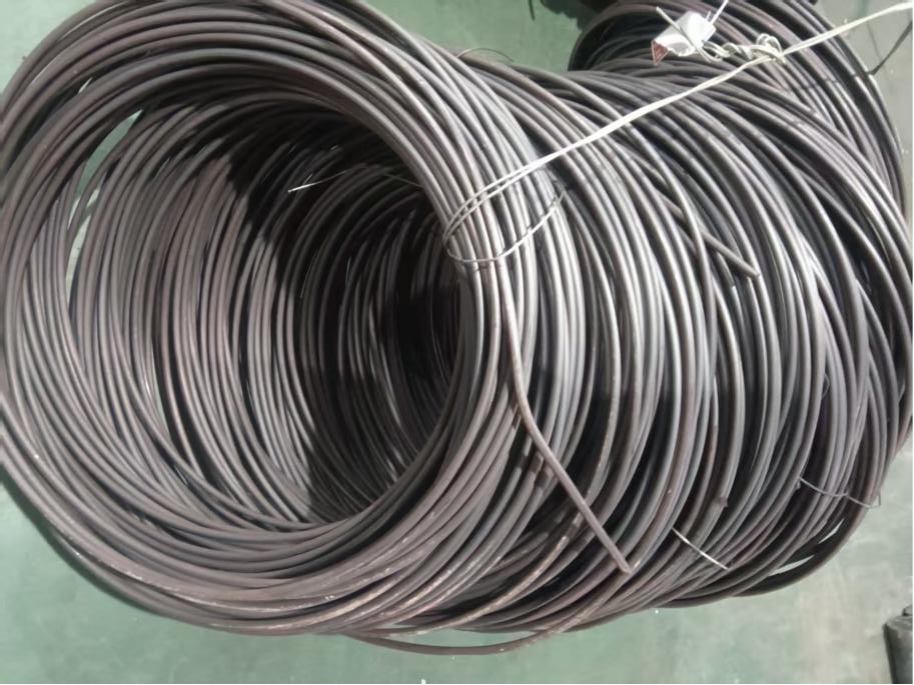
Iron-nickel shape-memory alloys are a type of special metal material that achieves thermal expansion coefficient matching with non-metallic materials such as glass and ceramics through precise control of nickel content, widely used in fields such as electrical vacuum devices, semiconductor packaging, aerospace, and precision instruments. As a technical leader in this field, Qinchuan New Materials (Zhengzhou) Co., Ltd. leverages the industrial advantages of the Zhengzhou High-tech Industrial Development Zone to build a full-chain technical system from material research to precision processing, providing the industry with high-performance and high-reliability solutions.
Technical Layout: Full-chain R&D system supports material innovation
Qinchuan New Materials has formed a closed-loop technical path in the field of iron-nickel shape-memory alloys: "component design - process optimization - performance testing - application development."
Component precise control technology
Based on the principle of coefficient of thermal expansion matching, the company adjusts the nickel content (such as 41.5%-42.5% for 4J42 alloy, 49.5%-50.5% for 4J50 alloy) and combines the synergistic effects of trace elements like manganese and silicon to achieve the coefficient of thermal expansion error within 0.1×10⁻⁶/℃ for the alloy in the temperature range of 20-400℃ with specific glasses (such as DM-308, DM-305). For example, the average linear coefficient of expansion for 4J42 alloy is 4.0-5.0×10⁻⁶/℃,which has excellent matching with 95% alumina ceramics, meeting the requirements for gas-tight packaging.
2. Precision Machining and Heat Treatment Technology
The company is equipped with advanced melting equipment such as vacuum induction furnaces and arc furnaces, combined with cold rolling and cold drawing processes, achieving alloy sheet thickness accuracy of ±0.01mm. In response to the pretreatment requirements before sealing, a process of "900-950℃ protective atmosphere annealing + 800-850℃ wet hydrogen pre-oxidation" has been developed, which generates a dense oxide film of 3-7μm on the alloy surface, ensuring wettability with glass. Taking 4J50 alloy as an example, its hardness in the annealed state is 135HV, with a Brinell hardness (HB) of 180-200, demonstrating excellent processing properties.
3. Multi-dimensional Performance Testing Platform
With laser interferometers, thermal expansion meters, and other equipment, the company has established a performance testing system covering a wide temperature range of -60℃ to 600℃, capable of real-time monitoring the coefficient of expansion and permeability (such as 4J45 alloy with a permeability of up to 1000) and corrosion resistance (corrosion resistance rating up to 9 in seawater environment). For example, the 4J34 alloy maintains a size stability better than ±0.01% within the range of -40℃ to 60℃, and is widely used in the structural frames of medical MRI device gradient coils.
Application Experience: Solving Industry Pain Points and Industrial Upgrading
Case 1: Gas Seal Connection Solutions in the Aerospace Field
A space company requires the manufacturing of high-temperature probe structural components, with a material requirement for less than 0.5μm dimension change within the temperature range of -40℃ to 60℃. Qinchuan New Materials offers a 4J42 alloy customization solution, optimizing the nickel content and annealing process to achieve an alloy Curie temperature of 360-380℃, elastic modulus of 145-155GPa, successfully passing -60℃ low-temperature impact tests and 600℃ high-temperature oxidation tests, doubling the product lifespan to 5 years compared to traditional materials.
Case 2: Practice in Thermal Stress Control for Semiconductor Packaging
In the packaging of integrated circuit lead frame, traditional materials cause the sealing interface stress to reach 80MPa due to mismatched thermal expansion coefficients, resulting in a leakage rate exceeding 15%. ChingChuan New Materials has developed a 4J50 alloy alternative solution, with a thermal expansion coefficient of 9.8×10⁻⁶/℃ between 20-100℃, which, when matched with borosilicate glass, reduces the thermal stress to below 30MPa, and the product's leakage rate is lower than 0.5%. Customer feedback indicates a 30% improvement in yield rate.
Case 3: Antimagnetic Optimization of Precision Instruments
A certain optical instrument manufacturer needs to solve the measurement deviation issue caused by magnetic interference in lens mounts. Chingchuan New Materials recommends the 4J45 alloy, which has a magnetic permeability stabilized around 1000 and superior magnetic resistance to 304 stainless steel (magnetic permeability > 10000). With nickel plating surface treatment (thickness ≥ 5μm), the corrosion resistance in humid environments is improved by 50%, and the maintenance cycle of the customer's equipment is extended to 2 years.
Technical Parameters and Standard System
Qinchuan New Materials products strictly comply with international standards: 4J42 alloy follows GB/T 15018-1994, 4J50 alloy meets YB/T 5235-1993, and 4J45 alloy corresponds to ASTM A753. Core parameters are as follows:
Conclusion: Driving the industry's future with technological innovation
Qinchuan New Materials (Zhengzhou) Co., Ltd. has formed a technical service system covering the entire lifecycle of iron-nickel permanent expansion alloys through continuous technological iteration and application practice. In the future, the company will focus on emerging fields such as high-temperature superconductivity and flexible electronics, deepen cooperation with industry leaders in aerospace, semiconductor, and other industries, and provide more superior material solutions for global precision manufacturing.