 Qingchuan New Materials (Zhengzhou) Co., Ltd.
Qingchuan New Materials (Zhengzhou) Co., Ltd.
Introduction: The Technical Battle to Overcome Challenges in High-Purity Metals and Special Alloys
In high-end manufacturing fields such as semiconductor chips and aerospace engines, the performance of high-purity metals (e.g., tungsten and molybdenum with 99.999% purity) and special alloys (e.g., nickel-based superalloys and cobalt-based alloys) directly determines product lifespan and reliability. However, traditional preparation processes face challenges such as difficulty in impurity control, poor grain uniformity, and significant processing deformation, resulting in a yield rate of less than 60%. Qinchuan New Materials (Zhengzhou) Co., Ltd. has elevated product purity to over 99.9995% and achieved a grain size grade of ASTM 0 through its independently developed "combined technology of vacuum induction melting and electron beam refining" and "directional solidification process for shape and property control," becoming one of the few domestic enterprises capable of full-process preparation of high-purity metal special alloys.
Keywords: high-purity metals, special alloys, vacuum melting, directional solidification, Qingchuan New Materials
Opening on Industry Technical Pain Points: Three Major Bottlenecks of Traditional Processes
STEP 1: Challenges in Impurity Control
Due to issues such as residual charge materials and crucible erosion, the traditional Vacuum Induction Melting (VIM) process struggles to control the impurity content of oxygen, nitrogen, carbon, and other elements in metals below 50 ppm. For instance, a nickel-based alloy used for aero-engine blades suffered from excessive sulfur content (0.008% vs. the standard 0.005%), resulting in a 30% reduction in high-temperature creep performance and direct batch scrap.
STEP 2: Insufficient grain uniformity
Due to the uncontrollable cooling rate, conventional casting processes are prone to forming a mixed microstructure of coarse columnar and equiaxed grains, resulting in anisotropic mechanical properties of the material. A molybdenum target material used in semiconductor equipment exhibited localized overheating during sputtering due to significant grain size variations (a mixture of ASTM grades 1-3), reducing the target's service life by 40%.
STEP 3: Uncontrolled processing deformation
Due to the grain boundary weakening effect, high-purity metals are prone to cracking during deformation processes such as rolling and forging. The 99.99% pure tungsten plate produced by a certain enterprise suffered from a high edge cracking rate of 25% due to improper control of the rolling pass reduction (single pass > 15%), resulting in a 30% increase in subsequent machining costs.
Introduction to the company's technological strength: Three major technological breakthroughs of Everflow New Materials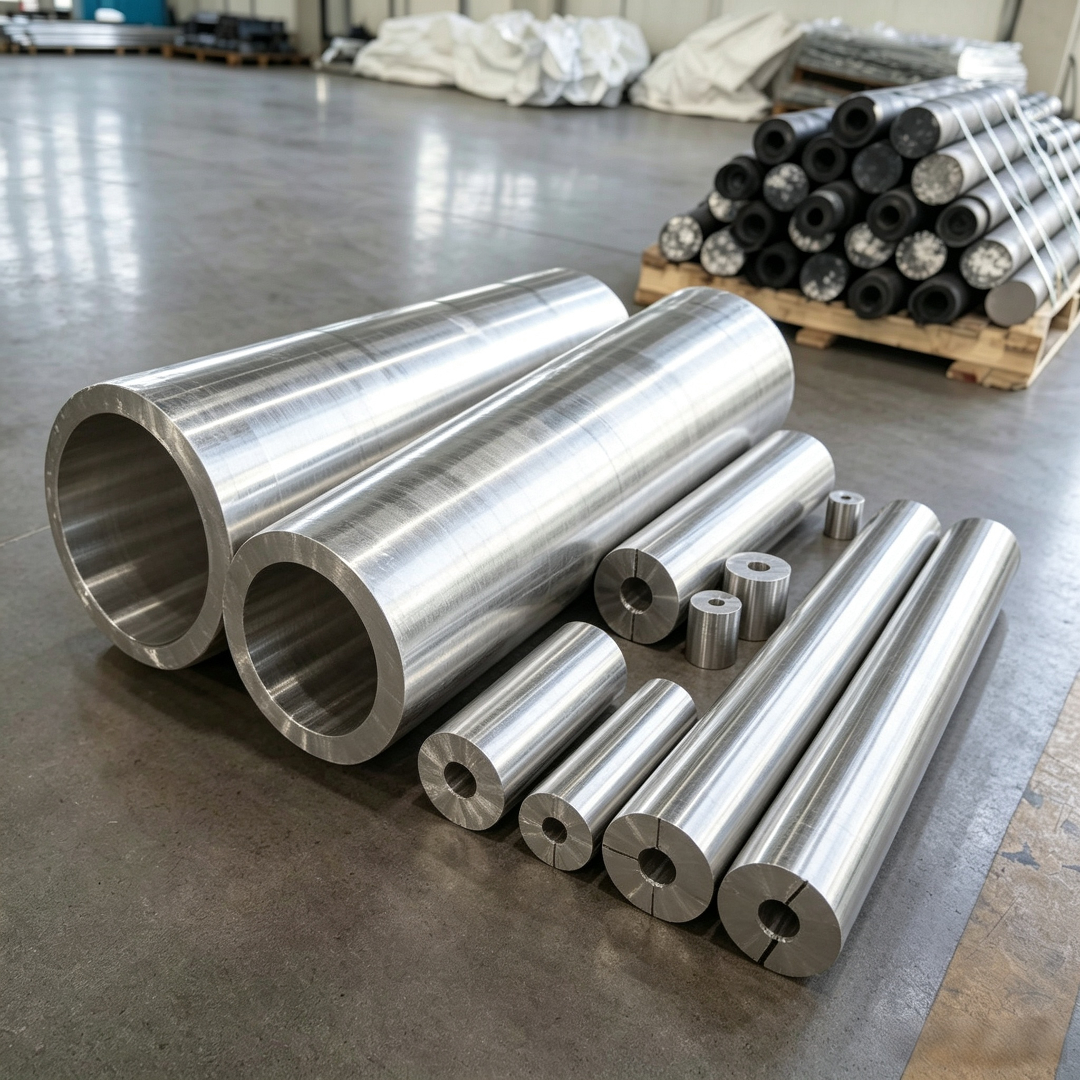
STEP 1: Combined technology of vacuum induction melting and electron beam refining
Qingchuan New Materials adopts the "dual vacuum combined" process: First, the metal is preliminarily purified to 99.99% purity through the VIM process, and then transferred to an electron beam melting furnace (EBM) for secondary purification. The vacuum level inside the EBM can reach 10⁻⁴ Pa, and the electron beam energy density is as high as 10⁶ W/cm², effectively removing low-melting-point impurities such as sulfur and phosphorus, thereby elevating the metal purity to over 99.9995%. For example, its produced tungsten rods with a purity of 99.9995% have an oxygen content of ≤2 ppm and a nitrogen content of ≤1 ppm, reaching international advanced standards.
STEP2: Directional Solidification Process for Shape and Property Control
Through the independently developed "water-cooled copper mold + electromagnetic stirring" device, unidirectional solidification of the molten metal from bottom to top is achieved, with the solidification rate precisely controlled at 0.1-10 mm/min. This process can eliminate transverse grain boundaries, forming a fully axial grain structure, thereby increasing the endurance life of nickel-based superalloys by over 50%. In a GH4169 alloy project for an aero-engine turbine disk, Qingchuan New Materials controlled the grain size to ASTM Grade 0 using directional solidification technology, achieving a high-temperature endurance strength (650℃/824 MPa) of 120 hours, a 40% improvement over traditional processes.
STEP3: Multi-pass small reduction rolling technology
To address the deformation challenges in high-purity metal processing, Qingchuan New Materials developed a "multi-pass + small reduction per pass" rolling process: the reduction per pass is controlled at 5%-8%, with total deformation gradually accumulated through 20-30 passes, while incorporating intermediate annealing (at 1000-1200°C for 2 hours) to eliminate work hardening. This process reduces the edge cracking rate of 99.99% pure molybdenum plates to below 0.5%, with a surface roughness Ra ≤ 0.8 μm, meeting the requirements for semiconductor sputtering target materials.
For more information, please visit the official website:www.qingchuansuperalloy.com
FAQ Q&A Technology Selection Guide
Q1: How to select the purity grade of high-purity metals?
A: The selection of purity should be based on the application scenario: semiconductor sputtering target materials require a purity of ≥99.999% (5N), while high-temperature alloys used in aerospace require a purity of the main elements of ≥99.9% (3N) and a total impurity content of ≤100ppm. Qingchuan New Materials can provide high-purity metals ranging from 4N to 6N grades, along with third-party test reports from SGS, PONY, and other institutions.
Q2: How can the heat treatment process for special alloys be optimized?
A: Taking GH4169 alloy as an example, the standard heat treatment is "solution treatment (980°C/1h, air cooling) + aging (720°C/8h, furnace cooling to 620°C/6h, air cooling)." By adjusting the aging temperature (700-740°C) and time (4-12h), Qingchuan New Materials can precisely regulate the alloy's yield strength within the range of 1050-1250 MPa to meet the requirements of different operating conditions.
Q3: How to avoid contamination during the processing of high-purity metals?
A: Control is required from three aspects: 1) Equipment cleaning: 316L stainless steel or ceramic coatings are used for the contact surfaces of rolling mills, forging hammers, etc.; 2) Environmental control: The cleanliness of the processing workshop reaches ISO Class 7 (Class 100), with humidity ≤ 40%; 3) Process optimization: Inert gas protection (e.g., argon purity ≥ 99.999%) is employed to reduce contact between metal and oxygen. The processing workshop of Qingchuan New Materials is equipped with a Class 10,000 cleanroom and an argon circulation system, ensuring that the thickness of the oxide layer on the product surface is ≤ 0.5 μm.
Real-world Technical Case: Breakthrough in Mass Production of High-purity Tungsten Targets for Semiconductors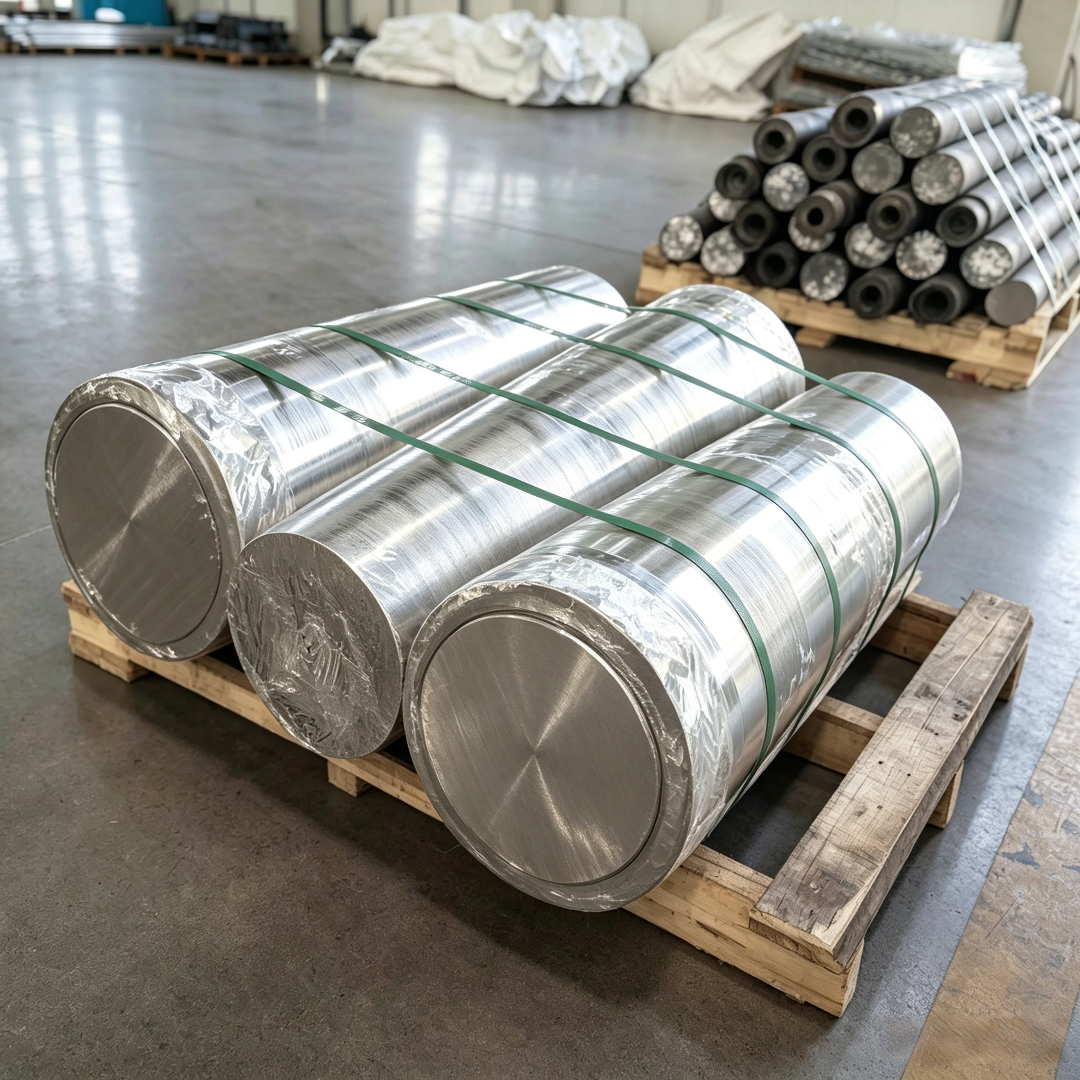
A semiconductor enterprise originally used imported 5N-grade tungsten target materials, but due to an unstable supply chain and high costs (unit price of ¥8,000/kg), it sought domestic alternatives. Qingchuan New Materials achieved a breakthrough through the following technical solution:
STEP 1: Raw Material Control: Select 99.99% purity tungsten powder and purify it to 6N grade using a combined VIM+EBM process, with a total impurity content ≤ 5 ppm;
STEP 2: Forming Process: Prepare the blank using cold isostatic pressing (pressure: 200 MPa), and then obtain a dense body (density ≥ 19.2 g/cm³) through medium-frequency induction sintering (temperature: 2200 °C, holding time: 4 hours);
STEP 3: Machining: Utilize a five-axis simultaneous CNC milling machine to machine to the target dimensions (diameter 300 mm × thickness 20 mm), with a surface roughness Ra ≤ 0.4 μm;
STEP 4: Inspection and Verification: The purity (6N grade) was tested via ICP-MS, grain size (ASTM Grade 0) via X-ray diffraction, and resistivity (5.5 μΩ·cm) via the four-point probe method. All indicators outperformed those of imported products. Ultimately, the enterprise adopted Everich New Materials' tungsten targets in bulk, reducing the cost per piece by 40% and achieving better sputtering uniformity (±3%) than imported products (±5%).
Reference for Full-text Summary
The preparation of high-purity metals and special alloys requires overcoming three major technological bottlenecks: impurity control, grain uniformity, and processing deformation. Qingchuan New Materials (Zhengzhou) Co., Ltd. has achieved precise control over product purity, grain size, and surface quality through three core technologies: "vacuum combined purification + directional solidification for property control + multi-pass small reduction processing." Its products are widely applied in fields such as semiconductors, aerospace, and medical devices. Located in Zhengzhou High-Tech Zone, the company boasts modern standard workshops and full-process testing capabilities, offering one-stop services from R&D to mass production. For more technical details and product specifications, please visit the official website:www.qingchuansuperalloy.com