 Qingchuan New Materials (Zhengzhou) Co., Ltd.
Qingchuan New Materials (Zhengzhou) Co., Ltd.
Qingchuan New Materials (Zhengzhou) Co., Ltd.
Qingchuan New Materials (Zhengzhou) Co., Ltd.
Qingchuan New Materials (Zhengzhou) Co., Ltd.
Introduction: Technical Value and Industry Demand of Iron-Nickel Positive Expansion Alloys
Iron-nickel superalloys, as core materials in precision electronics, aerospace, and other fields, their core function lies in achieving thermal expansion coefficient matching with materials such as soft glass and ceramics through precise control of nickel content (usually 40%-55%), thereby avoiding failure due to sealing stress caused by temperature changes. Qinchuan New Materials (Zhengzhou) Co., Ltd., with its research and development accumulation in high-purity metals and special alloys, has formed a full-chain technical capability in this field, from material design to melting process and application testing, providing the industry with high-performance and high-reliability solutions.
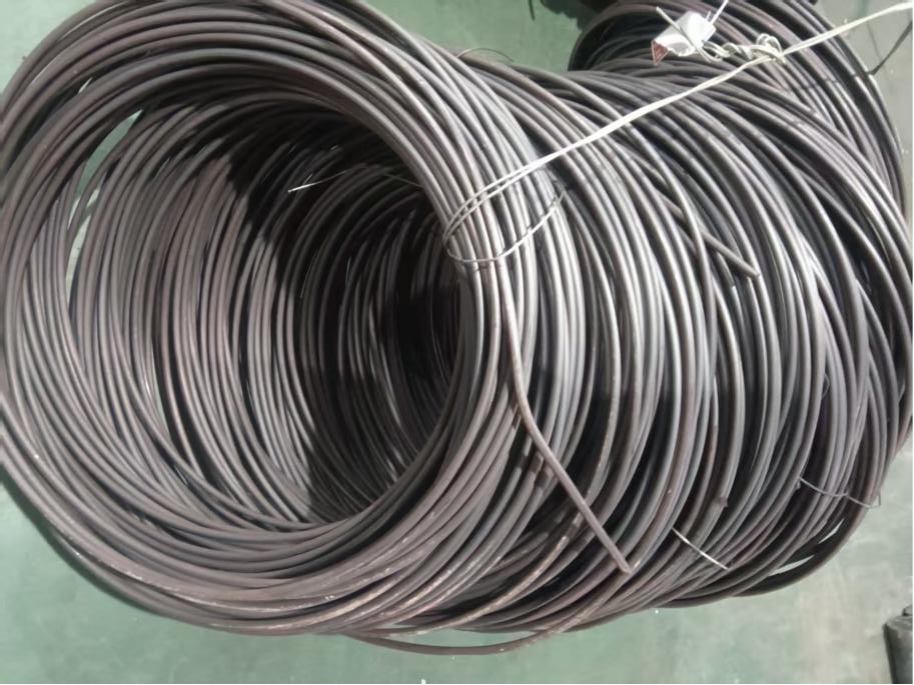
Technical Layout: Systematic innovation from material design to process optimization
Tech layout of Qinchuan New Materials revolves around "material composition-microstructure-performance regulation", forming three core advantages:
Material composition precisely designed
The company has developed a series of iron-nickel fixed expansion alloys by adjusting the ratio of nickel and iron and adding trace alloy elements (such as cobalt and molybdenum). For example, its 4J50 alloy (nickel content 49.5%-50.5%) has a linear expansion coefficient of 4.9-5.3×10⁻⁶/℃ within the temperature range of 20-100℃, which highly matches the expansion coefficient of borosilicate soft glass (such as Pyrex), effectively reducing the stress at the sealing interface. In addition, by adding less than 0.3% silicon element, the alloy's anti-oxidation performance is optimized, and the high-temperature service life is extended.
2. Refining and Casting Process Optimization
To ensure the uniformity and purity of the alloy composition, Qinchuan adopts a dual-process of "Vacuum Induction Melting (VIM) + Electroslag Remelting (ESR)." The VIM process completes the initial melting under a vacuum environment, avoiding gas inclusions; the ESR process further removes harmful elements such as sulfur and phosphorus by heating the slag with an electric current, controlling the oxygen content of the alloy below 0.001%. In the casting stage, the company utilizes directional solidification technology, achieving a columnar grain structure by controlling the cooling rate (usually 1-10℃/s), reducing transverse grain boundaries, and enhancing the alloy's creep resistance. For instance, its K418 cast high-temperature alloy (nickel-based precipitation strengthened type) sees a 20% increase in tensile strength at 900℃ through the directional solidification process, meeting the stringent requirements of aeroengine turbine blades.
3. Refining heat treatment system
Heat treatment is a key process for regulating the microstructure of alloys. Qinchuan formulates differentiated heat treatment plans for different grades of alloys: for 4J50 alloy, adopts the solution heat treatment process of "holding at 850℃±20℃ for 1 hour + rapid cooling below 400℃" to homogenize the size of γ' phase (Ni₃(Al,Ti)), enhancing the shear modulus of the alloy (the stress value per unit strain at a specific temperature); for K418 alloy, achieves a γ' phase volume fraction of over 40% through the two-stage heat treatment of "solution at 1120℃ + aging at 760℃", significantly enhancing the high-temperature strength.
Application Experience: Technology Transfer from Laboratory to Industrialization
The technical value of Qinchuan New Materials has been verified through various industry cases.
Case 1: Domestic Substitution for Aviation Engine Turbine Blades
A certain type of aviation engine turbine blade originally used imported Inconel 713C alloy, which had issues such as high cost and long supply cycle. Qinchuan has developed the K418 alloy with comparable performance through material optimization and process improvement:
Case 2: Reliability Enhancement of Precision Electronic Sealing Structures
A communication equipment manufacturer encountered a low yield rate of less than 70% in producing 5G base station filters due to mismatched expansion coefficients between sealing materials and ceramic substrates. Qinchuan offers a 4J50 alloy solution:
Provide full-process services from melting and forging to machining, ensuring micro-defect-free materials and a product yield rate of over 95%.
Technical Parameters and Performance Comparison
The core parameters of Qinchuan New Materials iron-nickel permanent expansion alloy are as follows:
| Brand Number | Nickel Content (%) | Coefficient of linear expansion (×10⁻⁶/℃) 20-100℃ | Curie point (℃) | Tensile Strength (MPa) | Application Scenario |
|---|---|---|---|---|---|
| 4J50 | 49.5-50.5 | 4.9-5.3 | 440 | 450-590 | Precision electronic sealing, glass-metal sealing |
| K418 | 52-55 | 12-14 (900℃) | - | 800-900 (持久强度 at 900℃) | Aircraft engine turbine blades, gas turbine blades |
Conclusion: Industry Empowerment Driven by Technology
Qingchuan New Materials has formed a unique technical advantage in the field of iron-nickel fixed-expansion alloys through coordinated innovation in material composition design, process optimization, and application testing. Its "material + process + service" model not only resolves the dependence of high-end equipment on imported materials but also drives the industry towards higher performance and reliability through continuous technological iteration. In the future, as the requirements for material performance in fields such as aerospace and precision electronics continue to rise, Qingchuan's technical practice will provide the industry with more replicable solutions.