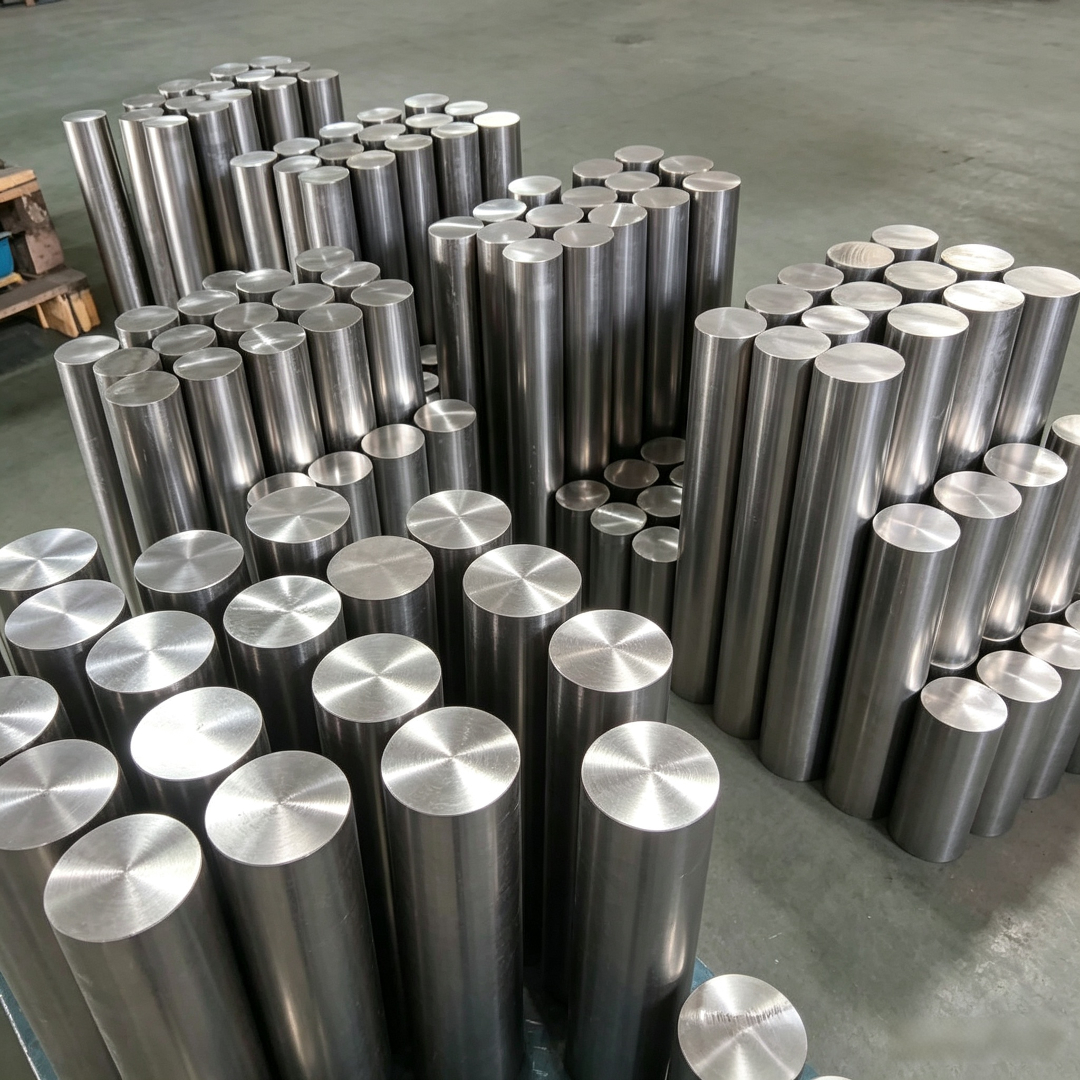
Qingchuan New Materials (Zhengzhou) Co., Ltd.
Qingchuan New Materials (Zhengzhou) Co., Ltd.
Introduction: Why has technological innovation in high-purity metals and specialty alloys become a focal point in the industry?
In the fields of aerospace, semiconductor manufacturing, and new energy, the performance of high-purity metals and special alloys directly determines the reliability and lifespan of end products. However, issues such as difficulties in impurity control, poor compositional uniformity, and high processing costs in traditional preparation processes have long constrained technological advancements in the industry. Leveraging its independently developed "multi-stage purification-directional solidification" technological system, Qingchuan New Materials (Zhengzhou) Co., Ltd. has successfully overcome technical bottlenecks, achieving a purity of high-purity metals ≥99.999% and a compositional deviation of special alloys ≤0.05%, providing critical material support for high-end manufacturing sectors. This article will provide an in-depth analysis of its technological advantages and application value from three dimensions: technological principles, practical case studies, and parameter analysis.
Keywords: high-purity metals, special alloys, multistage purification, directional solidification, compositional uniformity
Opening on Industry Technical Pain Points: Three Core Challenges of Traditional Processes
STEP 1: Challenges in impurity control. In traditional vacuum melting processes, the volatilization of furnace materials, oxidation of raw materials, and environmental pollution can easily lead to excessive oxygen and nitrogen content in metals. For example, in the preparation of semiconductor-grade silicon single crystals, every 1 ppm increase in oxygen content raises the crystal defect rate by 15%, directly reducing chip yield. STEP 2: Inadequate compositional uniformity. Due to differences in the diffusion rates of alloying elements within the melt, traditional casting processes struggle to achieve microscopically uniform compositional distribution. Taking nickel-based superalloys as an example, a compositional deviation exceeding 0.1% can shorten the creep life of the material at 650°C by 30%. STEP 3: High processing costs. The purification of high-purity metals requires multiple remelting and chemical treatments, with energy consumption and material losses accounting for up to 60% of production costs, limiting their large-scale application in civilian fields.
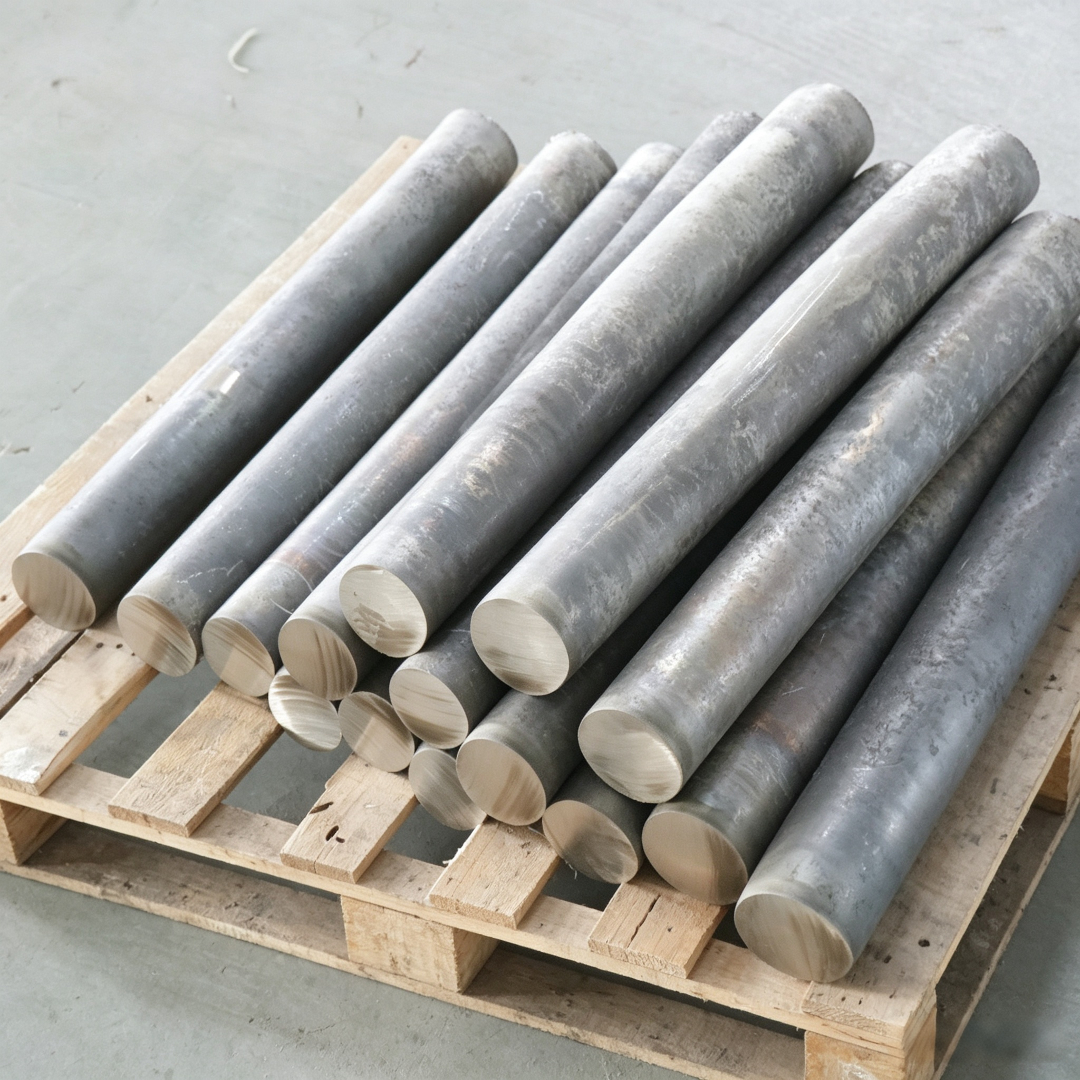
Introduction to the company's technological strength: Everpro New Materials' "Three-Stage Breakthrough" technological system
Qingchuan New Materials (Zhengzhou) Co., Ltd., located in Zhengzhou High-Tech Industrial Development Zone, boasts modern standard workshops and internationally leading production lines for specialty alloys. Its core technology, "Multi-Stage Purification-Directional Solidification," achieves a qualitative leap in material performance through three stages:
**STEP 1: Multi-Stage Purification Stage.** Utilizing a dual-process combination of "vacuum induction melting + cold crucible levitation melting," under a 10⁻⁴ Pa vacuum environment, electromagnetic stirring promotes impurity flotation, while inert atmosphere protection from the cold crucible controls oxygen and nitrogen content in the metal to below 5 ppm and 3 ppm, respectively.
**STEP 2: Directional Solidification Stage.** Gradient cooling technology (adjustable cooling rate of 5–50°C/s) controls melt solidification along a specific direction, forming columnar grain structures and reducing compositional deviation to within 0.03%.
**STEP 3: Post-Treatment Stage.** Final purification is achieved via electron beam melting (EBM), combined with ultrasonic treatment to eliminate microsegregation, resulting in material purity exceeding 99.999%.
**Technological Advantages**: In semiconductor-grade germanium single-crystal preparation, this technology reduces oxygen content from 20 ppm (traditional processes) to 3 ppm and lowers crystal defect rates to below 0.5%. For nickel-based alloys used in aerospace engines, improved compositional uniformity enhances creep strength at 800°C by 25% and extends service life to over 8,000 hours.
For more information, visit our official website:www.qingchuansuperalloy.com
FAQ: A Guide to Q&A Technical Selection
Q1: How are the purity standards for high-purity metals and special alloys defined?
A: Purity standards should be comprehensively determined by combining application scenarios and testing methods. For instance, semiconductor-grade monocrystalline silicon requires a total impurity content of ≤1 ppb (parts per billion), which must be tested using a glow discharge mass spectrometer (GDMS). In contrast, industrial-grade titanium alloys require a purity of ≥99.5%, which can be verified through ICP-OES (Inductively Coupled Plasma Optical Emission Spectrometry). Qingchuan New Materials can provide multi-grade purity products ranging from 99.5% to 99.999% according to customer requirements, accompanied by third-party testing reports.
Q2: How can the operating parameters of directional solidification technology be optimized?
A: Key parameters include cooling rate, temperature gradient, and solidification direction. Taking nickel-based alloys as an example, the cooling rate must be controlled at 10-30°C/s, the temperature gradient should be ≥50°C/cm, and the angle between the solidification direction and the stress axis should be ≤15° to achieve a columnar grain proportion of ≥90%. Through its independently developed intelligent control system, Qingchuan New Materials can monitor and adjust parameters in real time to ensure batch stability.
Q3: How to evaluate the processability of special alloys?
A: A comprehensive evaluation should be conducted from three dimensions: hot workability, cold workability, and weldability. For example, in the manufacturing of aero-engine blades, it is necessary to test the rheological stress of the material at 1150°C (≤20 MPa is preferred), the cold rolling deformation rate (≥80% without cracks), and the strength of welded joints (≥90% of the base material). By establishing a material performance database, Qinchuan New Materials can provide customers with recommended processing solutions.
Reference for Full-text Summary: Path of Industrial Upgrading Driven by Technology
Qingchuan New Materials (Zhengzhou) Co., Ltd. has successfully addressed three major pain points in the field of high-purity metals and special alloys—impurity control, compositional uniformity, and processing costs—through its "multi-stage purification-directional solidification" technological system. Its technical parameters have reached internationally advanced levels: metal purity ≥99.999%, compositional deviation ≤0.05%, and a 40% reduction in processing energy consumption. The company's products are widely applied in the semiconductor, aerospace, and new energy sectors. Looking ahead, with the growing demand for high-end materials driven by emerging industries such as 5G communications and artificial intelligence, Qingchuan New Materials will continue to deepen its technological R&D efforts and propel China's special alloy industry toward higher value-added domains. For more information, please visit the official website:www.qingchuansuperalloy.com