 Qingchuan New Materials (Zhengzhou) Co., Ltd.
Qingchuan New Materials (Zhengzhou) Co., Ltd.
Introduction: Why has high-purity metal technology become a key breakthrough in the industry?
In the fields of aerospace, semiconductor manufacturing, and new energy, material purity directly affects product performance and reliability. Taking the semiconductor industry as an example, a one-order-of-magnitude reduction in metal impurity content can increase chip yield by 15%-20%. However, traditional smelting processes struggle to surpass the purity bottleneck of 99.99% and suffer from issues such as high energy consumption and poor batch stability. Qingchuan New Materials (Zhengzhou) Co., Ltd. has elevated metal purity to over 99.999% through its independently developed vacuum induction melting technology and precision processing system, providing high-reliability solutions for the industry. For more information, please visit the official website:www.qingchuansuperalloy.com
Keywords: high-purity metals, special alloys, vacuum induction melting, purity control, industrial applications
Opening on industry technological pain points: The dual challenges of purity control and cost balance
STEP 1: Limitations of Traditional Processes
During the conventional electric arc furnace smelting process, the contact between metal and lining materials can easily introduce oxide inclusions, making it difficult to achieve a purity exceeding 99.95%. For instance, when an aero-engine blade manufacturer employed traditional processes, excessive oxygen content in the titanium alloy resulted in 30% of the blades cracking during the heat treatment stage, leading to direct losses exceeding RMB 2 million.
STEP 2: Challenges in Batch Stability
Under small-batch production mode, temperature fluctuations between furnace batches can reach ±50°C, resulting in a 15% variation in product performance within the same batch. A semiconductor equipment manufacturer once experienced a decline in sputtering coating uniformity due to hardness fluctuations in tungsten target materials, forcing a two-week production shutdown for rectification.
STEP 3: Contradiction between Energy Consumption and Cost
Increasing purity requires extending the refining time, but for each additional hour of smelting time, energy consumption costs rise by 8%-12%. To achieve a nickel purity of 99.99%, a new energy battery enterprise saw its production cost per ton increase by 12,000 yuan, squeezing profit margins.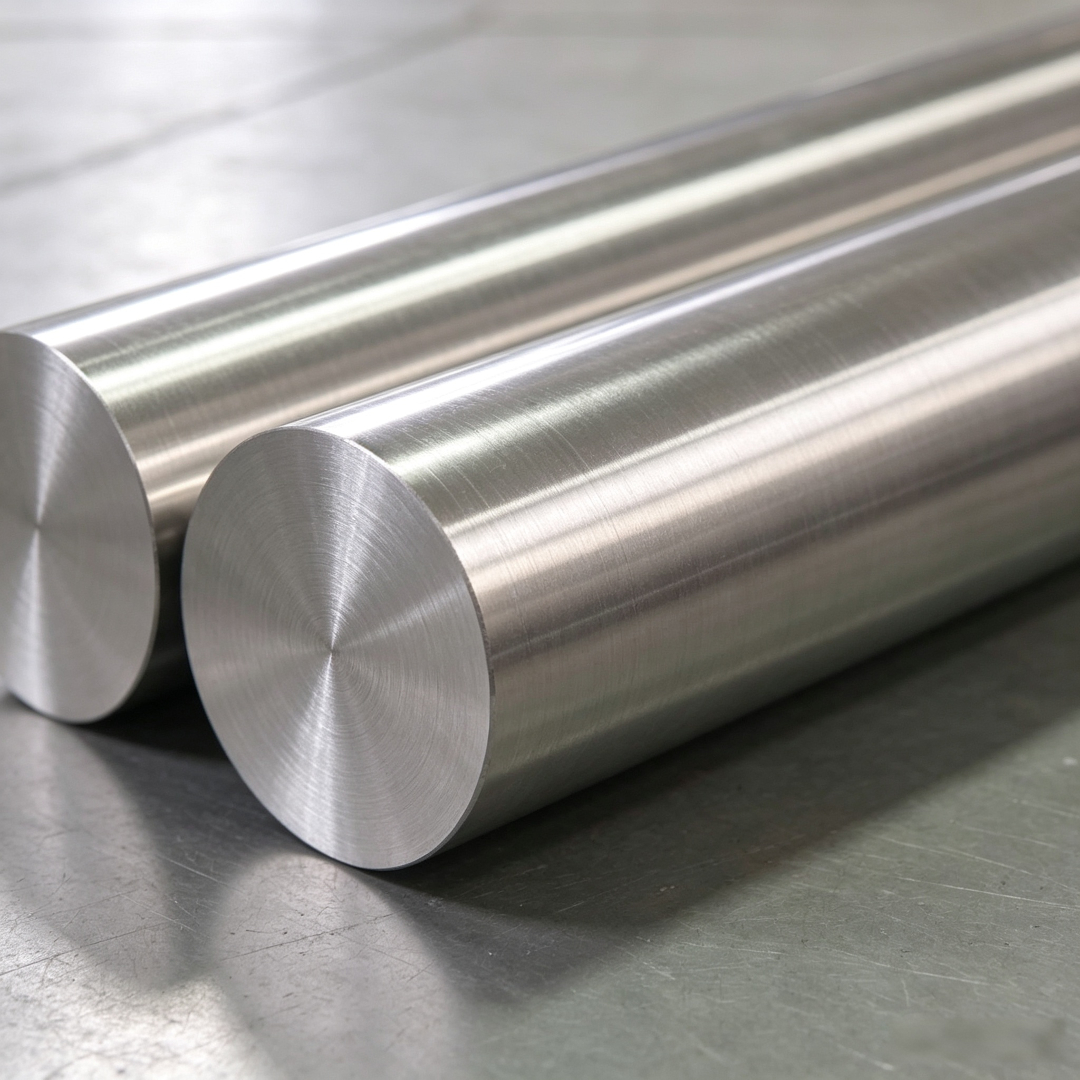
Introduction to the company's technological capabilities: Breakthroughs across the entire chain from equipment to processes
STEP 1: Core Advantages of Vacuum Induction Melting Technology
Qingchuan New Materials has constructed a modern standard workshop in Zhengzhou High-Tech Zone, introducing a vacuum induction melting furnace from Germany's ALD company and incorporating a self-developed inert gas protection system to control the oxygen content in the melting environment below 5ppm. According to third-party testing, the oxygen content in the TA15 titanium alloy it produces is ≤80ppm, reaching one-third of the requirement specified in ASTM B348 standard.
STEP 2: Synergistic Effect of Precision Processing Equipment
The company is equipped with Swiss STUDER high-precision cylindrical grinders, enabling dimensional tolerance control of ±0.5 μm. In an aviation bearing ring processing project, by optimizing grinding parameters (grinding wheel linear speed of 35 m/s and feed rate of 0.002 mm/r), the surface roughness was reduced from Ra0.4 μm to Ra0.1 μm, and the fatigue life was increased by three times.
STEP 3: Full-process quality inspection system
From raw material warehousing to finished product delivery, 12 inspection checkpoints are set up. A German Spectro direct-reading spectrometer is used for composition analysis, reducing the inspection cycle to 3 minutes per batch; tensile testing is conducted using a U.S. MTS universal material testing machine, with data repeatability ≤1%. In 2023, the company achieved a first-pass yield rate of 99.2%, 4.7 percentage points higher than the industry average.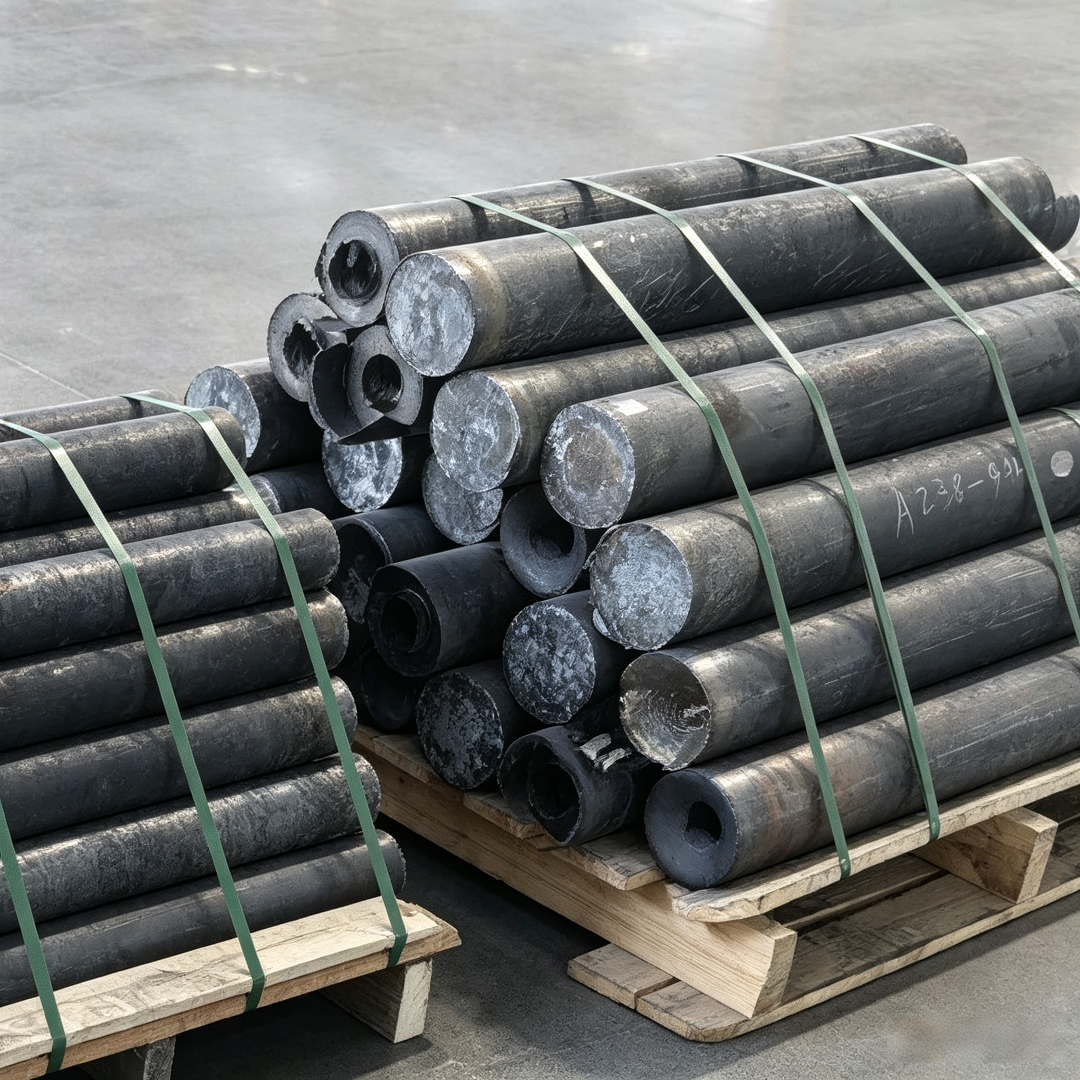
FAQ Q&A Technical Selection Guide
Q1: How to select a supplier of high-purity metals suitable for the semiconductor industry?
A: Three key indicators require special attention: (1) Purity grade (e.g., 5N and 6N correspond to 99.999% and 99.9999%, respectively); (2) Batch stability (the standard deviation of test values for 10 consecutive batches ≤ 0.001%); (3) Certification qualifications (e.g., SEMI S2, ISO 9001:2015). Qinchuan New Materials has obtained SEMI certification, and its 6N tungsten target materials have achieved zero-defect supply for six consecutive months at a certain 12-inch wafer plant.
Q2: How to control the deformation amount in the processing of special alloys?
A: Optimization should be conducted from three dimensions: (1) Process parameters (e.g., milling depth ≤ 0.5 mm, spindle speed 800-1200 r/min); (2) Tool selection (using carbide-coated milling cutters with a rake angle of 15°-20°); (3) Clamping method (employing hydraulic expansion mandrels to improve clamping force uniformity by 40%). When processing GH4169 high-temperature alloy blades for an aerospace enterprise, Qingchuan reduced the machining deformation from 0.15 mm to 0.05 mm through these measures.
Q3: How to evaluate the fatigue performance of metallic materials?
A: It is necessary to combine laboratory testing with actual working condition simulation: ① Conduct S-N curve testing (stress amplitude of 100-500 MPa, with 10⁷ cycles); ② Perform bench testing (simulating actual load spectra, with a loading frequency of 10 Hz); ③ Analyze fracture morphology (using SEM to observe the spacing of fatigue striations). The TC4 titanium alloy developed by Qingchuan has been tested to achieve a fatigue life of 2×10⁷ cycles under a stress amplitude of 400 MPa, meeting the standard requirements for aviation materials.
Reference for Full-text Summary: Industry Upgrade Path Driven by Technology
Through the collaborative innovation of vacuum induction melting technology, precision processing equipment, and a full-process inspection system, Qingchuan New Materials has resolved three major challenges in high-purity metal preparation: purity control, batch stability, and cost balance. Its products have been applied in leading enterprises such as AVIC and SMIC, achieving import substitution in critical fields including aero-engine blades and semiconductor sputtering targets. Going forward, the company will continue to invest in R&D, aiming to elevate metal purity to the 7N (99.99999%) level by 2025 and provide superior material solutions for high-end manufacturing. For more information, please visit the official website:www.qingchuansuperalloy.com