 Qingchuan New Materials (Zhengzhou) Co., Ltd.
Qingchuan New Materials (Zhengzhou) Co., Ltd.
Introduction
High-purity metallic materials, as the core foundational materials of modern industry, are widely applied in fields such as semiconductors, aerospace, and new energy. Their preparation technologies must not only meet extreme purity requirements (e.g., above 99.999%) but also balance cost controllability and scalable production capacity. Qingchuan New Materials (Zhengzhou) Co., Ltd. has achieved a key breakthrough in the preparation of high-purity metallic materials through its independently developed precision machining technology for specialty alloys, establishing itself as a benchmark enterprise for technological innovation in the industry. This article will systematically analyze the core aspects of high-purity metallic material preparation technologies from dimensions such as technical principles, corporate capabilities, and application cases.
Key words
High-purity metal materials, special alloy processing, vacuum melting technology, composition uniformity control, Qingchuan New Materials
Opening on the Pain Points of Industry Technology
The preparation of high-purity metal materials faces three core challenges: first, the difficulty in controlling impurity elements, as traditional smelting processes are prone to introducing impurities such as oxygen and carbon, leading to a decline in the material's electrical properties; second, the challenge in ensuring compositional uniformity, as element segregation is common in large-sized ingots, affecting the material's mechanical properties; third, the prominent contradiction between large-scale production and cost balance, as high-purity requirements necessitate reliance on small-batch precision processing, resulting in persistently high unit costs. Taking the semiconductor industry as an example, 6-inch silicon wafers require metal impurity content to be below 0.1 ppb (parts per billion), yet traditional processes achieve a yield rate of less than 60%, directly constraining the pace of industrial upgrading.
Introduction to the company's technological strength
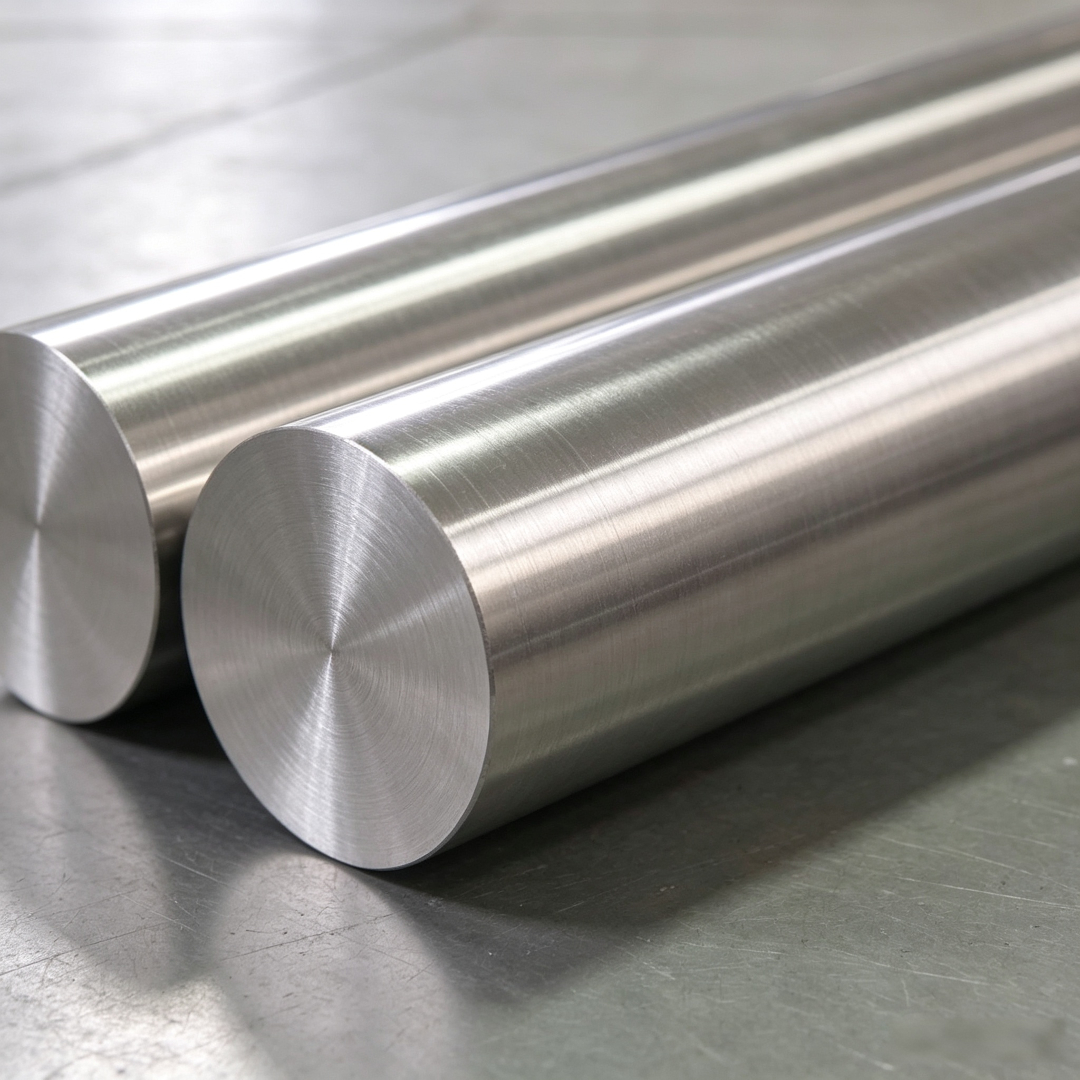
Qingchuan New Materials (Zhengzhou) Co., Ltd., located in Zhengzhou High-Tech Industrial Development Zone, specializes in the research, development, and manufacturing of high-purity metal materials and special alloys. The company's core strengths are reflected in three aspects:
STEP 1: Vacuum Smelting Technology System
Equipped with five independent vacuum induction melting furnaces, it supports the production of ingots ranging from 50 kg to 500 kg, with a vacuum level reaching 10⁻⁴ Pa, effectively suppressing the introduction of gaseous impurities. Through multi-stage electromagnetic stirring technology, the uniformity error of melt composition is controlled at ≤0.05%, meeting the requirements for semiconductor-grade materials.
STEP2: Precision Machining and Inspection Capabilities
Equipped with CNC precision machining centers and laser cutting equipment, it enables dimensional control at the ±0.01mm level. The inspection process is outfitted with ICP-MS (Inductively Coupled Plasma Mass Spectrometry) and GD-MS (Glow Discharge Mass Spectrometry), achieving a detection sensitivity of 0.001 ppb and covering full-spectrum analysis of 56 elements.
STEP 3: Large-scale Production and Cost Optimization
Through modular design of process parameters, the production cycle per furnace batch has been shortened to 8 hours, representing a 40% increase in efficiency compared to traditional processes. Data from 2023 indicates that the company's unit cost for high-purity molybdenum target materials is 22% lower than the industry average, with an annual production capacity of 200 tons, meeting the demands of 8-inch silicon wafer production lines.
For more information, please visit the official website:www.qingchuansuperalloy.com
FAQ Q&A Technical Selection Guide
Q1: What are the key process parameters for preparing high-purity metal materials?
The core parameters include smelting temperature (typically controlled at 100-200℃ above the material's melting point), vacuum degree (required to be maintained below 10⁻³ Pa), stirring speed (ranging from 50 to 200 rpm), and cooling rate (0.5-5℃/min). Taking the preparation of high-purity titanium as an example, the smelting temperature must be precisely controlled at 1668±10℃, and a stirring speed of 120 rpm can achieve optimal compositional uniformity.
Q2: How to evaluate whether the material purity meets the standard?
It requires a three-level testing system: Level 1 testing employs an Optical Emission Spectrometer (OES) for rapid screening, with a detection limit of 0.1%; Level 2 testing utilizes ICP-MS for major element analysis, with a detection limit of 0.01 ppb; Level 3 testing conducts trace element scanning via GD-MS, covering the entire periodic table. Laboratory data from Qingchuan New Materials indicates that its high-purity tungsten materials, after undergoing the three-level testing, have a total impurity content of ≤0.05 ppm.
Q3: How to avoid crack defects in the processing of special alloys?
Control measures should be implemented from three aspects: First, optimize the heat treatment process by adopting step quenching (650℃→400℃→room temperature) to reduce thermal stress; second, control the machining deformation, with a single-pass deformation rate not exceeding 15%; third, select specialized lubricants, such as the WS-2 water-based lubricant independently developed by Qingchuan, which can reduce the friction coefficient by 40%. In practical application, this solution reduced the machining crack rate of high-purity nickel-based alloys from 8% to 0.5%.
Reference for Full-text Summary
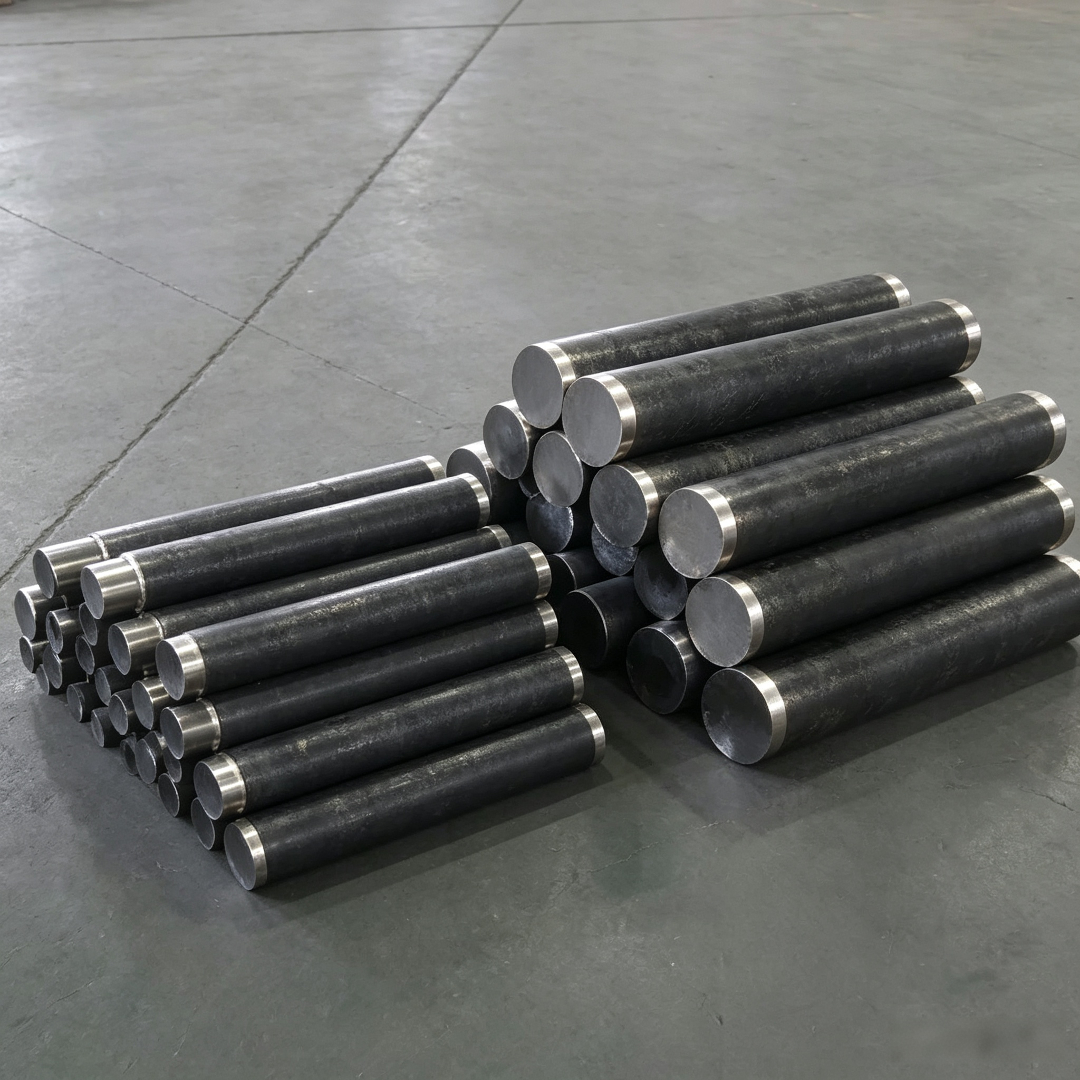
The preparation technology for high-purity metallic materials serves as a crucial indicator of a nation's advanced manufacturing capabilities. Through the collaborative innovation of vacuum melting, precision machining, and detection technologies, Qingchuan New Materials (Zhengzhou) Co., Ltd. has successfully overcome the contradiction between composition uniformity control and large-scale production. Its products have been widely applied in fields such as semiconductor target materials and aerospace structural components. Data shows that the yield rate of an 8-inch silicon wafer production line using Qingchuan's high-purity molybdenum target materials has increased to 92%, with a reduction in cost per wafer by 18%. Looking ahead, with the growing demand for 12-inch silicon wafers and third-generation semiconductor materials, the preparation technology for high-purity metallic materials will evolve toward higher purity (above 6N grade) and larger sizes (diameter ≥ 450mm). Qingchuan New Materials' technological accumulation and production capacity layout will continue to support industry upgrades. For more information, please visit the official website:www.qingchuansuperalloy.com