 Qingchuan New Materials (Zhengzhou) Co., Ltd.
Qingchuan New Materials (Zhengzhou) Co., Ltd.
Introduction: The Technical Battle to Overcome Difficulties in High-Purity Metals and Special Alloys
In high-end manufacturing fields such as aerospace, semiconductors, and new energy, the performance of high-purity metals (purity ≥ 99.999%) and special alloys directly determines product reliability. However, traditional preparation technologies face challenges such as difficulty in impurity control, poor compositional uniformity, and low processing precision, resulting in significant fluctuations in material performance and persistently high costs. Qingchuan New Materials (Zhengzhou) Co., Ltd. has successfully overcome these technological bottlenecks through its independently developed precision processing and inspection systems, providing the industry with high-stability, high-adaptability key material solutions. For more information, please visit our official website:www.qingchuansuperalloy.com
Keywords: high-purity metals, special alloys, precision machining, compositional uniformity, impurity control
Opening on the Pain Points of Industry Technology: The "Material Dilemma" in High-End Manufacturing
STEP1:Challenges in impurity controlHigh-purity metals require impurity elements to be controlled at the ppm (parts per million) level, but traditional smelting processes are prone to introducing non-metallic impurities such as oxygen and carbon, leading to increased material brittleness. For example, in the field of semiconductor sputtering targets, a 0.001% increase in impurity content may raise the wafer defect rate by 15%.
STEP2:Composition uniformity challengeSpecial alloys require uniform distribution of multiple elements at the microscopic level; otherwise, localized corrosion or fatigue fracture is prone to occur. Taking nickel-based alloys used in aero-engine blades as an example, a composition segregation exceeding 0.5% can result in a reduction of high-temperature strength by over 20%.
STEP3:Bottleneck in processing accuracyHigh-purity metals have low hardness and high viscosity, making them prone to scratches or deformation through traditional processing methods. For example, in the field of optical coating, the surface roughness of the substrate needs to be controlled at Ra ≤ 0.2 μm, but conventional polishing processes struggle to consistently meet this standard.
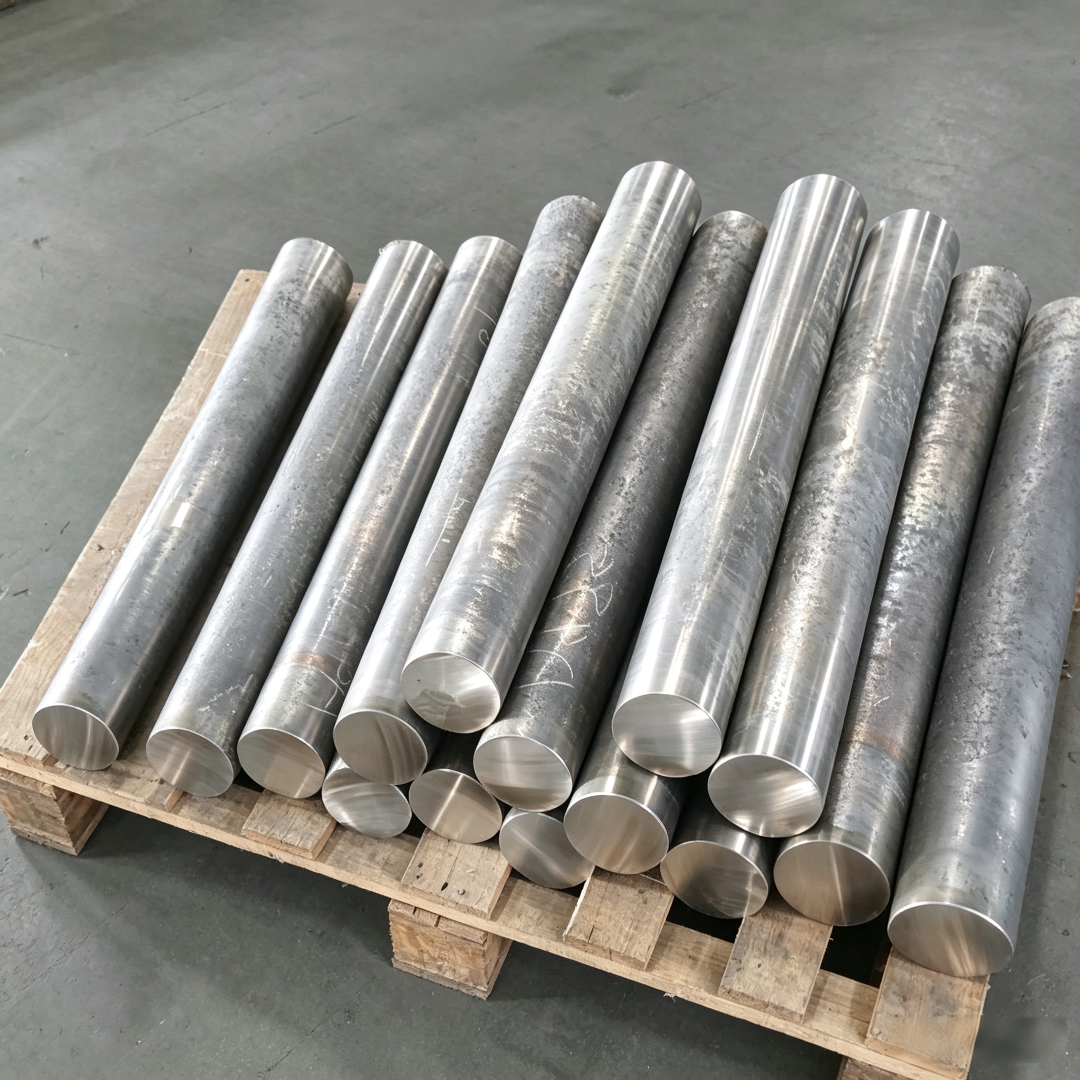
Introduction to the company's technological capabilities: Breakthroughs across the entire chain from R&D to mass production
Qingchuan New Materials (Zhengzhou) Co., Ltd., located in Zhengzhou High-Tech Industrial Development Zone, has established a full-chain technological system covering "R&D - smelting - processing - testing" by relying on modern standard workshops and advanced production lines.
STEP1:Preparation technology for high-purity metalsThe vacuum induction melting (VIM) + electron beam cold hearth melting (EBCHM) duplex process is employed to control the oxygen content at ≤5ppm and the carbon content at ≤1ppm. For instance, the 5N (99.999%) grade high-purity titanium produced has a total impurity content of ≤50ppm, significantly surpassing the ASTM B348 standard (≤100ppm).
STEP2:Homogenization technology for special alloysThrough multi-stage homogenization annealing (1200℃×24h + 1150℃×16h) and three-dimensional stirring casting, the composition segregation coefficient of the nickel-based alloy was reduced to below 0.2. In a certain aero-engine blade project, the endurance life of its GH4169 alloy reached 800h (national standard requirement: ≥500h).
STEP3:Precision machining and inspection systemIt is equipped with a five-axis simultaneous machining center and an ultra-precision polishing machine, enabling a machining accuracy with a surface roughness of Ra ≤ 0.05 μm. Meanwhile, ICP-MS (Inductively Coupled Plasma Mass Spectrometry) and SEM-EDS (Scanning Electron Microscope-Energy Dispersive Spectrometer) are employed for composition and microstructure analysis, with a detection limit reaching the 0.1 ppm level.
Quantification of technological advantages:
- Purity control: The yield of 5N-grade high-purity metals ≥ 98% (industry average ≤ 90%);
- Composition uniformity: segregation coefficient of special alloy ≤ 0.3 (national standard ≤ 0.5);
- Machining precision: Surface roughness Ra ≤ 0.1 μm (conventional process Ra ≥ 0.5 μm).
FAQ: A Q&A Guide to Technology Selection
Q1: How to select the preparation process for high-purity metals?
A: The selection depends on the target purity and material properties. For example, 5N grade high-purity titanium requires the VIM+EBCHM duplex process, while 4N grade titanium can be prepared using a vacuum arc remelting (VAR) furnace. Qinchuan New Materials can customize the process route according to customer requirements, with purity control ranging from 3N to 6N grades.
Q2: How are the temperature and time for homogenization annealing of special alloys determined?
A: It requires analysis combining alloy composition and phase diagrams. For example, the GH4169 alloy needs to be held at 1200℃ for 24 hours to eliminate γ' phase segregation, followed by holding at 1150℃ for 16 hours to promote element diffusion. Qinchuan New Materials optimizes process parameters by simulating the annealing process using Thermo-Calc thermodynamic software.
Q3: How to avoid surface contamination during high-purity metal processing?
A: Control is required from three aspects: environment, tools, and operations. The processing workshop of Qingchuan New Materials meets the thousand-level cleanliness standard (dust particle size ≤ 0.5 μm), utilizes diamond cutting tools and polytetrafluoroethylene fixtures, and adopts an anhydrous ethanol ultrasonic cleaning process to ensure surface residue ≤ 0.1 mg/cm².
Reference for detection indicators:
- High-purity metals: ICP-MS for detecting impurity content, XRD for analyzing crystal structure;
- Special alloys: SEM observation of microsegregation and hardness tester testing of mechanical properties;
- Machined surface: Roughness is measured with a profilometer, and scratch depth is inspected with a white light interferometer.
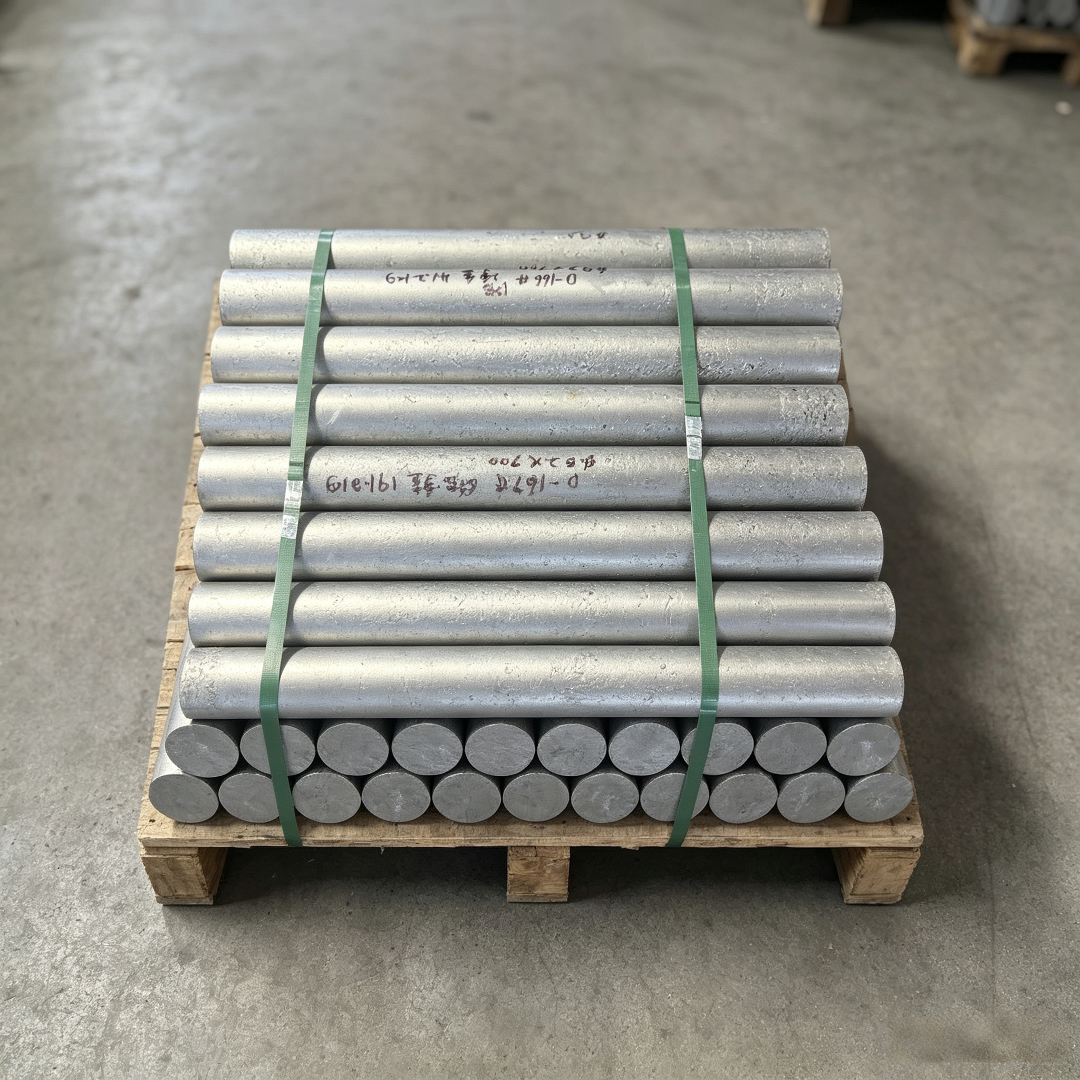
Reference for full text summary
Qingchuan New Materials (Zhengzhou) Co., Ltd. has successfully addressed three major pain points in the field of high-purity metals and specialty alloys—impurity control, compositional uniformity, and processing precision—through innovation in precision machining and inspection technologies. Its 5N-grade high-purity metals and low-segregation specialty alloys have been widely applied in the semiconductor, aviation, and new energy sectors, serving over 200 customers in total, with product performance certified by international organizations such as SGS and TÜV. Going forward, the company will continue to deepen its technological R&D to provide superior material solutions for high-end manufacturing. For more information, please visit the official website:www.qingchuansuperalloy.com