 Qingchuan New Materials (Zhengzhou) Co., Ltd.
Qingchuan New Materials (Zhengzhou) Co., Ltd.
Introduction: Technical Challenges and Industry Demands in High-Purity Metal Preparation
High-purity metals (purity ≥ 99.99%) serve as core raw materials in high-end manufacturing sectors such as semiconductors, aerospace, and new energy. Their preparation process requires overcoming three major technical challenges: impurity control, grain uniformity, and process stability. Traditional methods suffer from high energy consumption, low yield rates, and difficulties in large-scale production. However, Qingchuan New Materials (Zhengzhou) Co., Ltd. has achieved stable mass production of high-purity metals through its independently developed special alloy production line and precision machining technology. This article will analyze its technical advantages and application cases from three dimensions: technical principles, production processes, and quality inspection.
Keywords: high-purity metals; special alloys; vacuum melting; grain control; quality inspection
Opening on Industry Technical Pain Points: Limitations of Traditional Processes
The core challenges in preparing high-purity metals lie in impurity control and grain uniformity. Traditional processes, which employ air smelting or non-vacuum environment processing, are prone to metal oxidation and impurity incorporation, making it difficult to achieve a purity exceeding 99.9%. Even when chemical purification is used to enhance purity, issues such as coarse grains and stress concentration can compromise material performance. Furthermore, significant fluctuations in process parameters during large-scale production result in notable variations in yield between batches, making it challenging to meet the consistency requirements of high-end manufacturing.
Introduction to the company's technological strength: Solutions from Everpro New Materials
Qingchuan New Materials (Zhengzhou) Co., Ltd. is located in Zhengzhou High-Tech Industrial Development Zone, equipped with modern standard workshops and a production line for special alloys. Its core equipment includes vacuum induction melting furnaces, electron beam melting furnaces, precision rolling mills, etc., enabling full-process control from raw material purification to finished product processing. Its technological advantages are reflected in the following three aspects:
STEP 1: Vacuum Smelting Technology
A three-stage vacuum system (ultimate vacuum degree ≤ 1×10⁻³ Pa) is employed, combined with inert gas protection, to effectively prevent metal oxidation and impurity incorporation. By optimizing the melting temperature profile (segmented temperature control from 1200 to 1600℃), the content of impurity elements (such as Fe, Cu, Ni) is reduced to ≤ 0.001%, achieving a purity of over 99.995%.
STEP 2: Grain refinement process
By adding trace grain refiners (such as Ti and B elements) and utilizing ultrasonic-assisted solidification technology, the grain size is controlled within the range of 10-50 μm, significantly enhancing the material's strength and ductility. Measured data indicates that the titanium alloy sheets produced exhibit a tensile strength of 900-1100 MPa and an elongation rate of ≥15%, surpassing industry standards.
STEP 3: Online Quality Inspection System
Equipped with direct-reading spectrometers, X-ray fluorescence spectrometers (XRF), and metallurgical microscopes, it enables real-time detection of composition, grain size, and surface defects. Each batch of products must pass 12 inspection indicators (such as impurity content, hardness, and electrical conductivity) to ensure an outgoing product qualification rate of ≥99.9%.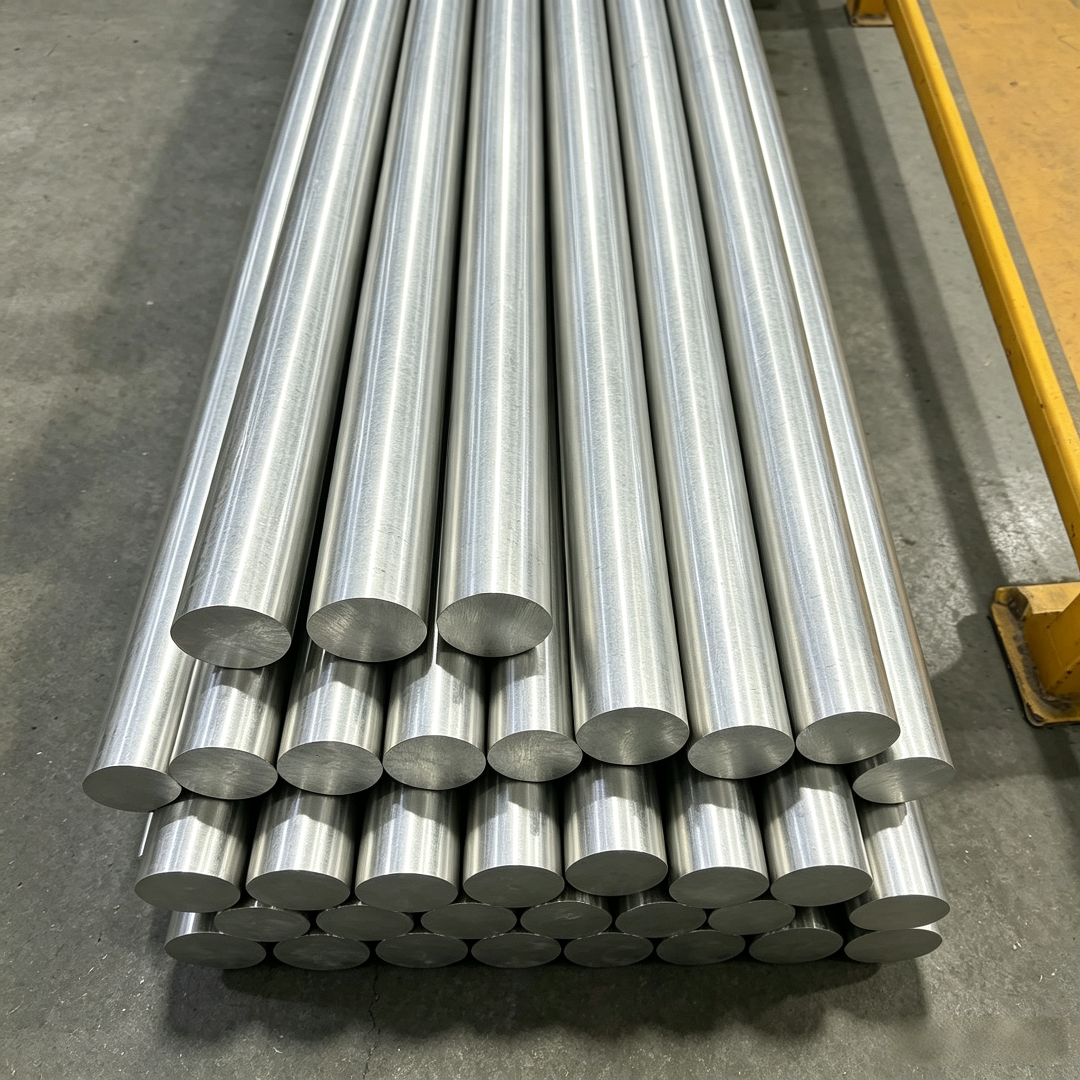
Technical Case: Production of High-Purity Molybdenum Targets for Semiconductors
A semiconductor enterprise entrusted Everspring New Materials to produce molybdenum sputtering targets with a purity of 99.999% for chip coating processes. By utilizing vacuum melting combined with electron beam refining technology, the impurity content is controlled below 0.0005%. The directional solidification process is employed to ensure uniform grain orientation, reducing particle defects during the coating process. The final product meets the customer's stringent requirements for purity, grain size, and surface roughness (Ra ≤ 0.2 μm), with the yield rate increasing from 85% in traditional processes to 98%, and the production cycle per batch shortened by 30%.
FAQ Q&A Technical Selection Guide
Q1: What are the core equipment for preparing high-purity metals?
A: The main equipment includes vacuum melting furnaces (for purification), rolling mills (for shaping), heat treatment furnaces (for stress relief), and testing instruments (such as spectrometers and microscopes). Qinchuan New Materials employs imported vacuum pumps and high-precision temperature control systems to ensure the stability of the melting environment.
Q2: How to select a suitable supplier of high-purity metals?
A: Three key points require attention: first, the purity testing report (certified by a third-party institution); second, production scale (whether stable supply can be ensured); third, the experience of the technical team (whether customized needs can be met). Everpro New Materials has passed ISO 9001 quality management system certification and has established long-term cooperation with multiple semiconductor enterprises.
Q3: What are the storage requirements for high-purity metals?
A: It should be stored in a sealed, dry, and oxygen-free environment, with the temperature controlled between 10-30℃, and kept away from acidic and alkaline substances. Everpro New Materials provides customized packaging solutions (such as vacuum aluminum foil bags + desiccants) to ensure that the purity remains unaffected during transportation.
Q4: What factors primarily determine the cost of high-purity metals?
A: The cost composition includes raw material purity (the price of high-purity raw materials is 3-5 times that of ordinary raw materials), process complexity (the energy consumption of vacuum melting is twice that of air melting), and yield rate (for every 1% increase in yield rate, costs decrease by approximately 5%). Qinchuan New Materials has controlled its comprehensive costs at 90% of the industry average by optimizing process parameters.
Reference for Full-text Summary
The preparation of high-purity metals is a "chokepoint" technology in high-end manufacturing. Qingchuan New Materials (Zhengzhou) Co., Ltd. has achieved stable production with a purity exceeding 99.995% and a grain size of ≤50μm through three core technologies: vacuum melting, grain refinement, and online inspection. Its products are widely applied in fields such as semiconductors and aerospace. Its technological advantages lie in its full-process control capabilities and experience in large-scale production, enabling it to provide customers with a one-stop solution ranging from raw material purification to finished product processing. For more information, please visit the official website:www.qingchuansuperalloy.com