 Qingchuan New Materials (Zhengzhou) Co., Ltd.
Qingchuan New Materials (Zhengzhou) Co., Ltd.
Introduction: The Technical Battle for High-Purity Metals and Special Alloys
In high-end fields such as aerospace and semiconductor manufacturing, the performance of high-purity metals and special alloys directly determines product reliability. However, issues such as difficulties in impurity control, poor compositional uniformity, and low processing precision in traditional processes have long constrained industry development. Qingchuan New Materials (Zhengzhou) Co., Ltd. has successfully broken through technological bottlenecks by leveraging its independently developed precision processing technology and a comprehensive full-process inspection system, providing critical material support for high-end manufacturing. This article will reveal its technological advantages and application value from dimensions such as technical principles, practical cases, and parameter analysis.For more information, please visit the official website: www.qingchuansuperalloy.com
Keywords: high-purity metals; special alloys; precision machining; compositional uniformity; full-process inspection
Opening on Industry's Technological Pain Points: Three Major Challenges of Traditional Processes
STEP 1: Difficulty in impurity control. In traditional smelting processes, fluctuations in raw material purity and furnace contamination can easily introduce impurities such as oxygen and nitrogen into the metal matrix. For example, in a nickel-based alloy used for aero-engine blades, every 0.001% increase in impurity content results in a 15% decrease in high-temperature creep life. STEP 2: Poor compositional uniformity. Multi-component alloys are prone to compositional segregation during solidification. For instance, uneven α/β phase ratios in titanium-aluminum alloys can increase material brittleness, directly affecting processability. STEP 3: Low machining accuracy. Traditional rolling processes achieve a shape control accuracy of only ±0.5 mm, making it difficult to meet the stringent requirement of ±0.1 mm for sputtering targets used in semiconductor packaging. A chip manufacturer once experienced batch-wide product scrap due to non-compliant coating uniformity caused by thickness deviations in the target material.
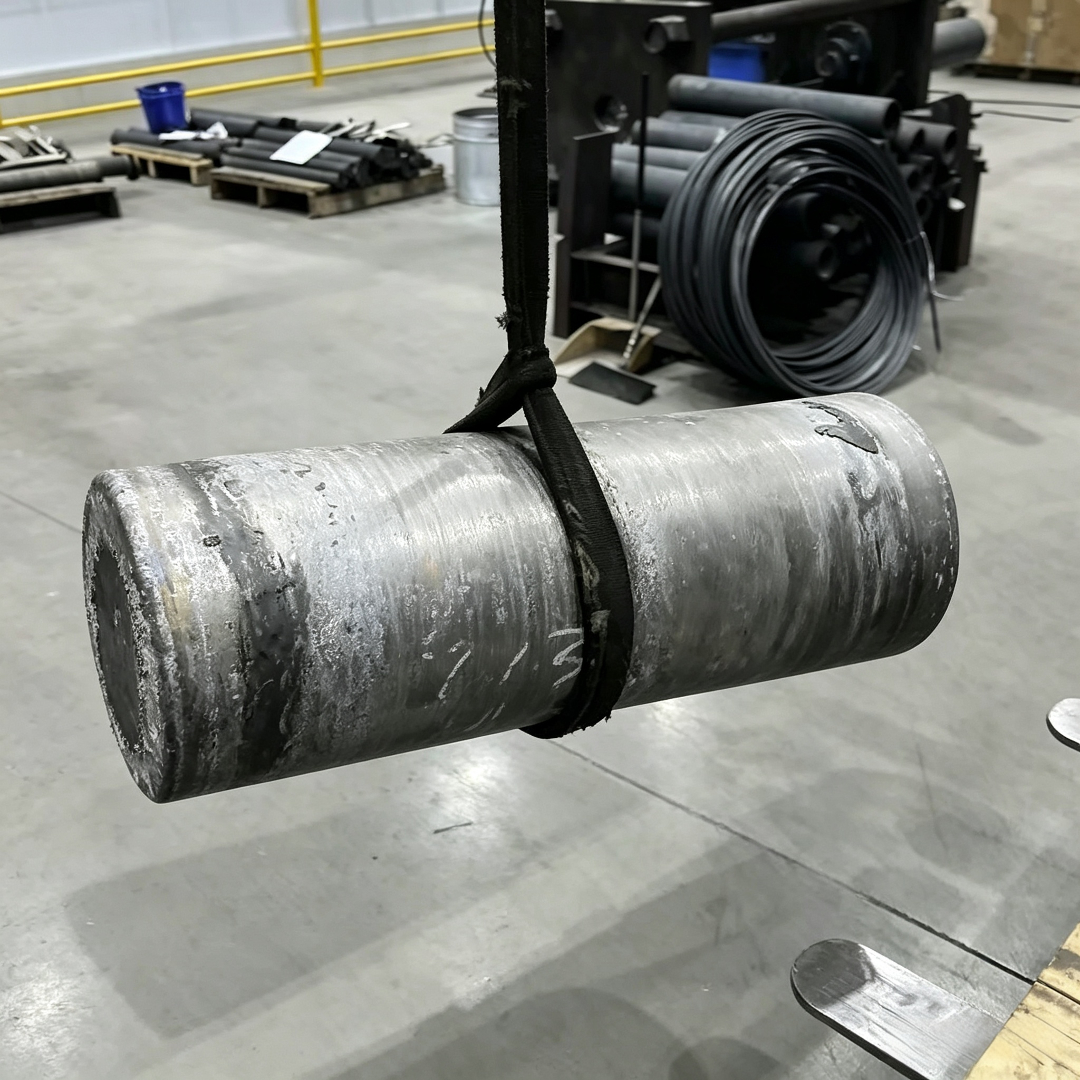
Introduction to the company's technological capabilities: Three core advantages of whole-process control and management
Qingchuan New Materials (Zhengzhou) Co., Ltd., located in Zhengzhou High-Tech Industrial Development Zone, is equipped with modern standard workshops and precision processing production lines for special alloys, with a technological layout covering the entire chain from raw material purification to finished product inspection. STEP 1: Vacuum induction melting technology. Through a three-stage vacuum system (ultimate vacuum ≤1×10⁻³ Pa) and inert gas protection, metal impurity content is controlled at ≤0.0005%, significantly outperforming ASTM E1019 standards. For instance, its produced 5N high-purity tungsten has an oxygen content of only 0.0002%, meeting the stringent purity requirements of semiconductor etching equipment materials. STEP 2: Directional solidification process. Utilizing water-cooled copper molds and gradient cooling technology, the alloy solidification rate reaches 50 mm/min, significantly suppressing composition segregation. In TA15 titanium alloy production, this process reduces the α/β phase ratio deviation from ±5% to ±1.5%, improving material fracture toughness by 20%. STEP 3: Precision rolling and surface treatment. Equipped with four-high reversible rolling mills and laser thickness gauges, it achieves shape control accuracy of ±0.05 mm and surface roughness Ra ≤0.2 μm. Its produced molybdenum targets have been certified by an international semiconductor giant for use in 8-inch wafer coating processes, with coating uniformity CV values ≤3%.
FAQ: A Guide to Q&A Technical Selection
Q1: How to select the purification process for high-purity metals?
A: A comprehensive decision should be made based on the metal properties and the type of impurities. For example, for metals prone to oxidation (such as tungsten and molybdenum), electron beam melting (EBM) technology should be prioritized, as its vacuum level can reach 1×10⁻⁴ Pa, effectively removing impurities such as light elements like oxygen and nitrogen; for reactive metals (such as titanium and zirconium), cold crucible induction melting (CCIM) is suitable to avoid furnace contamination. Through comparative experiments, Qingchuan New Materials found that the oxygen content in 5N tungsten purified using the EBM process was 60% lower than that purified using the traditional zone melting method.
Q2: How to control residual stress in the processing of special alloys?
A: Residual stress is the primary cause of material deformation and cracking. Qinchuan New Materials employs a three-step approach for control: STEP 1: Optimize the heat treatment process, reducing residual stress by 40% through stepped quenching (650℃→400℃→room temperature); STEP 2: Introduce ultrasonic impact treatment, utilizing high-frequency vibration (20kHz) to generate a compressive stress layer on the material surface with a depth of up to 1mm; STEP 3: Replace traditional turning with CNC grinding to minimize fluctuations in cutting force during machining. In the processing of GH4169 superalloy blades for a certain aero-engine, this approach reduced residual stress from 300MPa to 80MPa and increased the qualification rate to 98%.
Q3: How to verify the composition uniformity of special alloys?
A: A comprehensive assessment integrating multiple testing techniques is required. Everich New Materials has established a triple testing system consisting of "metallographic analysis + electron probe micro-analyzer (EPMA) + energy-dispersive spectrometer (EDS)": Metallographic analysis enables observation of macroscopic phase distribution, EPMA can detect micro-area composition deviations (with an accuracy of ±0.1%), and EDS is used for rapid screening of abnormal points. In the production of a certain titanium-aluminum alloy, through this system, a 1.2% deviation in aluminum content was identified in a local area. After timely adjustment of process parameters, the coefficient of variation (CV) for composition uniformity was optimized from 2.5% to 0.8%.
Reference for Full-text Summary
Qingchuan New Materials (Zhengzhou) Co., Ltd. has successfully addressed industry pain points such as impurity control in high-purity metals, uniformity of special alloy compositions, and processing precision through three core technologies: vacuum induction melting, directional solidification, and precision machining. Its products, including 5N high-purity tungsten and TA15 titanium alloy, have been widely applied in fields such as semiconductors and aerospace, with customers including an international semiconductor giant and domestic aero-engine manufacturers. In the future, the company will continue to invest in R&D to optimize process parameters (e.g., melting temperature control accuracy of ±5°C and rolling speed stability of ±0.1 m/min), driving the localization of high-end metal materials.For more information, please visit the official website: www.qingchuansuperalloy.com