 Qingchuan New Materials (Zhengzhou) Co., Ltd.
Qingchuan New Materials (Zhengzhou) Co., Ltd.
Qingchuan New Materials (Zhengzhou) Co., Ltd.
Qingchuan New Materials (Zhengzhou) Co., Ltd.
Qingchuan New Materials (Zhengzhou) Co., Ltd.
Technical Background and Industry Requirements
Iron-nickel super-precision alloy with definite expansion is a type of functional material with a specific coefficient of thermal expansion achieved through precise control of composition ratios, widely used in aerospace, precision instruments, semiconductor packaging, and other fields. The core challenge lies in how to achieve an expansion coefficient fluctuation less than ±2×10⁻⁶/℃ within the temperature range of -50℃ to 300℃ while meeting performance requirements such as high strength and corrosion resistance. ChengChuan New Materials (Zhengzhou) Co., Ltd., relying on the strategic location advantage of the Zhengzhou High-tech Zone, has successfully broken through the technical bottleneck in this field by means of independent research and development of vacuum induction melting technology and precision rolling process, and has become one of the few domestic enterprises with full-process production capabilities.
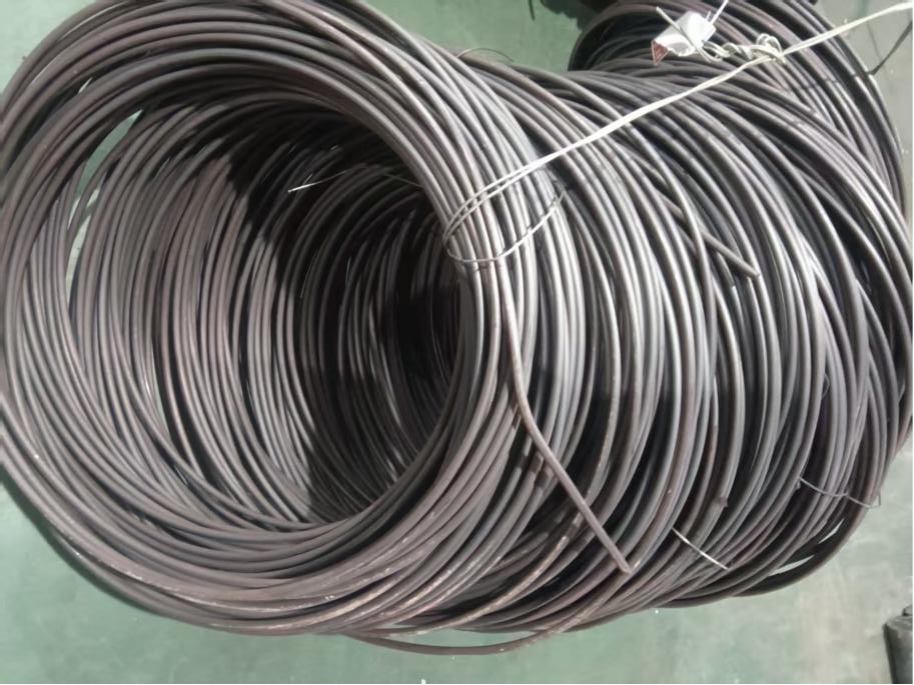
Technical Analysis: Ingredient Design and Process Control
Qingchuan New Materials' iron-nickel fixed expansion alloy is based on the formula Fe-36Ni (36% nickel content), and its high-temperature stability is enhanced by adding trace amounts of cobalt (0.5%-1.2%) and molybdenum (0.2%-0.8%). Its core process includes:
Step 1: Vacuum Induction MeltingUsing a 100kg vacuum induction furnace, melting under a 10⁻³Pa vacuum environment, inert gas protection is employed to minimize oxidation inclusions, ensuring uniformity of composition ≤0.05%. The melting temperature is controlled at 1600℃±10℃, with a holding time of 45 minutes to allow for full diffusion of alloy elements.
Step 2: Precision Rolling and Heat TreatmentThe billet must be heated to 1200℃ for uniformizing annealing before rolling, followed by multi-pass cold rolling through a four-high reversing mill with a total deformation of ≥80%. The final process employs a two-step annealing technique: the first stage at 650℃ for 4 hours to eliminate work hardening, and the second stage at 480℃ for 8 hours to achieve stabilization of the coefficient of expansion.
STEP 3: Performance Testing and Quality ControlEach batch of products must pass the expansion coefficient test with a laser interferometer, with test temperature points including -50°C, 25°C, 150°C, and 300°C, with the expansion coefficient deviation at each point ≤1.5×10⁻⁶/°C. Meanwhile, tensile tests (tensile strength ≥520MPa), bending tests (bending angle ≥90° without cracks), and salt spray tests (480h without corrosion) are conducted to ensure comprehensive performance.
Practical Case: Semiconductor Packaging Substrate Application
A semiconductor company requires a batch of supports for high-power chip packaging, with the material having a coefficient of expansion matching the ceramic substrate (α=6.5×10⁻⁶/℃) within the range of -40℃ to 200℃, and meeting a thermal conductivity of ≥15W/(m·K). Qinchuan New Materials successfully developed a customized product with a coefficient of expansion α=6.3×10⁻⁶/℃ and thermal conductivity of 16.2W/(m·K) by adjusting the formula (Fe-34Ni-1Co-0.5Mo) and process parameters (total deformation 85%, annealing temperature 630℃×3h). Customer testing shows that after 1000 cycles from -40℃ to 200℃, the gap between the support and substrate is ≤0.02mm, significantly improving chip reliability.
Technical Advantages and Industry Layout
Tech advantages of Qinchuan New Materials are reflected in three aspects: Firstly, full-process control capability, from high-purity raw materials (nickel purity ≥99.99%) to finished product inspection, all are independently completed; secondly, flexible production capacity, capable of quickly responding to customer customized requirements, with the minimum order quantity of 50kg; thirdly, strict quality control system, certified by ISO 9001:2015, with product defect rate ≤0.2%. Currently, its iron-nickel fixed expansion alloy has been applied in scenarios such as spacecraft thermal control systems, precision optical instrument brackets, 5G communication filters, etc., with an annual production capacity of 200 tons, serving customers across the Yangtze River Delta, Pearl River Delta, and Chengdu-Chongqing regions.
FAQ: Common Technical Questions Answered
Q1: How to adjust the expansion coefficient of Fe-Ni shape memory alloys?A: Achieved primarily by adjusting the nickel content (32%-42%) and adding trace alloy elements (such as cobalt, molybdenum). Every 1% increase in nickel content results in an approximate 1×10⁻⁶/°C increase in expansion coefficient; cobalt improves high-temperature stability, while molybdenum refines grain structure.
Q2: How to avoid fluctuations in the coefficient of expansion during the processing process?A: The key lies in controlling the rolling deformation amount and annealing process. Insufficient deformation leads to coarse grain size and unstable coefficient of expansion; excessive annealing temperature or insufficient time leaves internal stress, affecting low-temperature properties. It is recommended to use multi-pass cold rolling (single-pass deformation ≤15%) and segmented annealing (e.g., 650℃×2h+480℃×6h).
Q3: Can this material be used in a strongly corrosive environment?A: The standard Fe-36Ni alloy has a neutral salt spray corrosion resistance of about 480h. For higher corrosion resistance, the protective level can be enhanced by surface nickel plating (thickness ≥5μm) or using the Fe-36Ni-1.5Cr formula (salt spray test ≥1000h).