 Qingchuan New Materials (Zhengzhou) Co., Ltd.
Qingchuan New Materials (Zhengzhou) Co., Ltd.
Qingchuan New Materials (Zhengzhou) Co., Ltd.
Qingchuan New Materials (Zhengzhou) Co., Ltd.
Qingchuan New Materials (Zhengzhou) Co., Ltd.
Technical Background and Industry Demands
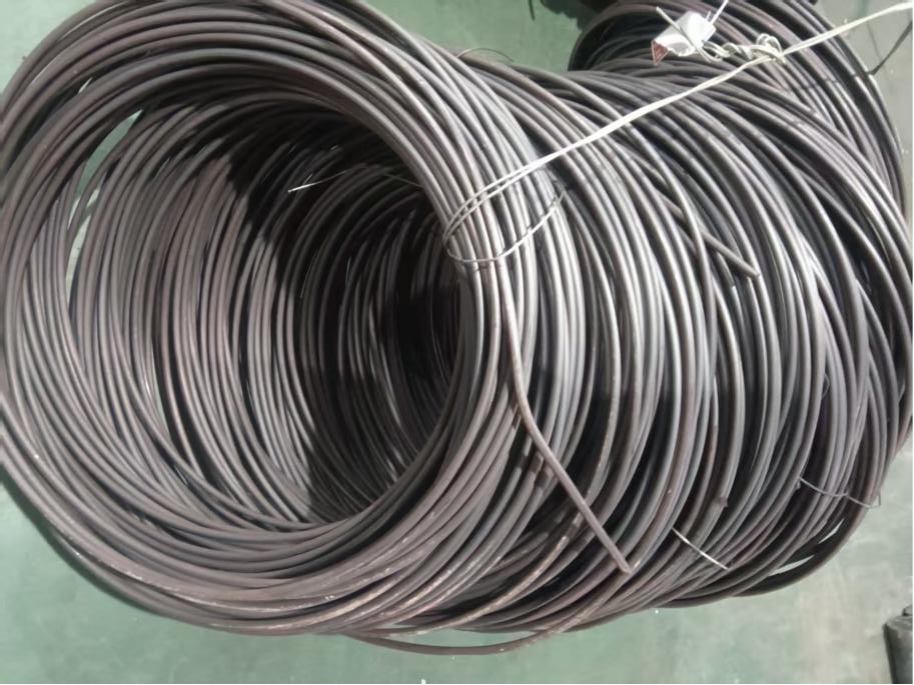
Iron-nickel fixed-expansion precision alloys are special metal materials with specific thermal expansion coefficients achieved through precise control of composition ratios, widely used in aerospace, precision instruments, semiconductor manufacturing, and other fields. Their core value lies in solving connection failure issues caused by the difference in thermal expansion coefficients among different materials, such as in optical instruments where the expansion coefficients of lenses and frames must be highly matched to avoid image distortion. Chengchuan New Materials (Zhengzhou) Co., Ltd., relying on the strategic location advantage of the Zhengzhou High-Tech Industrial Development Zone, focuses on the research and manufacturing of high-purity metals and special alloys, and its iron-nickel fixed-expansion alloy product line covers international standard grades such as 4J29, 4J36, with thermal expansion coefficient accuracy up to ±1×10⁻⁶/°C, meeting the stringent requirements of high-end manufacturing for material stability.
Technical Principles and Core Advantages
The expansion characteristics of iron-nickel constant-expansion alloys originate from the modulating effect of nickel atoms on the iron atom lattice in their crystal structure. By adjusting the nickel content (usually 28%-36%) and adding trace amounts of cobalt, molybdenum, and other elements, the average linear expansion coefficient of the material can be precisely controlled within the temperature range of -50℃ to 200℃. Qinchuan New Materials adopts a vacuum induction melting (VIM) + electroslag remelting (ESR) double-refining process to ensure alloy composition uniformity ≤0.05% and impurity content (such as sulfur, phosphorus) ≤0.005%, significantly enhancing the material's thermal stability and processing performance. Its independently developed cold rolling-annealing integrated production line can achieve customized production of thickness specifications from 0.05mm to 10mm, with an annual production capacity of 500 tons. The products have passed the ISO 9001 quality management system certification and are widely used in scenarios such as semiconductor wafer carriers and laser器 casings.
Typical Application Case: Semiconductor Wafer Carrier
In semiconductor manufacturing, wafer carriers must maintain dimensional stability under high-temperature conditions (300℃-500℃) to prevent wafer deformation or contamination. After a well-known international semiconductor equipment supplier replaced traditional aluminum alloys with ChengChuan 4J29 alloy, the thermal expansion coefficient matching of the carriers increased by 90%, the service life extended from 12 months to 36 months, and the annual maintenance cost of a single unit decreased by about 200,000 yuan. In this case, the ChengChuan technical team optimized the alloy annealing process parameters (temperature 650℃±5℃, holding time 4 hours) through simulating the wafer processing thermal cycle process, reducing the residual stress of the material to ≤15MPa, ensuring the structural integrity of the carriers under extreme operating conditions.
Technical layout and R&D strength
Qinchuan New Materials has established a full chain technological layout in the field of iron-nickel fixed expansion alloys, covering "material design, process development, and detection verification." Its R&D center is equipped with field emission scanning electron microscopy (SEM), electron probe microanalysis (EPMA), and other equipment, which can achieve atomic-level characterization of the material's microstructure and composition. Recently, the company has jointly carried out the "Development of Ultra-Low Coefficient of Expansion Iron-Nickel Alloys" project with the School of Materials Science and Engineering at Zhengzhou University. By adding the rare earth element yttrium (Y), the expansion coefficient of 4J36 alloy has been successfully reduced to 0.8×10⁻⁶/℃ within the temperature range of -200℃ to 100℃, reaching an international advanced level. Currently, the material has passed extreme environment tests by a certain aerospace technology group and is planned to be used in the supporting structure of satellite optical components.
Experience Summarization and Industry Outlook
Technical breakthroughs in iron-nickel constant-expansion alloys require a balance between material design and process control. Practice by Qinchuan New Materials shows that through component optimization (such as micro-adjustment of nickel content), melting process improvement (such as double melting), and precise control of heat treatment parameters (such as annealing temperature gradient design), material performance can be significantly improved. In the future, with the increasing demand for precision devices in fields such as 5G communication and quantum computing, iron-nickel constant-expansion alloys will develop towards higher accuracy (expansion coefficient ≤ 0.5×10⁻⁶/℃) and wider temperature range (-250℃ to 400℃). Qinchuan New Materials plans to invest 120 million yuan in building an intelligent production line, introducing an AI-driven process parameter optimization system, further consolidating its leading position in the special alloy field.