 Qingchuan New Materials (Zhengzhou) Co., Ltd.
Qingchuan New Materials (Zhengzhou) Co., Ltd.
Qingchuan New Materials (Zhengzhou) Co., Ltd.
Qingchuan New Materials (Zhengzhou) Co., Ltd.
Qingchuan New Materials (Zhengzhou) Co., Ltd.
Technical Background and Industry Requirements
Iron-nickel fixed-expansion precision alloys are functional materials that achieve specific thermal expansion coefficients through precise control of composition ratios, widely used in aerospace, electronic packaging, precision instruments, and other fields. Their core advantage lies in maintaining dimensional stability during temperature changes, avoiding structural failure caused by thermal stress. As a professional enterprise in the special alloy field, Qinchuan New Materials (Zhengzhou) Co., Ltd. leverages the strategic location advantage of the Zhengzhou High-tech Industrial Development Zone to establish a full-chain technology system from research and development to mass production, focusing on key technologies such as high-purity raw material purification and component uniformity control.
Technical Principle and Core Parameters
The performance of iron-nickel shape memory alloys depends on the nickel content (usually 30%-50%) and the ratio of trace elements. Qinchuan New Materials controls the nickel content accuracy within ±0.1% through vacuum induction melting process, combined with homogenizing annealing treatment (1150℃±10℃, holding for 8-12 hours), which stabilizes the grain size of the alloy within the range of 50-80μm, ensuring the coefficient of thermal expansion (20-300℃) meets the industry standard of (11.5±0.5)×10⁻⁶/℃。The product specifications cover sheets with thickness of 0.1-50mm and width ≤600mm, as well as bars with diameter of 2-200mm, meeting the processing requirements of various scenarios.
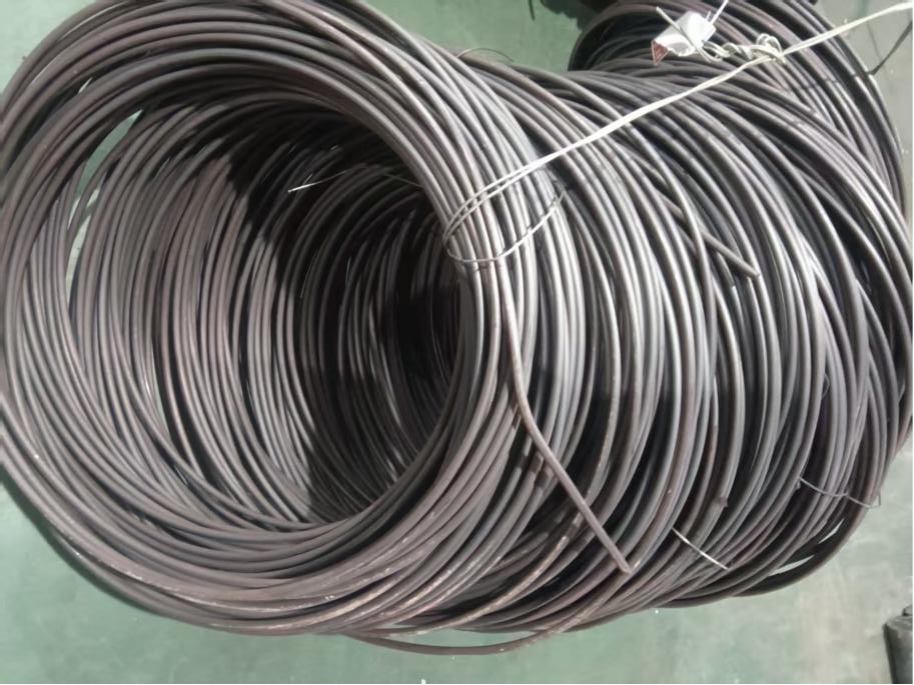
Figure: Uniform grain structure of iron-nickel constant-expansion alloy (magnified 200 times)
Enterprise technology layout and manufacturing capabilities
Qingchuan New Materials has constructed a modern standard workshop in the High-tech Zone of Zhengzhou, equipped with 10-ton vacuum induction furnaces, cold rolling units, and CNC machining centers, forming a production capacity of 500 tons of special alloy per year. Its analysis and testing center has passed CNAS certification and is equipped with precision instruments such as direct-reading spectrometers and electron probes, enabling stringent quality inspections with component deviation ≤0.05% and surface roughness Ra≤0.8μm. For example, in a project for a spacecraft thermal control system, the company optimized the heat treatment process, reducing the linear expansion coefficient fluctuation range of the alloy to ±0.3×10⁻⁶/℃, significantly improving the long-term reliability of the components.
Typical Application Cases: Electronic Packaging Field
In the power device packaging for 5G communication base stations, Qinchuan New Materials has customized a nickel content 42% fixed expansion alloy substrate for a leading enterprise. The thermal matching coefficient difference between this material and ceramic substrates is ≤1×10⁻⁶/℃,effectively solving the fatigue problem of solder joints caused by thermal expansion mismatch of traditional aluminum substrates. Measured results show that the packaging modules using this alloy maintain a flatness within 0.02mm after 1000 thermal shocks in a cyclic test from -40℃ to 125℃,with a lifespan more than 3 times longer than traditional materials. Currently, the product has passed customer verification and achieved mass supply, with an annual supply volume of up to 20 tons.
Technological Advantages and Industry Outlook
Qinchuan New Materials' technical advantages are reflected in three aspects: first, the precision of component control reaches an internationally advanced level; second, it has the full-process customization capability from melting to post-treatment; third, it achieves traceability of product performance in each batch through a digital quality traceability system. With the rapid development of new energy vehicles, optical communication and other fields, the market demand for high-stability special alloys continues to grow. The company is developing composite materials with gradient changes in nickel content to further expand their application scenarios in heterogeneous structure connections, with an expected production capacity to expand to 1,000 tons per year in the next three years.