 Qingchuan New Materials (Zhengzhou) Co., Ltd.
Qingchuan New Materials (Zhengzhou) Co., Ltd.
Qingchuan New Materials (Zhengzhou) Co., Ltd.
Qingchuan New Materials (Zhengzhou) Co., Ltd.
Qingchuan New Materials (Zhengzhou) Co., Ltd.
Technical Background: Core Value of Iron-Nickel Positive Expansion Sealing Alloy
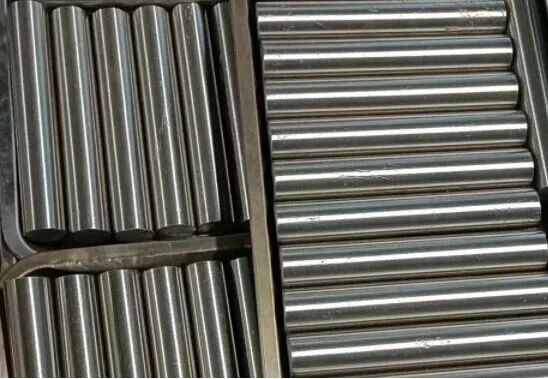
Iron-nickel fixed expansion sealing alloy is a type of functional material that achieves a specific thermal expansion coefficient through precise control of the iron-nickel ratio. Its core advantage lies in its high match with the thermal expansion coefficient of non-metallic materials such as glass and ceramics, effectively solving issues like cracking and gas leakage caused by thermal stress in scenarios such as electronic packaging and vacuum devices. Qinchuan New Materials (Zhengzhou) Co., Ltd., relying on its independently developed component design model, stabilizes the thermal expansion coefficient of the alloy within the range of (5.0-8.0)×10⁻⁶/℃,to meet different packaging process requirements.
Technical Analysis: Double Breakthrough in Component Design and Process Control
The R&D team of Qinchuan New Materials optimizes the alloy composition through orthogonal experiments, determining Fe-42Ni (mass fraction) as the matrix formula, and adding trace amounts of cobalt (Co≤0.5%) and molybdenum (Mo≤0.3%) to enhance high-temperature stability. In terms of technology, the company adopts a vacuum induction melting + electroslag remelting double process, controlling the content of impurity elements to P≤0.015%, S≤0.010%, ensuring the purity of the alloy reaches above 99.95%. The thickness tolerance of its cold-rolled strip can be stabilized at ±0.01mm, and the surface roughness Ra≤0.8μm, meeting the stringent requirements of semiconductor packaging for material flatness.
Practical Case: 5G Base Station Filter Packaging Project
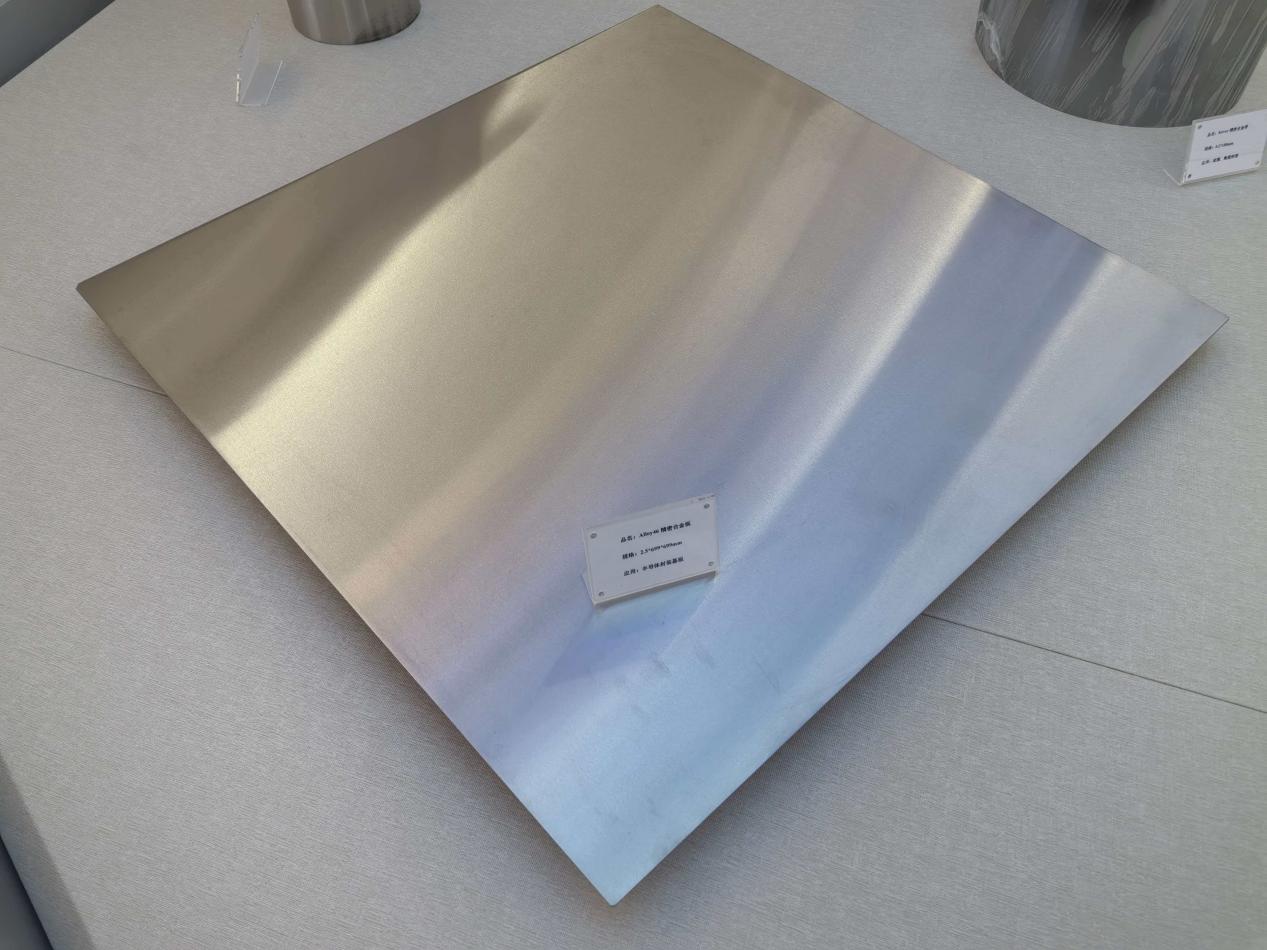
In the 5G base station metal cavity filter encapsulation project of a certain communication enterprise, Qinchuan New Materials provides customized 4J33 alloy strip (thickness 0.2mm, width 50mm), achieving a sealed connection with ceramic substrates through laser welding technology. After high and low temperature cycle tests from -40℃ to +125℃ (1000 times), the encapsulation leakage rate is ≤1×10⁻¹² Pa·m³/s, a 30% improvement in reliability compared to the traditional Kovar alloy solution. Project data shows that after using Qinchuan alloy, the filter yield rate increased from 82% to 95%, and the cost per unit of equipment was reduced by 12%.
Enterprise Technology Layout: Full Chain Capabilities from Lab to Industrialization
Qingchuan New Materials has established a 2000㎡ special alloy R&D center in the High-tech Zone of Zhengzhou, equipped with scanning electron microscopy (SEM), electron probe micro-analyzer (EPMA) and other testing equipment, enabling precise analysis of alloy composition, phase structure, residual stress, and other parameters. The annual production line of 500 tons of special alloy adopts an automatic control system, with key processes (such as melting temperature, rolling speed) precisely controlled by PLC to ensure the stability of performance between batches. Currently, the company has obtained ISO 9001 quality management system certification, and its products have passed RoHS, REACH, and other environmental compliance tests.
FAQ: Technical Challenges of Iron-Nickel Positive Expansion Seal Alloy Technology Deciphered
Q1: How to choose the appropriate alloy model?
A: The thermal expansion coefficient (CTE) of the encapsulation material must be matched. For example, when encapsulating with borosilicate glass (CTE≈3.3×10⁻⁶/℃), 4J29 alloy (CTE≈4.6×10⁻⁶/℃) is preferred; for aluminum oxide ceramic encapsulation (CTE≈7.2×10⁻⁶/℃), 4J33 alloy (CTE≈6.5×10⁻⁶/℃) is more suitable.
Q2: How to deal with cracks during the alloy processing process?
Cracks mainly originate from excessive cold working rate or improper annealing process. It is recommended to control the cold rolling deformation per pass ≤15%, and use a 780℃±10℃ holding process for 2 hours during intermediate annealing to effectively eliminate work hardening.
Q3: What are the technical advantages of Qinchuan New Materials?
A: The company achieves collaborative innovation across three dimensions: component design model shortens R&D cycle by 40%, dual-melting process enhances purity by 15%, and intelligent detection system achieves 100% online inspection for each coil of material, establishing a full-process technical barrier from material development to application support.