 Qingchuan New Materials (Zhengzhou) Co., Ltd.
Qingchuan New Materials (Zhengzhou) Co., Ltd.
Qingchuan New Materials (Zhengzhou) Co., Ltd.
Qingchuan New Materials (Zhengzhou) Co., Ltd.
Qingchuan New Materials (Zhengzhou) Co., Ltd.
Technical Background and Definition
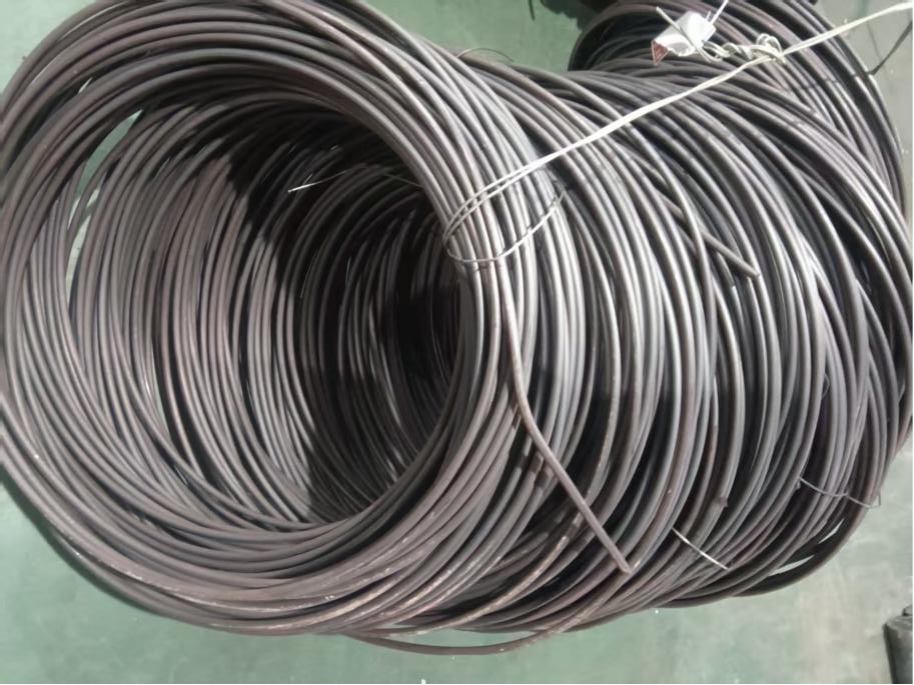
Iron-nickel precision alloy with fixed expansion is a special alloy material that achieves highly controllable thermal expansion coefficient within a specific temperature range by precisely controlling the proportion of iron and nickel elements and adding trace amounts of other elements (such as cobalt, copper, etc.). Its core characteristic is the linear relationship between expansion coefficient and temperature, which can be adjusted by composition to fit different application scenarios, and is widely used in precision instruments, optical components, electronic packaging, and other fields.
Tengchuan New Materials' technical layout and production capabilities
Qingchuan New Materials (Zhengzhou) Co., Ltd. is a professional enterprise in the field of high-purity metals and special alloys, relying on modern standard workshops in the Zhengzhou High-Tech Industrial Development Zone, equipped with internationally advanced special alloy production lines and precision processing equipment. The company's technical team has been dedicated to the research and development of iron-nickel-based alloys for over a decade, forming a full-process technical system from composition design, melting process to post-treatment. It has the production capacity of thousands of tons of special alloys per year, with product purity reaching above 99.99%, and the expansion coefficient control accuracy being better than ±0.5×10⁻⁶/℃.
Technical Principles and Core Parameter Analysis
The expansion behavior of iron-nickel superalloys is mainly determined by the regularity of atomic spacing in the crystal structure with temperature changes. By adding cobalt elements (usually 5%-15% by content), the Curie temperature (Tc) of the alloy can be significantly increased, maintaining stable ferromagnetism in the range of room temperature to 200°C, thereby inhibiting nonlinear expansion. Typical compositions like the 4J36 alloy (containing 36% nickel) have an expansion coefficient of 1.5×10⁻⁶/°C (20-100°C), suitable for glass-metal sealing applications; while the 4J29 alloy (29% nickel, 17% cobalt) has a lower expansion coefficient (0.9×10⁻⁶/°C), commonly used in aerospace precision structural components.
Practical Steps: Alloy Composition Design and Melting Process
Step 1: Ingredient DesignAccording to the target expansion coefficient (α) and the temperature range of use, simulate the effect of different element ratios on α through thermodynamic calculation software (such as Thermo-Calc). For example, increasing the nickel content can reduce α, but it requires balancing magnetic properties with processing properties; adding 0.1%-0.3% carbon can improve melting fluidity, but excessive addition will lead to increased brittleness.
STEP 2: Vacuum Induction MeltingUsing a 500kg vacuum induction furnace, melting under a vacuum degree of 10⁻³Pa to avoid oxidation inclusions. The melting temperature is controlled at 1550-1600°C, and after 30 minutes of holding, it is cast into ingots. At this stage, strict monitoring of component segregation is required, and grain coarsening is suppressed through rapid cooling (water-cooled copper mold).
Step 3: Heat Treatment and Cold WorkingThe forged alloy requires homogenization annealing at 1050℃ (4 hours) to relieve residual stresses, followed by cold rolling (deformation rate 60%-70%) and intermediate annealing (750℃, 2 hours). Finally, it undergoes aging treatment (480℃, 8 hours) to stabilize the microstructure. The treated alloy can achieve a tensile strength of up to 600MPa and an elongation of ≥25%.
Enterprise Application Case: Optical Instrument Sealing Components
Qingchuan New Materials customized 4J36 alloy sealing rings for a precision optical company, which must meet the thermal matching requirements with K9 glass (expansion coefficient 8.2×10⁻⁶/℃). By adjusting the nickel content to 36.2% and adding 0.02% zirconium to refine the grain structure, the final product has an expansion coefficient of 8.1×10⁻⁶/℃ (20-100℃), and the leakage rate after glass sealing is below 1×10⁻¹² Pa·m³/s. After 1000 cycles of testing from -40℃ to 85℃, there is no cracking, significantly improving the reliability of the instrument.
Cautionary Notes and Common Issues
FAQ1: How to select the alloy model suitable for the application scenario?Select based on the temperature range of use and the expansion coefficient of matching materials: Prioritize 4J36 in scenarios of 20-100℃; choose 4J29 for lower expansion coefficient or higher strength; for high-temperature environments (>200℃), consider adding molybdenum elements (such as 4J50) to enhance thermal stability.
FAQ2: How to avoid composition segregation during the melting process?Adopting multi-stage stirring technology (magnetic stirring + mechanical stirring), controlling the casting speed (≤0.5m/s), and eliminating micro segregation through subsequent homogenizing annealing (1050°C, 6 hours).
FAQ3: How to handle cracks after cold working?Immediately halt processing, check if the deformation exceeds the limit (usually ≤70%), and perform annealing treatment (700°C, 2 hours) on the material. If cracks are deep, remove the defective part and reprocess.
Technical Summary and Outlook
The technical core of the Fe-Ni precision alloy with definite expansion lies in the precise matching of composition, process, and performance. Qinchuan New Materials has achieved industry-leading precision in expansion coefficient control through continuous optimization of melting process and heat treatment systems. In the future, it will focus on researching and developing high-temperature resistant (>300℃) and ultra-low expansion (α<0.5×10⁻⁶/℃) alloys, expanding their applications in semiconductor packaging and quantum computing fields.