 Qingchuan New Materials (Zhengzhou) Co., Ltd.
Qingchuan New Materials (Zhengzhou) Co., Ltd.
Qingchuan New Materials (Zhengzhou) Co., Ltd.
Qingchuan New Materials (Zhengzhou) Co., Ltd.
Qingchuan New Materials (Zhengzhou) Co., Ltd.
I. Technical Background and Industry Positioning
Qingchuan New Materials (Zhengzhou) Co., Ltd. is located in the Zhengzhou High-tech Industrial Development Zone, a company focusing on the research, development, and manufacturing of high-purity metals, special alloys, and their products. Relying on modern standard workshops and internationally advanced production lines, the company has established a full-process technological system covering special alloy melting, precision processing, and composition analysis. Particularly in the large-scale production of Alloy46 (a high-strength, corrosion-resistant nickel-based alloy), it has formed a unique technological advantage.
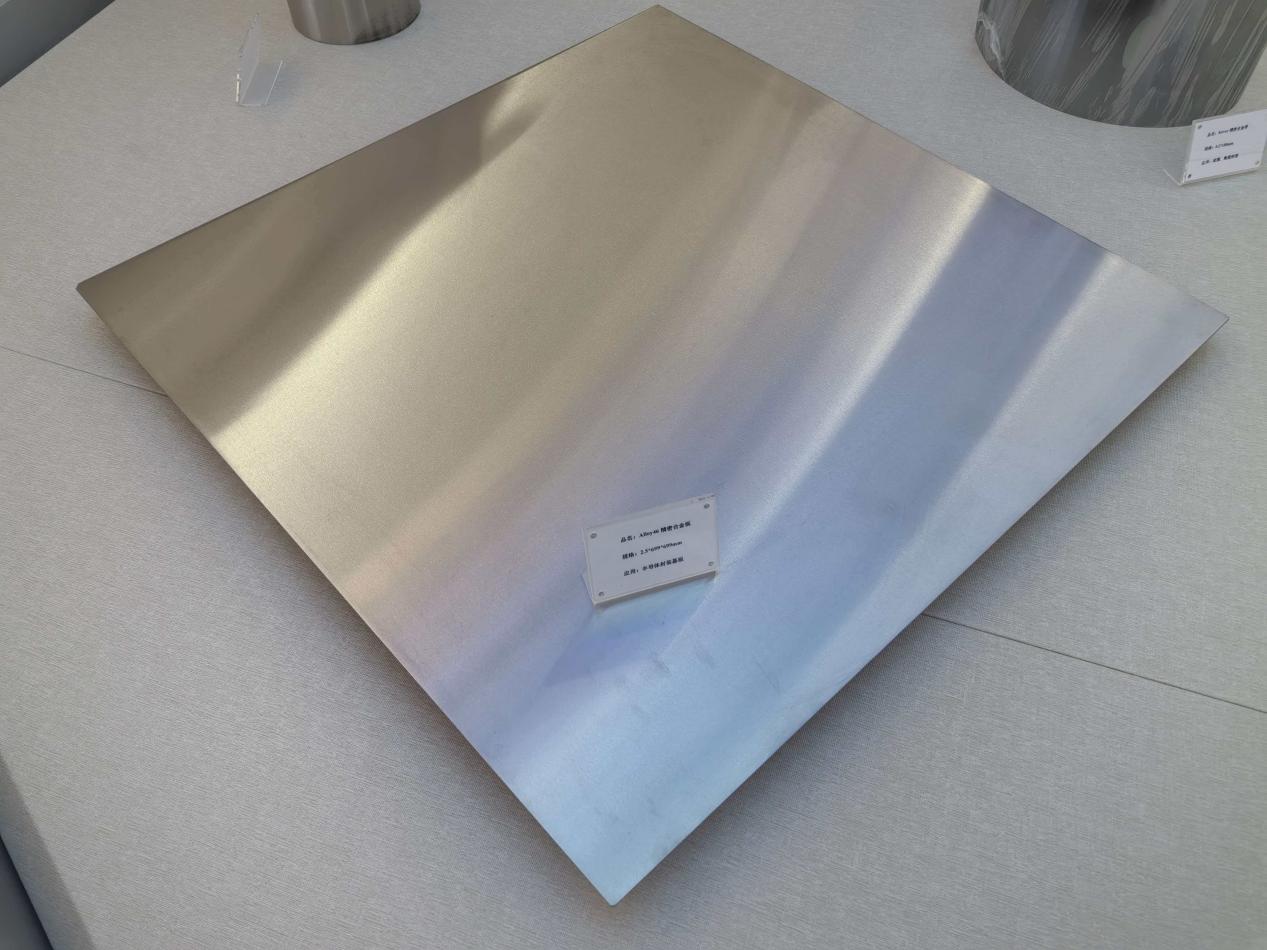
Part Two: Technical Analysis of Alloy46 Special Alloy
Alloy46 is a special alloy with nickel as the matrix, adding elements such as chromium, molybdenum, niobium, etc., with core performance indicators including: tensile strength ≥850MPa, elongation ≥25%, and corrosion resistance equivalent (PREN) ≥45, which can maintain stable performance within a wide temperature range of -196℃ to 600℃. Qinchuan New Materials controls the alloy composition deviation within ±0.05% through a double process of vacuum induction melting (VIM) + electroslag remelting (ESR), and simultaneously adopts a combination process of cold rolling + aging treatment, making the grain size reach ASTM E112 standard level 6-8, significantly improving the fatigue resistance.
III. Core Process Parameters and Quality Control
1. Melting parametersVacuum ≤ 1Pa, melting temperature 1600-1650°C, holding time ≥ 120 minutes, ensuring uniform distribution of elements.
2. Processing ParametersCold rolling total deformation ≥70%, intermediate annealing temperature 1050-1100°C, aging temperature 720-750°C, holding time 8-12 hours.
3. Inspection StandardsComponent analysis by direct-reading spectrometer (OES), mechanical property testing by universal testing machine (UTM), grain structure observation under metallographic microscope, corrosion resistance verification by salt spray test chamber (NSS), covering multiple international standards such as ASTM, GB/T, ISO.
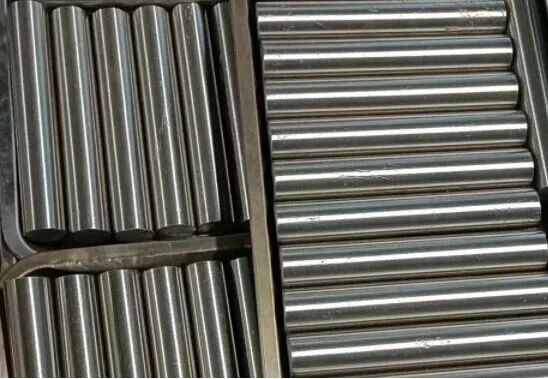
4. Typical Application Cases: Marine Engineering Pipeline Systems
In the seawater circulation pipeline project of a coastal nuclear power plant, the Alloy46 alloy pipe materials provided by Qingchuan New Materials must meet the following requirements: seawater flow rate of 3m/s, chloride content of 35,000ppm, and design life of 30 years. Through optimizing the alloy composition (increasing molybdenum content to 3.5%) and surface passivation treatment, the corrosion rate of the material under simulated working conditions is reduced to 0.02mm/year, which is more than 5 times higher than that of traditional 316L stainless steel. After 5 years of operation, the inspection shows that there are no defects such as pitting and stress corrosion cracking on the inner wall of the pipeline, which verifies the reliability of the technical scheme.
V. Technological Advantages and Industry Value
Inching New Materials' breakthrough in Alloy46 technology is mainly reflected in three aspects: Firstly, it solves the problem of composition segregation through the double melting process; secondly, it has developed low-temperature aging strengthening technology; thirdly, it has established a full-process quality traceability system. Currently, the company has formed a production capacity of 500 tons of Alloy46 alloy per year, with products widely used in marine engineering, chemical equipment, aerospace and other fields. It has served over 200 customers cumulatively, and its technical parameters have reached the international level of similar products.
Structured FAQ Page
Q1: What are the main application scenarios of Alloy46?
A1: Alloy46 is commonly used in marine environments (such as desalination equipment, offshore platform pipelines), the chemical industry (such as sulfuric acid/hydrochloric acid conveying pipelines), the energy sector (such as nuclear power plant cooling systems), and high-end manufacturing (such as aviation engine components) due to its excellent corrosion resistance and high strength.
Q2: How does Qinchuan New Materials ensure the quality of the alloy?
A2: The company has established a three-level quality control system, from raw material inspection (using ICP-MS to analyze impurity content) to production process monitoring (recording melting temperature/process deformation for each batch) to finished product inspection (performing 100% ultrasonic testing), and regularly entrusts third-party institutions (such as SGS) for performance retesting.
Q3: What are the performance differences between Alloy46 and 316L stainless steel?
A3: Compared to 316L, Alloy46 has a 40% increase in the pitting resistance equivalent number (PREN) and a 30% increase in tensile strength, allowing for long-term use in higher chloride ion concentrations (such as seawater) and higher temperatures (such as steam environments), but it costs about twice as much as 316L.