 Qingchuan New Materials (Zhengzhou) Co., Ltd.
Qingchuan New Materials (Zhengzhou) Co., Ltd.
Qingchuan New Materials (Zhengzhou) Co., Ltd.
Qingchuan New Materials (Zhengzhou) Co., Ltd.
Qingchuan New Materials (Zhengzhou) Co., Ltd.
I. Technical Background and Industry Positioning
FeNi50 (Iron-Nickel 50 alloy) is a special alloy with low thermal expansion coefficient, high magnetic permeability, and excellent corrosion resistance, widely used in electronic components, precision instruments, aerospace and other fields. As a professional enterprise in the field of high-purity metals and special alloys, Qinchuan New Materials (Zhengzhou) Co., Ltd. leverages the regional advantage of Zhengzhou High-Tech Industrial Development Zone, and through its independently developed precision processing production line and full-process quality inspection system, has achieved closed-loop control of FeNi50 alloy from component design to finished product manufacturing. Its core advantages include: 1) Uniformity control of alloy composition (±0.05%); 2) Precise control of heat treatment process on grain size (ASTM 1-10 level); 3) Surface treatment technology enhancement of corrosion resistance (salt spray test ≥ 1000 hours).
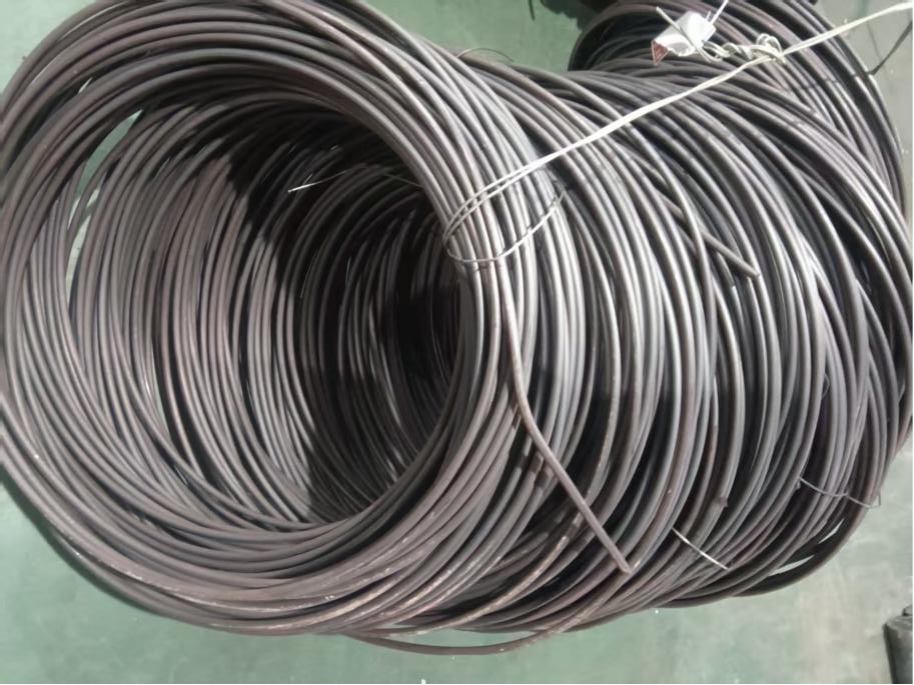
Part II: Technical Analysis: Manufacturing Process and Parameter Control of FeNi50 Alloy
1. Component Design and Melting TechnologyThe nickel content of FeNi50 alloy must be strictly controlled within the range of 49.5%-50.5% to balance magnetic properties and thermal expansion coefficient. Qinchuan New Materials adopts vacuum induction melting (VIM) technology, through inert gas protection and multiple refining, to reduce the content of impurity elements (such as C, S, O) to ppm level (C≤0.005%, S≤0.002%, O≤0.001%), ensuring the purity of the alloy matrix. The melting temperature is controlled at 1550-1600℃, with holding time of 30-45 minutes to promote uniformity of components.
2. Hot processing and cold deformation technologyThe alloy ingot, after forging and roughing, requires multi-pass rolling (total deformation ≥80%) and intermediate annealing (850-900°C, holding for 2 hours) to eliminate work hardening. In the cold rolling stage, a four-roller reversible mill is used, with single-pass deformation controlled at 10%-15%, and the final thickness tolerance ≤±0.01mm. The annealing process has a significant impact on grain size: rapid cooling (quenching in water) yields fine grain structure (ASTM 5-8 grades), suitable for high-strength demand scenarios; while slow cooling (oven cooling) forms coarse grain structure (ASTM 2-4 grades), optimizing magnetic properties.
3. Surface Treatment and Quality InspectionTo enhance corrosion resistance, the alloy surface must be electrolytically polished (surface roughness Ra≤0.2μm) and passivated (chromate concentration 5-8g/L). Quality inspection covers the entire process: real-time monitoring of composition deviation using a direct-reading spectrometer (OES); X-ray diffraction (XRD) analysis of grain orientation; salt spray test chamber to verify corrosion resistance (compliant with ASTM B117 standard).
3. Corporate Technical Layout and Application Experience
Qinchuan New Materials has three major characteristics in its technological layout in the FeNi50 field: 1)Research and development-oriented1) Jointly establish a joint laboratory with the School of Materials Science and Engineering of Zhengzhou University, focusing on alloy composition optimization and development of new heat treatment processes; 2)Equipment investment:Introduce high-end equipment such as Germany's ALD vacuum melting furnace and Japan's Mitsubishi cold rolling machine, achieving processing accuracy of ±0.005mm; 3)Industry ApplicationsProducts have been supplied in bulk to Huawei (5G communication filters), China Aviation Electronics (aviation connectors), and other companies, with a cumulative delivery volume exceeding 200 tons, and customer feedback indicates a pass rate of ≥99.2%.
For example, in a certain aerospace project: the customer required the thermal expansion coefficient of FeNi50 alloy to be ≤1.2×10⁻⁶/℃ within the temperature range of -55℃ to 125℃, and the permeability μ≥5000. Qinchuan New Materials achieved the product performance standards by adjusting the Ni content to 50.2% and adopting a stepwise annealing process (880℃×2h + 820℃×1h), ensuring a stable supply of 500kg per batch.
Four: Technical Challenges and Future Directions
Current challenges in the manufacturing of FeNi50 alloy include: 1) controlling the composition uniformity of large-sized billets (diameter ≥300mm); 2) ensuring rolling stability of ultra-thin strip materials (thickness ≤0.05mm). Qichuan New Materials plans to break through through the following paths: 1) upgrading the electromagnetic stirring system of the vacuum melting furnace; 2) developing nano-grade lubricants to reduce the cold rolling friction coefficient; 3) exploring additive manufacturing technologies such as laser selective melting (SLM) to expand the application scenarios of the alloy in complex structural components.