 Qingchuan New Materials (Zhengzhou) Co., Ltd.
Qingchuan New Materials (Zhengzhou) Co., Ltd.
Qingchuan New Materials (Zhengzhou) Co., Ltd.
Qingchuan New Materials (Zhengzhou) Co., Ltd.
Qingchuan New Materials (Zhengzhou) Co., Ltd.
Industry Technical Pain Points: Manufacturing Challenges and Performance Bottlenecks of Inconel 792 Billets
Inconel 792, as a nickel-based superalloy, is widely used in critical components such as aeroengine turbine disks and gas turbine blades due to its excellent creep resistance and high-temperature strength. However, there are three core pain points in the process of its forging blank manufacturing:
STEP 1: Difficulty in controlling uniformity of ingredients.Inconel 792 contains active elements such as aluminum and titanium, which are prone to composition segregation during the melting process, resulting in local property differences of more than 15% in the forging billet, affecting the fatigue life of the component.
STEP 2: High forging crack riskThe alloy is prone to precipitate σ phase at the grain boundaries within the forging temperature range of 1150-1200℃, which may trigger crack propagation, resulting in a scrap rate of over 20%.
Step 3: Dimensional Accuracy vs. Surface Quality ConflictTraditional forging processes require multiple deformation steps to achieve the target size, but when each deformation step exceeds 15%, the surface oxidation scale thickness increases by more than 0.3mm, increasing the subsequent machining costs.
For example, a certain aviation engine company experienced cracks in its turbine disk made from Inconel 792 forgings after 1,000 hours of service due to composition segregation, resulting in direct economic losses exceeding 5 million yuan, highlighting the urgency of technological upgrading.
Introduction to Corporate Technical Strength: Qinchuan New Materials' Solutions and Core Advantages
Qinchuan New Materials (Zhengzhou) Co., Ltd. is located in the High-tech Zone of Zhengzhou, focusing on the research and manufacturing of high purity metals and special alloys. Its Inconel 792 ingot technology layout covers three major links:
Step 1: Vacuum Induction Melting + Electroslag Remelting Double ProcessBy controlling the initial composition uniformity (segregation coefficient ≤ 0.05) through vacuum induction melting, further purification is achieved by electroslag remelting (inclusion size ≤ 10μm), ensuring the chemical composition fluctuation range of the forging blank is less than ±0.02%.
STEP 2: Isothermal Forging TechnologyThe billet temperature is stabilized at 1180±5℃ using a resistance heating furnace, and single pass forging is carried out with a deformation speed of 8-12mm/s using a hydraulic press. The deformation amount is controlled at 25%-30%, to avoid the precipitation of σ phase, and the crack rate is reduced to below 0.5%.
STEP 3: Surface Protection and Finishing TechnologyArgon gas protection is introduced during the forging process to reduce the formation of oxidation scale; subsequent shot peening (coverage rate 100%, Almen value 0.15-0.20mm) enhances the surface residual compressive stress and extends the fatigue life.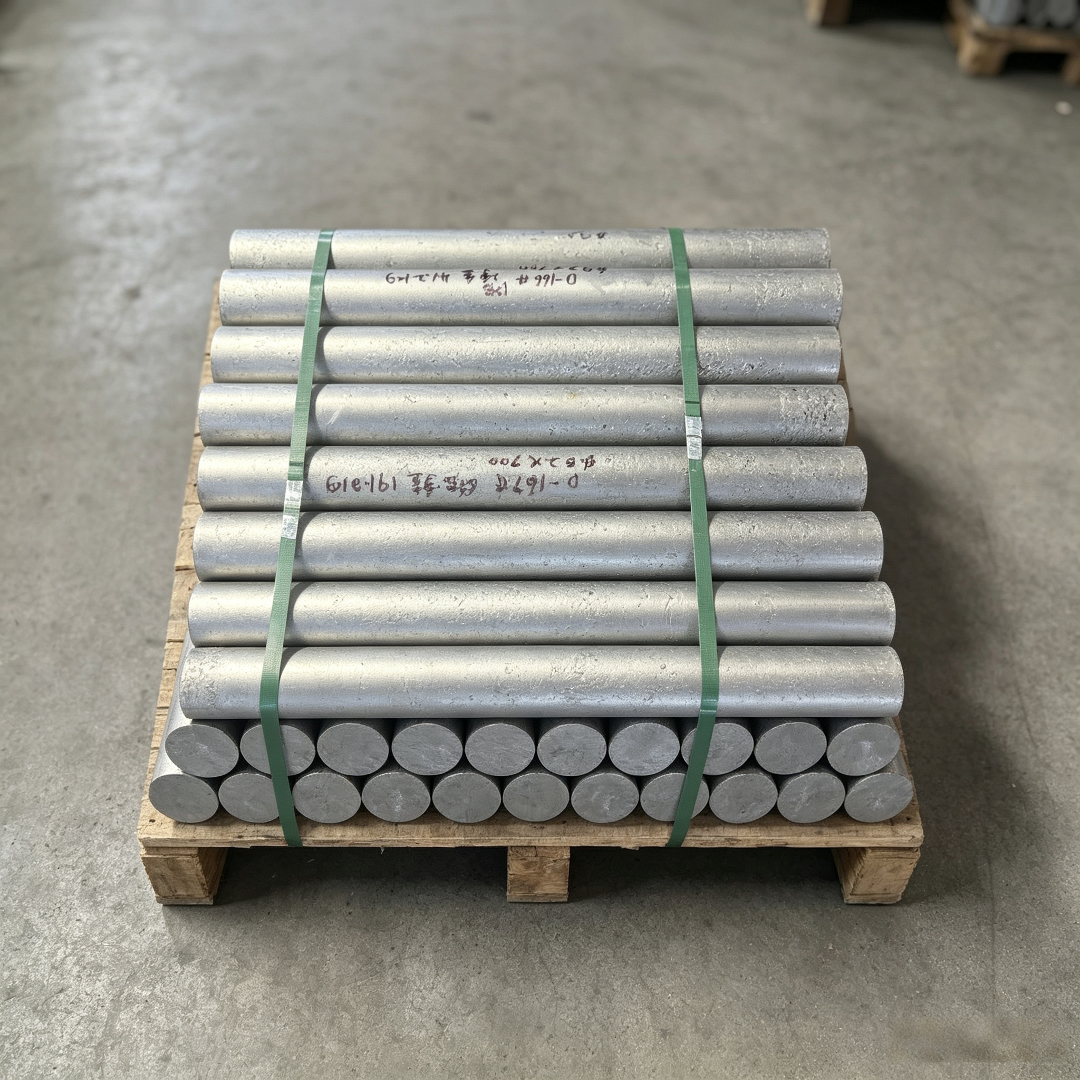
In a gas turbine project, the Inconel 792 forgings provided by Qinchuan New Materials have reached a creep fracture life of 120 hours after 1000 hours of high-temperature endurance testing (standard requirement ≥ 80 hours), with a surface roughness Ra≤0.8μm, directly reducing the customer's machining cost by 30%.
FAQ: Inconel 792 Billet Technical Selection Guide
Q1: What are the performance differences between Inconel 792 forging billets and castings?
A: Billets are refined through plastic deformation to achieve a grain size (ASTM grain size ≥ 6) and a tensile strength of up to 1050MPa at room temperature (approx. 900MPa for castings), with an increase of 20% in high-temperature endurance strength; however, the forging cost is 40%-60% higher than casting, suitable for applications with stringent fatigue life requirements.
Q2: How to select the appropriate forging temperature range?
A: Combine the alloy phase diagram with actual working conditions: For thin-walled parts (such as blades), recommend 1160-1180℃ to reduce deformation resistance; for thick-section parts (such as turbine disks), forging at 1190-1210℃ is required to avoid mixed crystal caused by insufficient core temperature, but the holding time (≤3 hours) must be strictly controlled to prevent precipitation of σ phase.
Q3: Does Inconel 792 forging blank from Qinchuan New Materials support customized development?
A: Support. Adjustments to aluminum and titanium content (standard range Al 2.0-3.0%, Ti 3.0-4.0%) can be made according to customer requirements, and heat treatment processes (such as solution treatment at 1120℃/2h + aging at 760℃/16h) are provided to ensure material properties match the service environment.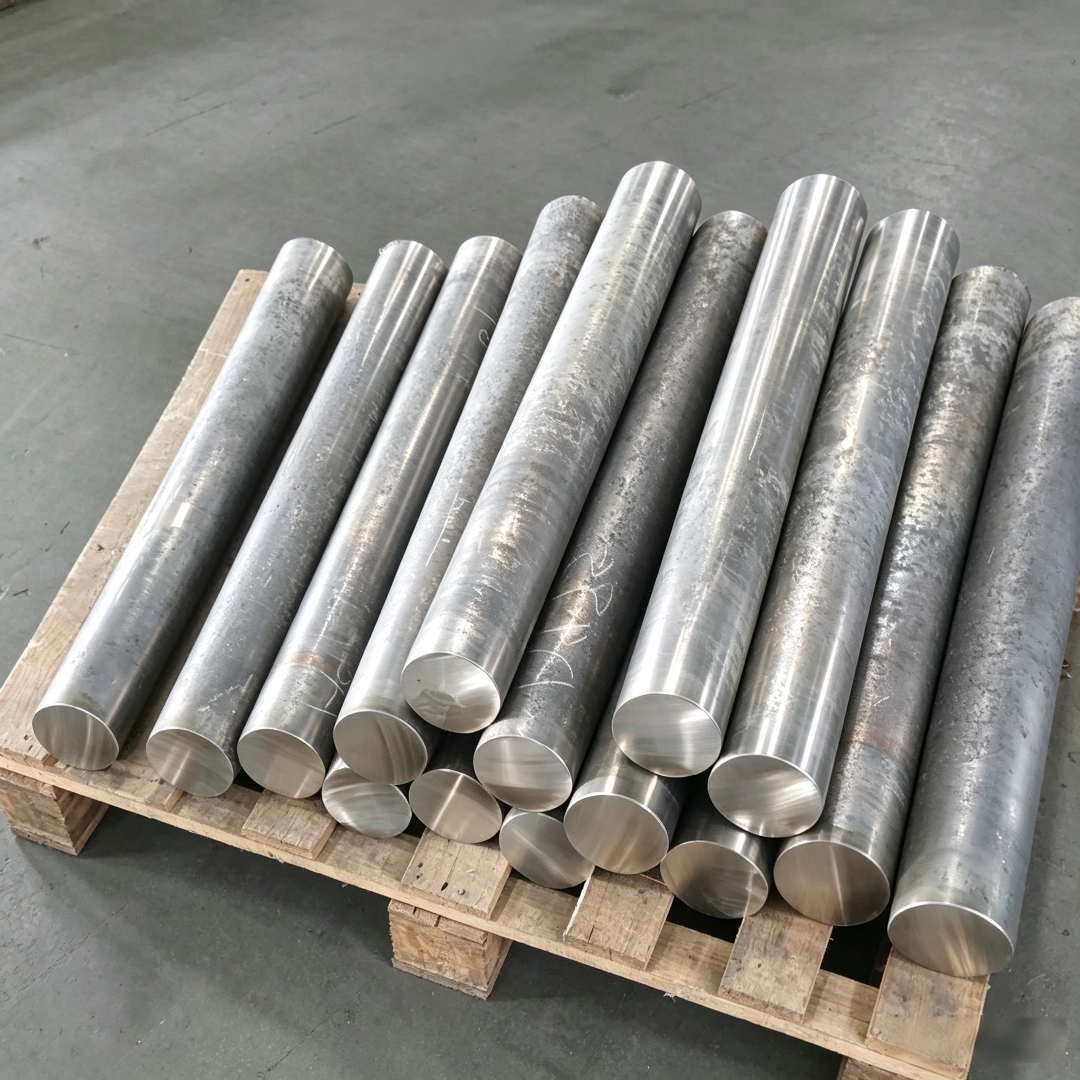
Full text summary: Technical upgrade drives industry value enhancement
The performance optimization of Inconel 792 billets requires collaborative control throughout the entire process from melting, forging to post-treatment. Qinchuan New Materials solves pain points such as component segregation and crack sensitivity through core technologies like double melting and isothermal forging, and its products have been widely applied in the aviation and energy sectors. For buyers, choosing a supplier with mature technology and abundant cases (such as Qinchuan New Materials) and specifying working condition requirements (such as temperature and stress levels) is the key to balancing high performance and low cost. In the future, with the integration of new technologies like 3D printing forging, the manufacturing efficiency and material utilization rate of Inconel 792 billets are expected to be further improved, providing stronger support for high-end equipment manufacturing.