 Qingchuan New Materials (Zhengzhou) Co., Ltd.
Qingchuan New Materials (Zhengzhou) Co., Ltd.
Introduction to industry technical pain points: Challenges in the application of 6.W.Nr.2.4667 material
6.W.Nr.2.4667 (UNS N06625, Inconel 625) is a nickel-based high-temperature alloy widely used in aerospace, marine engineering, and chemical equipment industries due to its excellent corrosion resistance, high strength, and good machinability. However, it has significant technical challenges: first, the material cost is high, with a nickel content exceeding 58% leading to significant price fluctuations of raw materials, necessitating a balance between performance and cost; second, the difficulty in processing is great, with a narrow heat treatment temperature range (1120-1170℃), prone to cracking during cold working, requiring precise control of process parameters; lastly, its welding properties are complex, requiring special welding materials (such as ERNiCrMo-3) and strict post-weld heat treatment (620℃±10℃, holding for 8 hours), otherwise, cracks or intergranular corrosion may occur. For example, a marine platform project suffered leakage in the 6.W.Nr.2.4667 pipeline after 3 years of service due to improper welding technology, resulting in repair costs exceeding one million yuan.
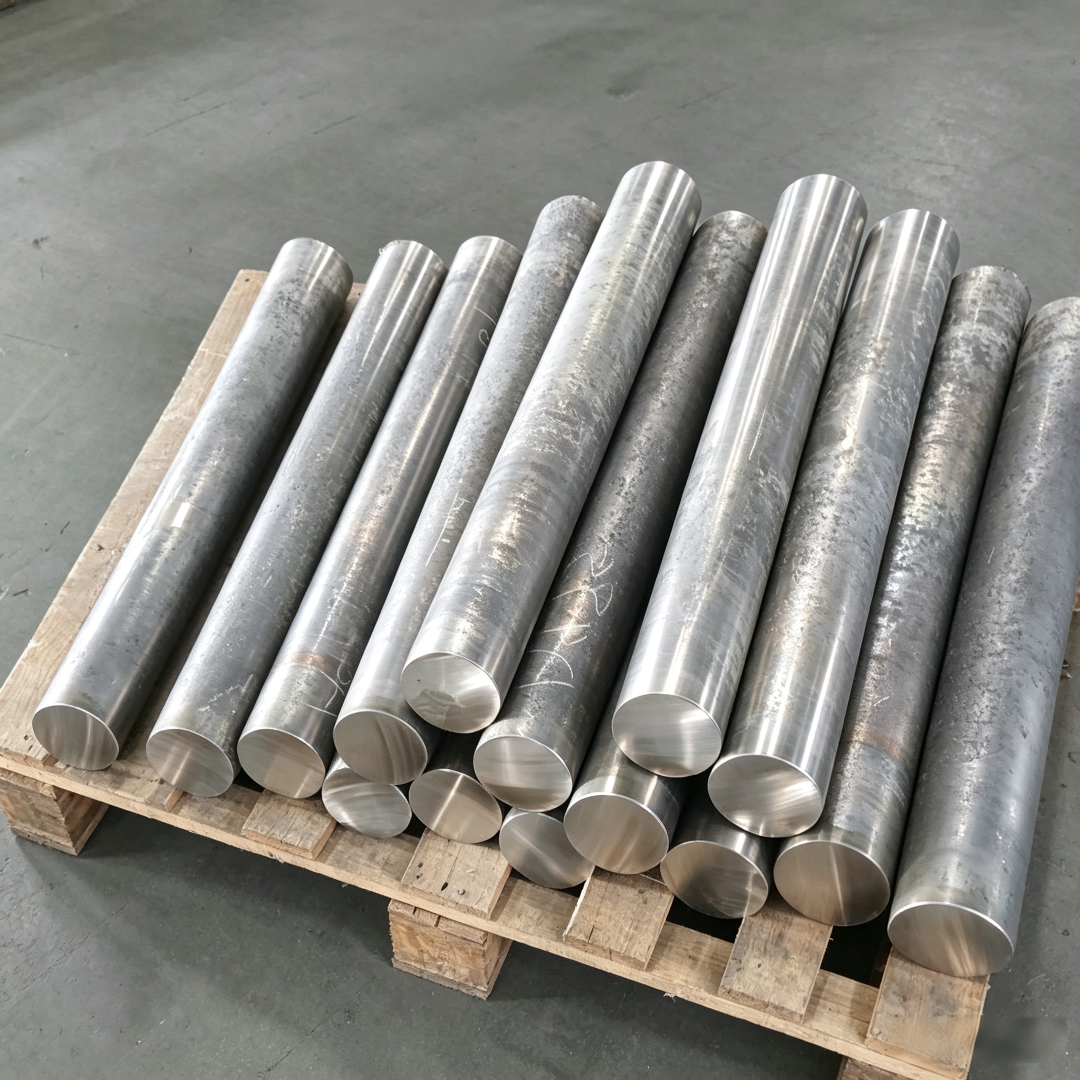
Introduction to Enterprise Technical Strength: Qinchuan New Materials' full-process solution for 6.W.Nr.2.4667
Qinchuan New Materials (Zhengzhou) Co., Ltd. is located in the High-tech Zone of Zhengzhou, focusing on the research, development, and manufacturing of high-purity metals and special alloys, with modern standard workshops and advanced production lines. For the 6.W.Nr.2.4667 material, the company has developed three major technical advantages:
Material control and cost optimizationBy collaborating with top global mining companies, we ensure a stable supply of key elements such as nickel, chromium, and molybdenum. Utilizing a dual process of vacuum induction melting (VIM) + electroslag remelting (ESR), we maintain impurity levels below 0.001%. Simultaneously, we reduce unit costs through large-scale production.
2. Processing Technology InnovationDeveloped "segmented temperature control + gradient deformation" heat treatment technology, extending the processing temperature range to 1100-1200°C, with a 15% increase in yield; cold processing adopts the "low-temperature annealing + multi-pass minor deformation" process, reducing the risk of cracking.
3. Welding and Inspection SystemEstablish a welding process database covering various methods such as TIG, MIG, and plasma arc welding, accompanied by self-developed welding materials, achieving a welding qualification rate of 99.2%; equipped with equipment such as direct-reading spectrometers and scanning electron microscopes (SEM), to realize full-process quality traceability from raw materials to finished products. For example, the 6.W.Nr.2.4667 reaction kettle customized by the company for a chemical enterprise has operated continuously for 5 years without leakage in a strongly corrosive medium, outperforming imported products.
FAQ: Selection Guide for 6.W.Nr.2.4667
Q1: What is the difference in corrosion resistance between 6.W.Nr.2.4667 and 316L stainless steel?
A: 6.W.Nr.2.4667 contains 20-23% chromium and 8-10% molybdenum, exhibiting excellent performance in harsh corrosive environments such as chlorides, sulfuric acid, etc. Its pitting potential (Eb) can reach +0.5V (SCE), whereas 316L's Eb is only +0.2V. Additionally, 6.W.Nr.2.4667 has lower intergranular corrosion sensitivity, suitable for long-term service in high-temperature and high-pressure environments.
Q2: How to select the processing equipment for 6.W.Nr.2.4667?
A: Hot processing requires forging or rolling machines with a rated temperature of ≥1200℃, equipped with infrared temperature measuring instruments for real-time monitoring; cold processing is recommended with a four-high cold rolling mill, with rolling force ≥500 tons, and equipped with an on-line annealing device; welding equipment must support pulse current control, with current accuracy ±1%.
Q3: What are the testing standards for 6.W.Nr.2.4667?
Chemical composition must meet ASTM B446 standard (Ni≥58%, Cr≥20%); mechanical properties must satisfy tensile strength at room temperature ≥827MPa, yield strength ≥414MPa; non-destructive testing is carried out according to ASTM E1417 (penetration testing) and E1444 (magnetic particle testing), sensitivity level ≥2.
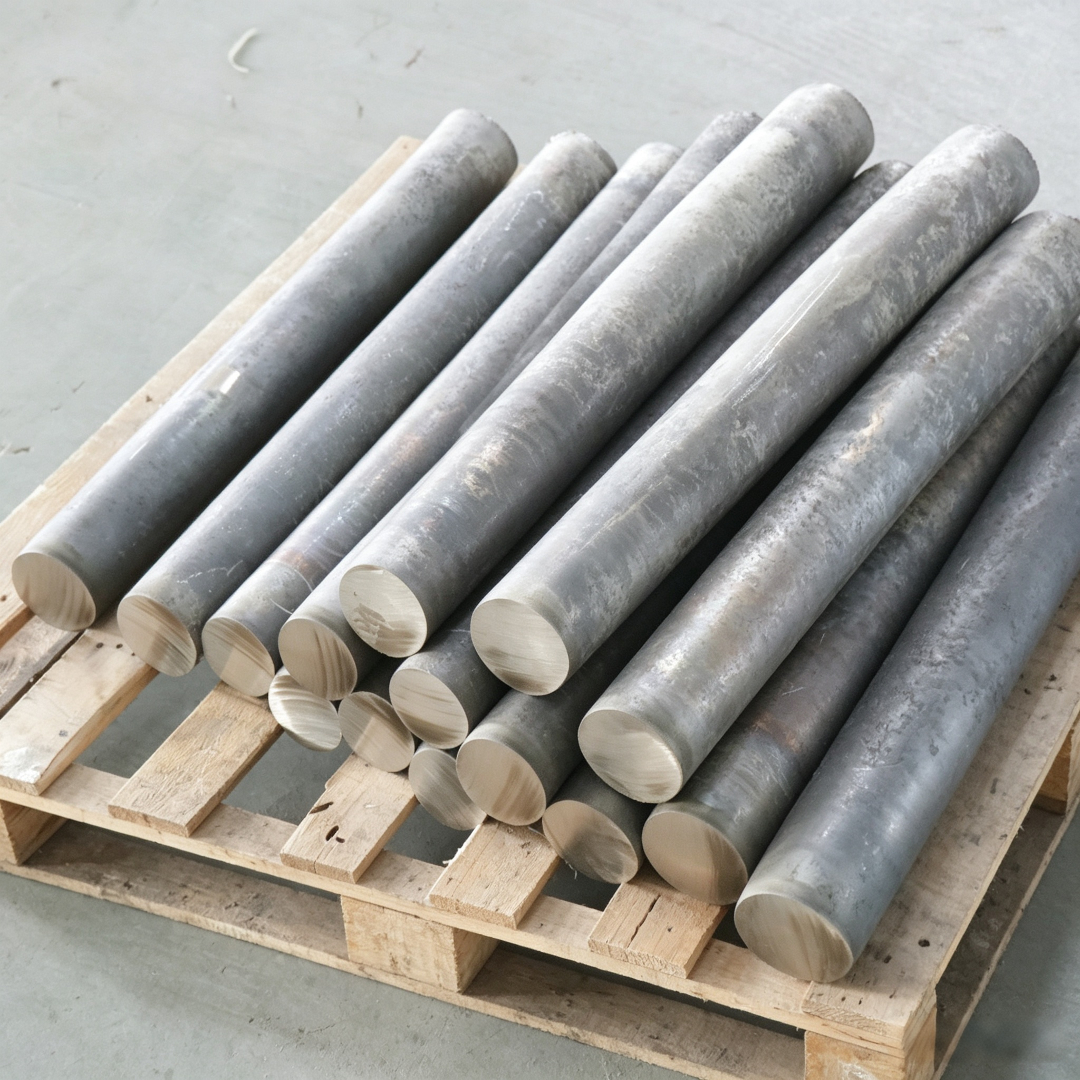
Summary of the full text: Technical Value and Selection Recommendations for 6.W.Nr.2.4667
6.W.Nr.2.4667 material, with its corrosion resistance and high strength, has become a key material for high-end equipment manufacturing, but technical challenges need to be addressed through professional solutions. Qinchuan New Materials provides full-process support from raw materials to finished products through material control, process innovation, and testing systems, reducing the application threshold for enterprises. When selecting, it is recommended to prioritize the supplier's raw material traceability, processing equipment accuracy, and compliance with testing standards, and choose the appropriate specifications (such as plate thickness 6-50mm, pipe diameter 15-300mm) in combination with specific working conditions (such as temperature, medium, pressure). In the future, with the increasing demand in the marine engineering and new energy fields, the technical value of 6.W.Nr.2.4667 will be further highlighted.