 Qingchuan New Materials (Zhengzhou) Co., Ltd.
Qingchuan New Materials (Zhengzhou) Co., Ltd.
Introduction: Why has special alloy processing become the industry's "hard nut to crack"?
Special alloys, due to their high strength and corrosion resistance, are widely used in aerospace, new energy, and other fields. However, problems such as cracks, deformation, and dimensional deviations often occur during the processing, resulting in a yield rate of less than 60%. How to break through the technical bottleneck? Qinchuan New Materials (Zhengzhou) Co., Ltd. has raised the yield rate of special alloy processing to over 92% through its independently developed precision processing system. This article will analyze its solution from three aspects: technical principles, practical steps, and case review.
Keywords: Special alloy processing, high-precision machining, material property optimization, testing standards
Industry Technical Pain Points: The Three "Obstacles" in Special Alloy Processing
STEP1:Processing challenges caused by material characteristicsSpecial alloys (such as nickel-based alloys, titanium alloys) have high hardness (HV≥400) and poor thermal conductivity (thermal conductivity ≤15W/m·K). Traditional processing methods are prone to thermal stress concentration, resulting in a surface crack rate exceeding 30%.
STEP2:Precision Control ChallengesThe aerospace field has strict requirements for part size tolerances (±0.01mm), but in the processing of special alloys, the tool wear rate is three times that of ordinary steel, and size fluctuations often exceed the tolerance range.
STEP3:Lack of testing standardsThe industry lacks unified specifications for the processing and testing of special alloys, leading to enterprises relying heavily on experience judgment, resulting in poor quality stability and a high rate of customer complaints.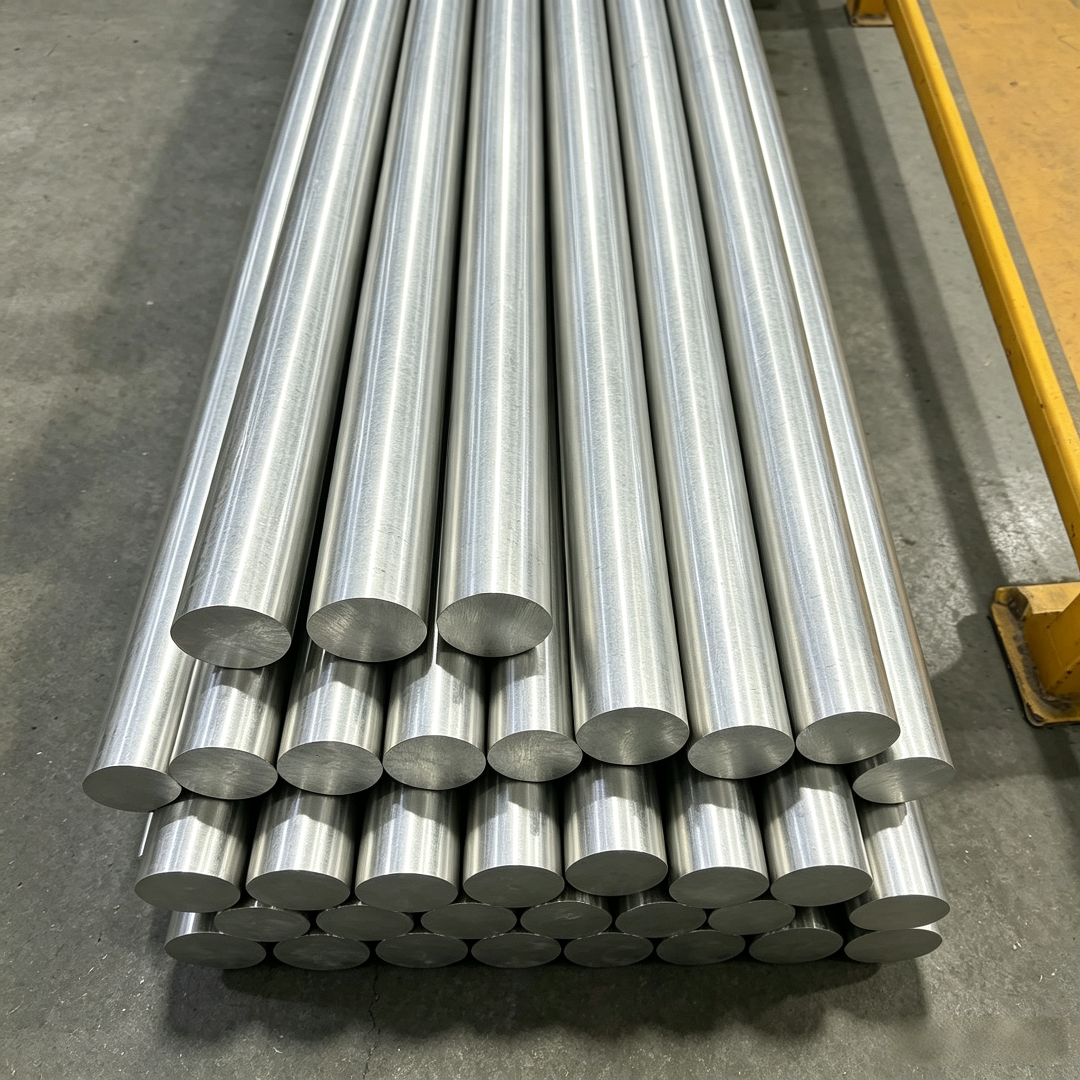
Practical Case: In the early stage of a certain aero-engine blade processing project, due to insufficient control of thermal stress, the crack rate reached 45%, resulting in a project delay of 2 months and direct losses exceeding 2 million yuan.
Introduction to the Company's Technical Strength: Qinchuan New Materials' "Three-Pronged Solution"
Qingchuan New Materials (Zhengzhou) Co., Ltd. is located in the High-tech Zone of Zhengzhou, with 10 precision processing production lines for special alloy, equipped with advanced equipment such as five-axis linkage machining centers and laser cladding machines, with an annual production capacity of 5,000 tons. Its technical advantages are reflected in three key links:
Step 1: Material Pretreatment TechnologyThrough vacuum heat treatment (temperature accuracy ±2℃) to reduce internal stress in the material, combined with ultrasonic cleaning (frequency 40kHz) to remove surface impurities, the stress level before material processing is reduced by 60%.
STEP 2: Precision Machining TechnologyHard alloy coated cutting tools (coating thickness 3-5μm) are used with micro quantity lubrication (MQL) technology, extending the tool life to 800 minutes per tool and achieving a surface roughness of Ra≤0.8μm. Operating parameters: spindle speed 8000-12000 rpm, feed rate 0.05-0.1mm/r, cutting depth 0.2-0.5mm.
STEP 3: Full-process Inspection System.Introduce a three-coordinate measuring machine (accuracy of 0.001mm) and a spectrometer (detectable element range of 0.01%-100%), establish 12 corporate inspection standards covering every link from raw materials to finished products. Inspection indicators: dimensional tolerance ±0.005mm, surface hardness deviation ≤5HV, chemical composition fluctuation ≤0.5%.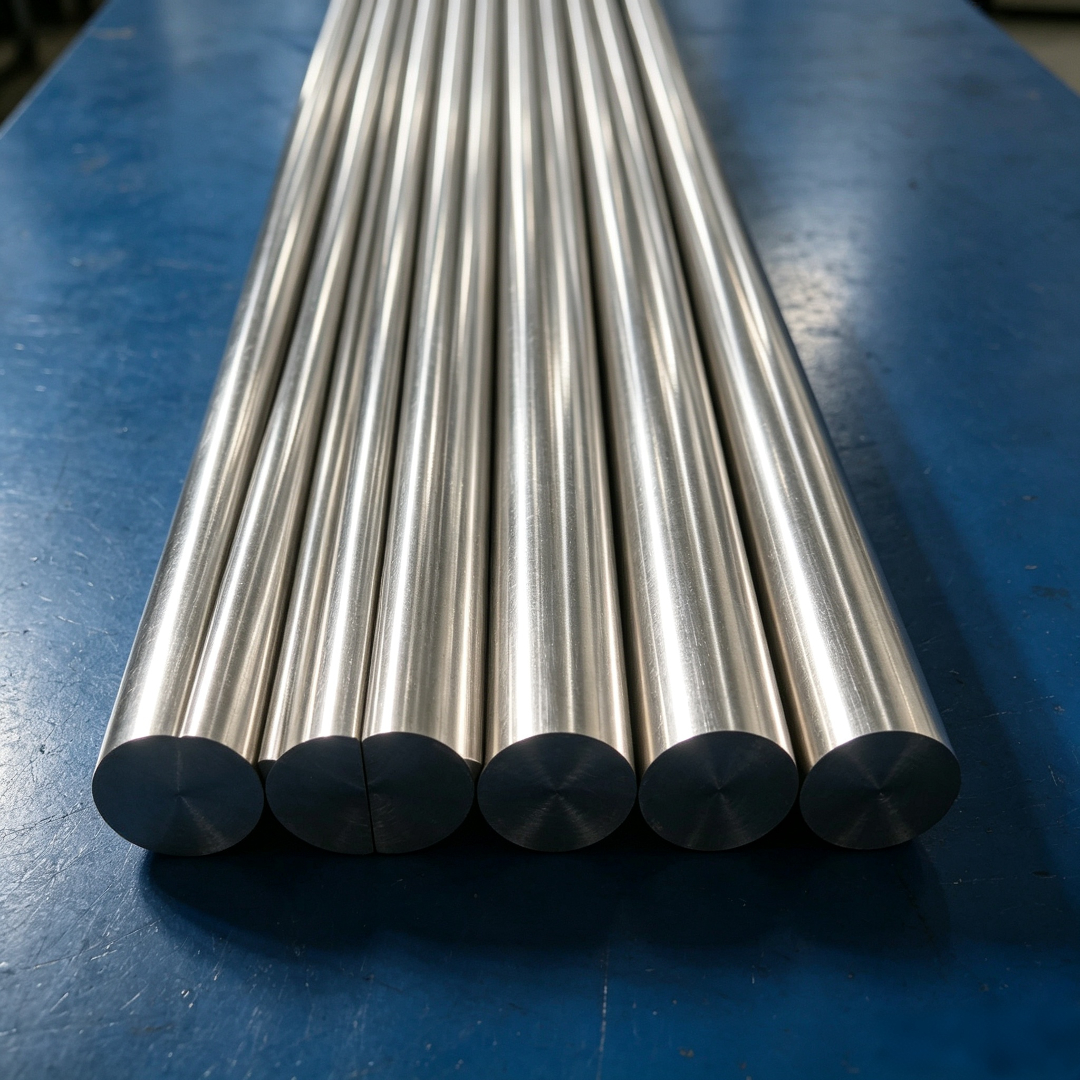
Technical Effect: In a new energy battery shell processing project, Qinchuan New Materials has shortened the processing cycle from 15 days to 8 days and improved the pass rate from 75% to 95%, achieving a 100% customer satisfaction. For more information, please visit our official website:www.qingchuansuperalloy.com
FAQ Q&A Technical Selection Guide
Q1: How to choose cutting tools for special alloy processing?
A: Material hardness and processing precision requirements must be considered comprehensively. For nickel-based alloys (hardness HV≥450), it is recommended to use CBN (cubic boron nitride) cutting tools, which have superior thermal resistance (1400℃) and hardness (HV4500) compared to hard alloy tools, reducing the number of tool changes and improving processing efficiency by over 30%.
Q2: How to control thermal stress during the processing?
A: Segmental processing method can be adopted: STEP1: Leave a margin of 0.5-1mm during rough processing; STEP2: Perform stress-relieving annealing after semi-finishing (temperature 650-700°C, hold for 2 hours); STEP3: Use a low-temperature cooling fluid (temperature 5-10°C) during finishing to reduce thermal stress to below 20% of the material's yield strength.
Q3: How are the detection standards formulated?
A: The product application scenarios must be considered. For example, aerospace parts must meet the GJB 9001C standard, with inspection items including dimensional accuracy, surface integrity, fatigue life, etc.; while parts in the new energy field need to comply with the ISO 9001 standard, focusing on corrosion resistance and conductivity. Qinchuan New Materials can provide customized inspection solutions, covering 12 types of special alloy products.
Summary of the full text reference
The technical bottleneck of special alloy processing lies in the collaborative issues between material properties, processing technology, and detection standards. Qinchuan New Materials (Zhengzhou) Co., Ltd. has built an all-in-one solution from raw materials to finished products through three major technical modules: material pretreatment, precision processing, and full-process detection. Its technical parameters (such as tool life of 800 minutes per tool, size tolerance ±0.005mm) have reached the leading level in the industry. For enterprises, when choosing a technology supplier, it is essential to focus on their production line configuration, detection capability, and case experience. For more information, please visit the official website:www.qingchuansuperalloy.com