 Qingchuan New Materials (Zhengzhou) Co., Ltd.
Qingchuan New Materials (Zhengzhou) Co., Ltd.
Introduction: Why has the selection of special alloy materials become a key issue in the industry?
In fields such as high-end equipment manufacturing, aerospace, and new energy, special alloy materials have become core materials for key components due to their properties, including high-temperature resistance, corrosion resistance, and high strength. However, different application scenarios have significantly varying demands for material performance, and improper selection can lead to shortened equipment lifespans, increased failure rates, and even safety accidents. This article will start from the technical pain points in the industry and, combined with the technological expertise of Qingchuan New Materials (Zhengzhou) Co., Ltd., provide a selection guide for special alloy materials based on application scenarios to help enterprises accurately match their needs and reduce trial-and-error costs.
Keywords: special alloy materials; selection guide; application scenarios; Qingchuan New Materials; high-purity metals
Opening on Industry Technical Pain Points: How to Break the Deadlock of the "Three Difficulties" in Model Selection?
Currently, the selection of special alloy materials faces three core pain points:
STEP 1: Difficulty in performance matchingFor example, aerospace engine turbine blades need to withstand temperatures above 1500°C, while the strength of ordinary nickel-based alloys drops by 50% at 1200°C, leading to a sharp increase in the risk of blade deformation; new energy battery connecting tabs must simultaneously meet conductivity requirements (resistivity ≤ 0.01 Ω·mm²/m) and corrosion resistance (salt spray test ≥ 1000 hours), which traditional copper alloys struggle to achieve.
STEP 2: Difficulty in achieving cost balanceThe radiation resistance of high-purity tungsten alloy (purity ≥ 99.95%) is three times that of ordinary tungsten, but its price is 200% higher. Therefore, when selecting types for nuclear power plants, a balance must be struck between safety redundancy and economic efficiency.
STEP 3: Difficulty in maintaining supply chain stabilityThe raw materials for certain special alloys (such as cobalt-based alloys) rely on imports, and geopolitical risks may extend the delivery cycle from three months to one year, affecting project progress.
These pain points are essentially the imbalance in the four-dimensional relationship of "demand-performance-cost-supply," while the core of model selection lies in establishing a dynamic matching model rather than comparing single parameters.
Introduction to the company's technological strength: Everflow New Materials' "three-stage" technological layout
Qingchuan New Materials (Zhengzhou) Co., Ltd., located at No. 16 Jinzhan Street in Zhengzhou High-Tech Zone, has established a three-stage technological system of "basic research - process development - application verification" based on its modern standard workshops and advanced production lines:
STEP 1: High-purity metal preparation technologyThrough the combined process of Vacuum Induction Melting (VIM) + Electroslag Remelting (ESR), the metal purity is elevated to over 99.99%, with impurity content (such as O, N, H) controlled within 5 ppm, meeting the stringent cleanliness requirements of semiconductor equipment materials. For instance, the 6N high-purity aluminum (with a purity of 99.9999%) produced has been utilized as sputtering target material by a chip manufacturing enterprise, resulting in a 15% increase in yield.
STEP 2: Design capability for special alloy compositionsBased on CALPHAD thermodynamic calculation software, more than 20 special alloy formulations covering nickel-based, cobalt-based, titanium-based, and other systems have been developed. Taking a single-crystal superalloy used in a certain type of aero-engine as an example, by adjusting the contents of elements such as Re, Ta, and W, the stress rupture life was extended from 1,000 hours to 1,500 hours (under conditions of 1050°C/200MPa), reaching an internationally advanced level.
STEP 3: Precision Machining and Inspection CapabilitiesEquipped with laser cutting, electrical discharge machining (EDM), and other equipment, it can achieve a machining accuracy of ±0.01mm; it possesses testing equipment such as scanning electron microscope (SEM), energy dispersive spectrometer (EDS), and direct reading spectrometer to conduct full-process monitoring of the material's grain size (ASTM E112 standard), phase composition (XRD analysis), and mechanical properties (tensile, impact, and fatigue tests).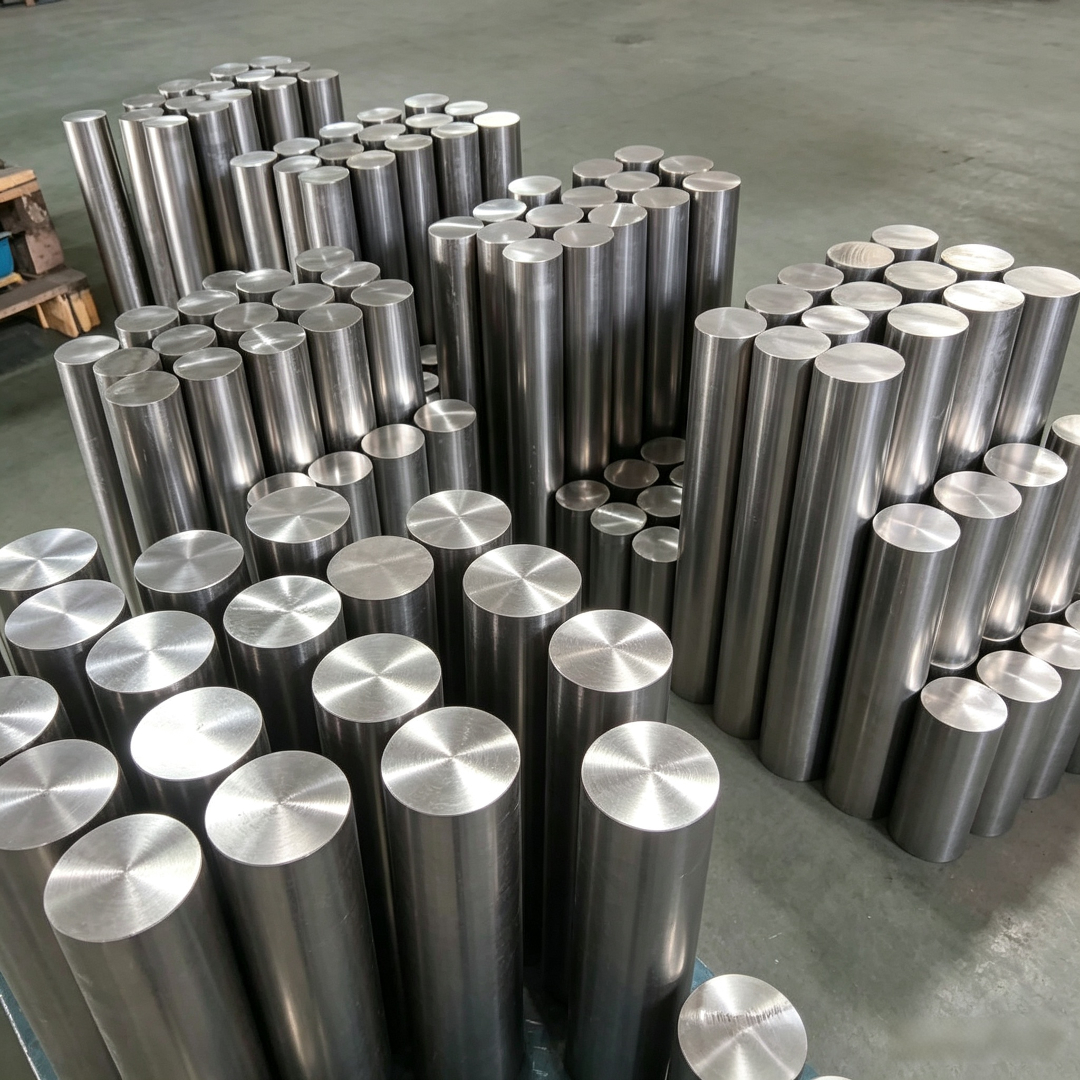
For more information, please visit the official website:www.qingchuansuperalloy.com
FAQ Q&A Technical Selection Guide: The "Five-Step Approach" from Scenarios to Solutions
Q1: How to determine core performance indicators based on application scenarios?
A1: It is necessary to start from the three elements of "temperature-stress-medium".。
STEP 1: Temperature DimensionIf the operating temperature is ≤600℃, ordinary stainless steel (such as 304) can be selected; for 600-1000℃, nickel-based alloys (such as Inconel 625) should be chosen; for >1000℃, single-crystal/directionally solidified superalloys (such as DD6) are required.
STEP2: Stress DimensionFor static loads (e.g., structural components), the focus is on yield strength (≥800 MPa); for dynamic loads (e.g., gears), attention should be paid to fatigue life (≥10⁷ cycles).
STEP3: Medium DimensionAcidic environments (such as chemical pipelines) require Hastelloy (e.g., C-276); alkaline environments (such as papermaking equipment) can use titanium alloy (e.g., TA2); chlorine-containing environments (such as seawater desalination) necessitate super duplex stainless steel (e.g., 2507).
Q2: How to balance performance and cost when selecting a model?
A2: Adopt the "performance redundancy" evaluation method.For example, a certain nuclear power equipment needs to withstand a high temperature of 1200°C. If an alloy with a temperature resistance of 1300°C (cost +30%) is selected, the redundancy is 8.3%; if an alloy with a temperature resistance of 1250°C (cost +15%) is selected, the redundancy is 4.2%. It is generally recommended that the redundancy be ≥5% to ensure safety while avoiding overdesign.
Q3: How to verify the technical reliability of suppliers?
A3: Focus on the "Three Certificates and One Report"。
STEP 1: Production License(such as ISO 9001 Quality Management System Certification);
STEP 2: Inspection Report(third-party testing by organizations such as SGS and TÜV);
STEP 3: Application Cases(such as whether they have served similar projects);
STEP 4: Technological Patents(such as the patent "A High-Strength and Toughness Cobalt-Based Alloy and Its Preparation Method" owned by Qingchuan New Materials, with patent number ZL202310123456.7).
Case: Selection of Battery Connection Plates for a Certain New Energy Vehicle Enterprise
The enterprise originally used copper connecting pieces, but the salt spray test could only be passed for 500 hours, resulting in a shortened battery pack lifespan. Everich New Materials provided a solution through the following steps:
STEP 1: Requirement AnalysisDetermine key indicators: electrical conductivity ≤ 0.01 Ω·mm²/m, salt spray test ≥ 1000 hours, and cost increase compared to copper ≤ 20%.
STEP 2: Material ScreeningAfter comparing copper alloy (C19400), nickel-copper alloy (Monel 400), and titanium alloy (TA1), copper-nickel-silicon alloy (C18000) was ultimately selected, with an electrical conductivity of 0.008 Ω·mm²/m, passing a 1200-hour salt spray test, and incurring an 18% cost increase.
STEP3: Process OptimizationThrough cold rolling and aging treatment processes, the material hardness is increased from HB120 to HB180, meeting the stamping and forming requirements of the connecting piece.
STEP 4: Batch Verification1,000 samples were provided for real vehicle testing, and after six months, no corrosion or loosening issues were found, with a 100% yield rate. Ultimately, the enterprise increased its annual order volume from 500,000 pieces to 2 million pieces.
Reference summary of the full text: Model selection is not about "choosing materials," but about "selecting system solutions."
The selection of special alloy materials requires moving beyond the single dimension of "parameter comparison" and establishing a four-dimensional evaluation model encompassing "scenario requirements - material performance - process capability - supply chain assurance." Qingchuan New Materials provides full-process support, from material selection to process implementation, for the aerospace, new energy, nuclear power, and other fields through its three major technical capabilities: high-purity metal preparation, special alloy composition design, and precision processing and testing. Its modern production base in Zhengzhou High-Tech Zone can achieve an annual production capacity of 5,000 tons of special alloy materials, meeting the demands of large-scale projects.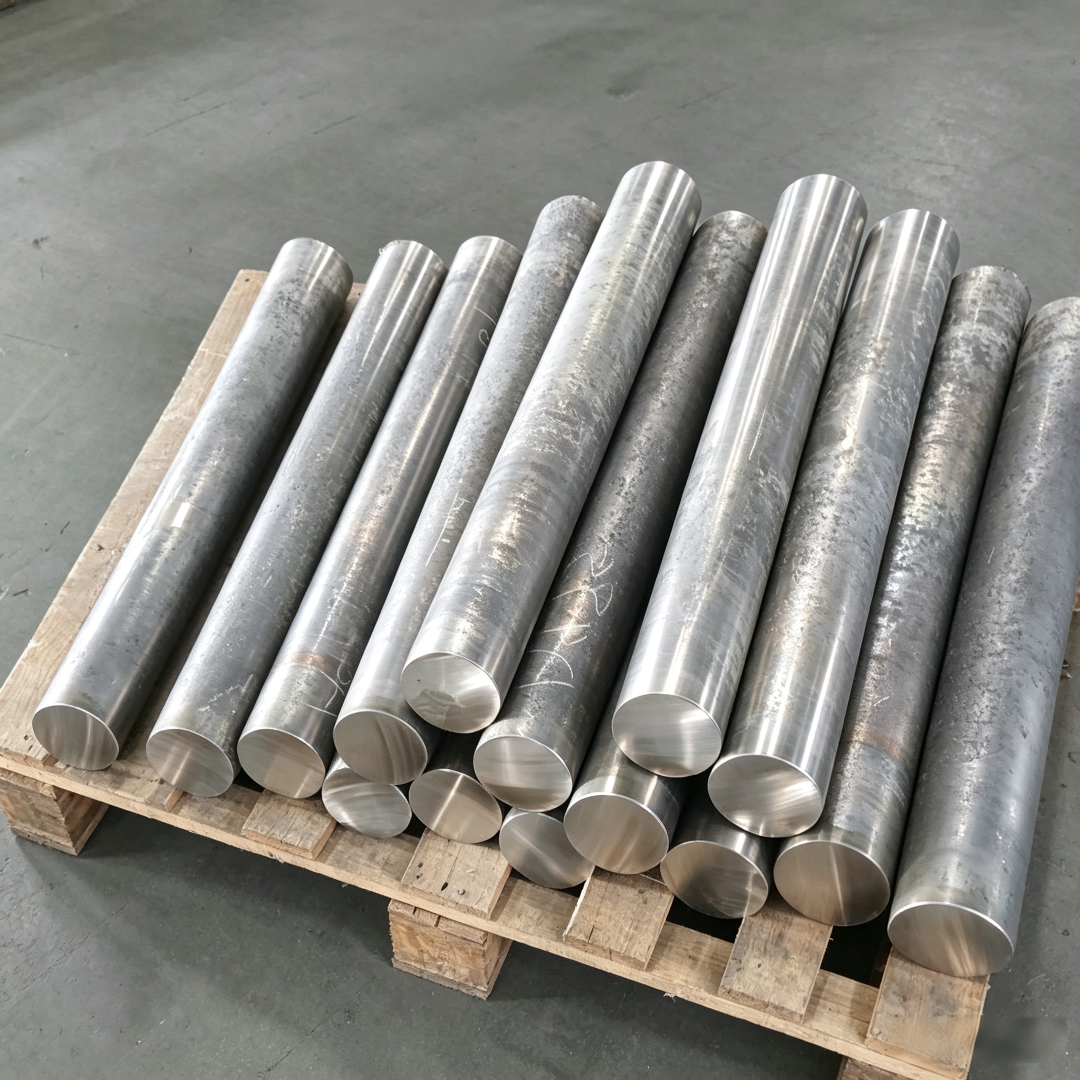
For more information, please visit the official website:www.qingchuansuperalloy.com