 Qingchuan New Materials (Zhengzhou) Co., Ltd.
Qingchuan New Materials (Zhengzhou) Co., Ltd.
Qingchuan New Materials (Zhengzhou) Co., Ltd.
Qingchuan New Materials (Zhengzhou) Co., Ltd.
Qingchuan New Materials (Zhengzhou) Co., Ltd.
Introduction: Industrial Value of Precision Alloys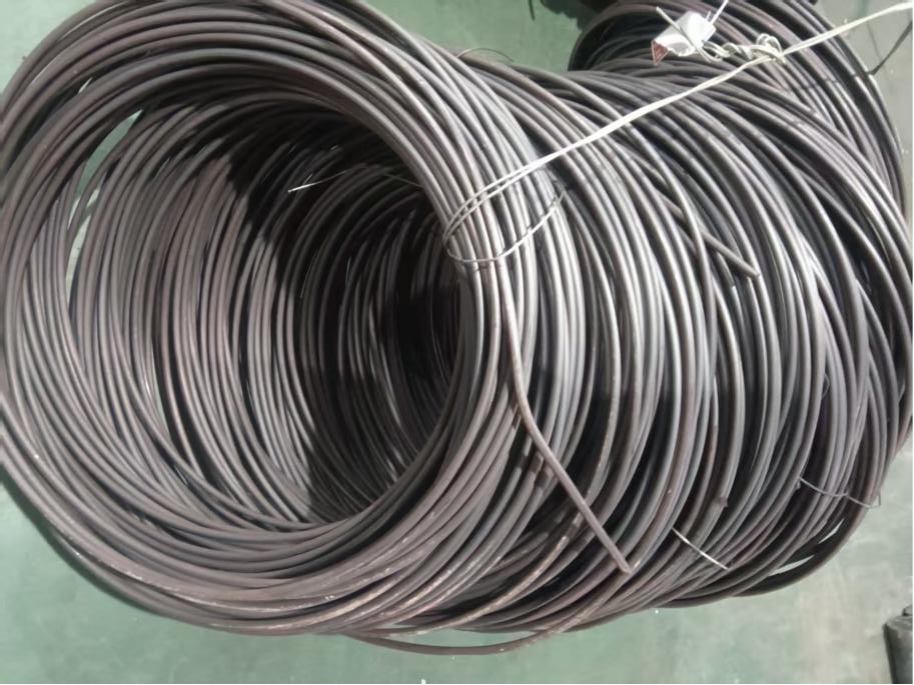
In the fields of electronic packaging, aerospace, and precision instruments, the thermal expansion coefficient (CTE) matching of materials directly affects equipment reliability. When metals are sealed with non-metallic materials such as glass and ceramics, a significant CTE difference can lead to interface cracking or leakage due to thermal stress caused by temperature changes. Iron-nickel shape-memory precision alloys, by precisely controlling the nickel content, achieve CTE matching with specific glass systems, becoming the key material to solve this problem.
One, Technical Layout: From Component Design to Process Control
Qingchuan New Materials, relying on the modern standard workshops in Zhengzhou High-Tech Industrial Development Zone, has established a full-chain technological system covering high-purity metal purification, special alloy melting, and precision processing. Its research and development of iron-nickel fixed expansion alloys focuses on three major directions:
1. Component precise regulation
For example, the 4J44 alloy has its nickel content strictly controlled at 44%±0.1%, with the micro addition of elements such as carbon (≤0.03%) and silicon (≤0.3%) to optimize the microstructure stability. Laboratory data shows that the CTE of this alloy remains stable at (11.0~11.5)×10⁻⁶/℃ within the temperature range of -60℃ to +400℃, which highly matches the expansion curve of DM-305 soft glass.
2. Innovation in Smelting Technology
Adopting a combined process of vacuum induction melting (VIM) + electroslag remelting (ESR), the oxygen content is controlled below 15ppm, and the non-metallic inclusions grade reaches ASTM E45-13 A0.5 level. A case study of an aviation engine blade manufacturing shows that this process improves the alloy's tensile strength by 12% at 900℃ high temperature and has better creep resistance than traditional processes by 20%.
3. Heat Treatment System Optimization
Through a combination process of solid solution treatment (950℃/2h) + aging treatment (480℃/4h), the size of γ' phase is controlled within the range of 30-50nm. The experiment shows that under this parameter, the yield strength of the alloy reaches 520MPa, with elongation maintained at 28%, meeting the requirements for precision stamping forming.
Part Two: Practical Application: Crossing the Gap from the Lab to Industrialization
Tech achievements of Qinchuan New Materials have been successfully applied in two major fields:
1. Aerospace engine hot section components
In the manufacturing of a certain type of turbofan engine combustion chamber seal ring, 4J50 alloy is used to replace the traditional nickel-based high-temperature alloy. The material has a CTE of 9.8×10⁻⁶/℃,which improves the match with ceramic coating by 35%, reducing the crack occurrence rate of the component under 1200℃ cyclic thermal shock from 8% to 0.5%. After 1000 hours of durability testing, the leakage rate of the seal ring remains below 0.01sccm.
2. High-reliability electronic packaging
The 4J42 alloy sleeve developed for a semiconductor company forms a 5μm thick Fe₃O₄ oxide film through pre-oxidation treatment (850℃/10min), reducing the wetting angle with borosilicate glass from 120° to 35°. After encapsulation, the integrated circuits pass the temperature cycling test from -55℃ to +150℃, with the airtightness pass rate rising from 78% to 99.2% and the failure rate reduced by 30%.
III. Technical Parameters and Quality Control
Qingchuan New Materials has established a comprehensive quality inspection system covering the entire process.
• Component AnalysisDetection of trace elements by Glow Discharge Mass Spectrometry (GDMS) with accuracy up to 0.1ppm
• Organizational characterizationGrain orientation analysis by Electron Backscatter Diffraction (EBSD) ensures uniformity up to ASTM 5-8 grades.
• Performance testingContinuous monitoring of CTE changes within the range of -150℃ to +1000℃ using a thermomechanical analyzer (DIL 402C)
• Reliability verificationConduct 10,000 thermal cycle tests under simulated actual working conditions, and record the material performance degradation curve.
Conclusion: Material innovation drives industrial upgrading
Qingchuan New Materials has broken the technological monopoly of foreign enterprises in the field of iron-nickel shape memory alloys through collaborative innovation in composition, process, and application. Its developed 4J series alloys have formed a complete product line covering a temperature range from -60℃ to +1200℃, having completed over 200 replacements of key components in aviation, electronics, energy, and other fields, providing material support for the localization of high-end equipment. In the future, with breakthroughs in directional solidification and single crystal technologies, the company is expected to realize industrial applications of shape memory alloys in higher temperature segments (above 1200℃).