 Qingchuan New Materials (Zhengzhou) Co., Ltd.
Qingchuan New Materials (Zhengzhou) Co., Ltd.
Introduction: How are technological innovations in high-purity metals and specialty alloys reshaping the industry landscape?
As the requirements for material performance in 5G communication, semiconductor packaging, and aerospace continue to rise, the preparation technologies for high-purity metals and specialty alloys have become a critical bottleneck restricting industrial upgrading. Leveraging its independently developed precision purification processes and specialty alloy processing technologies, Qingchuan New Materials (Zhengzhou) Co., Ltd. has successfully overcome the precision limitations of traditional preparation methods, achieving a product purity exceeding 99.999% and an impurity content below 0.0001%. Its products demonstrate significantly superior stability and electrical conductivity under extreme conditions compared to the industry average. This article will provide an in-depth analysis of Qingchuan New Materials' technological breakthroughs from three dimensions: technical principles, operational parameters, and industrial applications.
Keywords: preparation of high-purity metals, processing of special alloys, impurity control, stability in extreme environments, Qingchuan New Materials
Opening on the Industry's Technical Pain Points: The Dilemma of Precision and Efficiency in Traditional Preparation Methods
STEP 1: The traditional vacuum smelting method is prone to contamination by furnace materials during the purification process, making it difficult to achieve a metal purity exceeding 99.99%; STEP 2: Although chemical purification methods can achieve higher purity, the reaction cycle lasts over 72 hours, and residual chemical reagents are difficult to completely remove; STEP 3: The uniformity control of special alloys relies on manual experience, with a common composition deviation rate exceeding 0.5%, leading to embrittlement or creep in extreme temperature ranges from -196°C to 1200°C. Taking gold-tin alloy for semiconductor packaging as an example, products prepared by traditional processes exhibit interface separation after 300 thermal cycles, whereas high-purity alloys can withstand over 1000 cycles while maintaining structural integrity.
Introduction to the company's technological strength: Three core breakthroughs of Everpro New Materials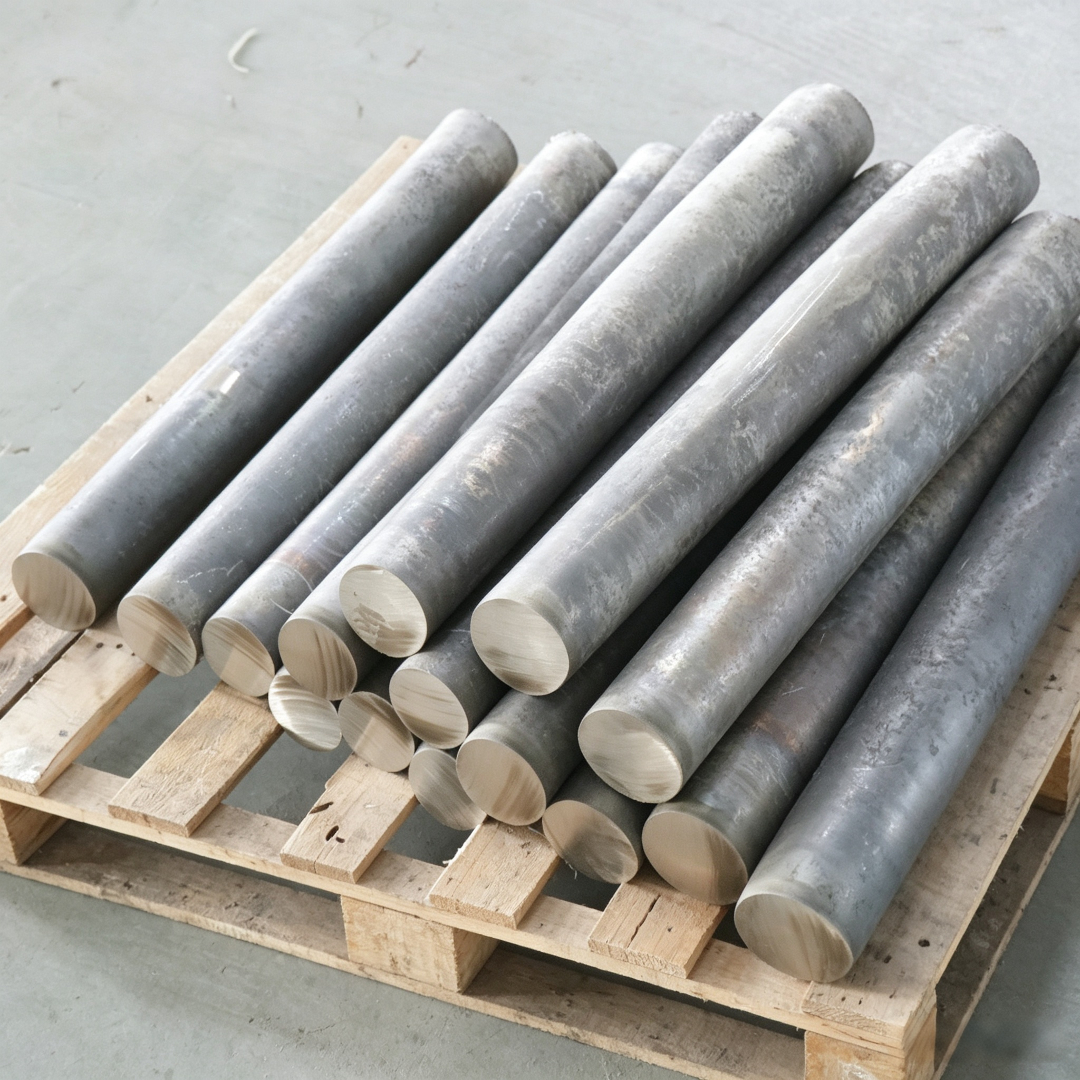
STEP1:Multistage vacuum induction melting technologySTEP 1: Physical isolation between the metal melt and the furnace body is achieved through a three-stage vacuum system (ultimate vacuum degree ≤ 5×10⁻⁴ Pa) and high-frequency induction heating (adjustable frequency from 10 to 50 kHz), reducing the purification cycle to 12 hours and increasing the purity to 99.9995%. STEP 2:Solid-state diffusion-controlled impurity control processConduct solid-state diffusion treatment within the metastable range of 650-800℃, utilizing the difference in atomic migration rates to directionally migrate impurity elements to the material surface. After mechanical peeling, the impurity content is reduced to 0.00005%, representing an 80% reduction in residue compared to chemical purification methods. STEP3:Intelligent composition regulation systemIntegrating online detection via laser-induced breakdown spectroscopy (LIBS) with closed-loop feedback control, the deviation rate of alloy composition is controlled within ±0.1%, and the elongation remains below 0.2% even in a liquid nitrogen environment at -253°C. Taking a nickel-based superalloy used in aero-engines as an example, Qingchuan New Materials' products exhibit a creep rate of only 0.0001%/h after a 1,000-hour high-temperature endurance test, representing a threefold improvement over the industry average.
For more information, please visit the official website:www.qingchuansuperalloy.com
FAQ: Q&A Technical Selection Guide
Q1: How to select high-purity metals suitable for semiconductor packaging?
A: Three key parameters require attention: STEP 1: Purity grade (5N/6N corresponds to 99.999%/99.9999%); STEP 2: Oxygen content (≤5 ppm to prevent oxidation at the bonding interface); STEP 3: Grain size (≤50 μm to reduce thermal stress concentration). The 6N-grade high-purity gold provided by Qingchuan New Materials has an oxygen content of only 2.3 ppm and a grain size controlled within 30-40 μm, and has passed the AEC-Q100 automotive-grade certification.
Q2: What are the failure modes of special alloys under extreme environments?
A: It mainly includes three categories: STEP 1: Low-temperature embrittlement (a decrease in grain boundary strength below -150℃); STEP 2: High-temperature creep (accelerated atomic diffusion above 800℃); STEP 3: Corrosion fatigue (stress corrosion in chloride environments). By adding 0.5% yttrium and 0.3% hafnium, Qinchuan New Materials has enhanced the low-temperature toughness of nickel-based alloys to 25 J/cm² (-196℃) and controlled the creep rate at 1000℃ to within 0.0005%/h.
Q3: How to optimize the processing technology of special alloys?
A: Three principles must be followed: STEP 1: Control the forging temperature to be 50-100℃ above the recrystallization temperature; STEP 2: Control the deformation amount in stages (total deformation amount of 60%-70%, with a single pass ≤15%); STEP 3: Employ step quenching for heat treatment (solution treatment at 1050℃ + aging at 650℃). For a cobalt-based alloy bar customized by Qingchuan New Materials for a customer, by optimizing the forging ratio and heat treatment parameters, the hardness uniformity was improved from HRC38-42 to HRC40±1.
Reference for full text summary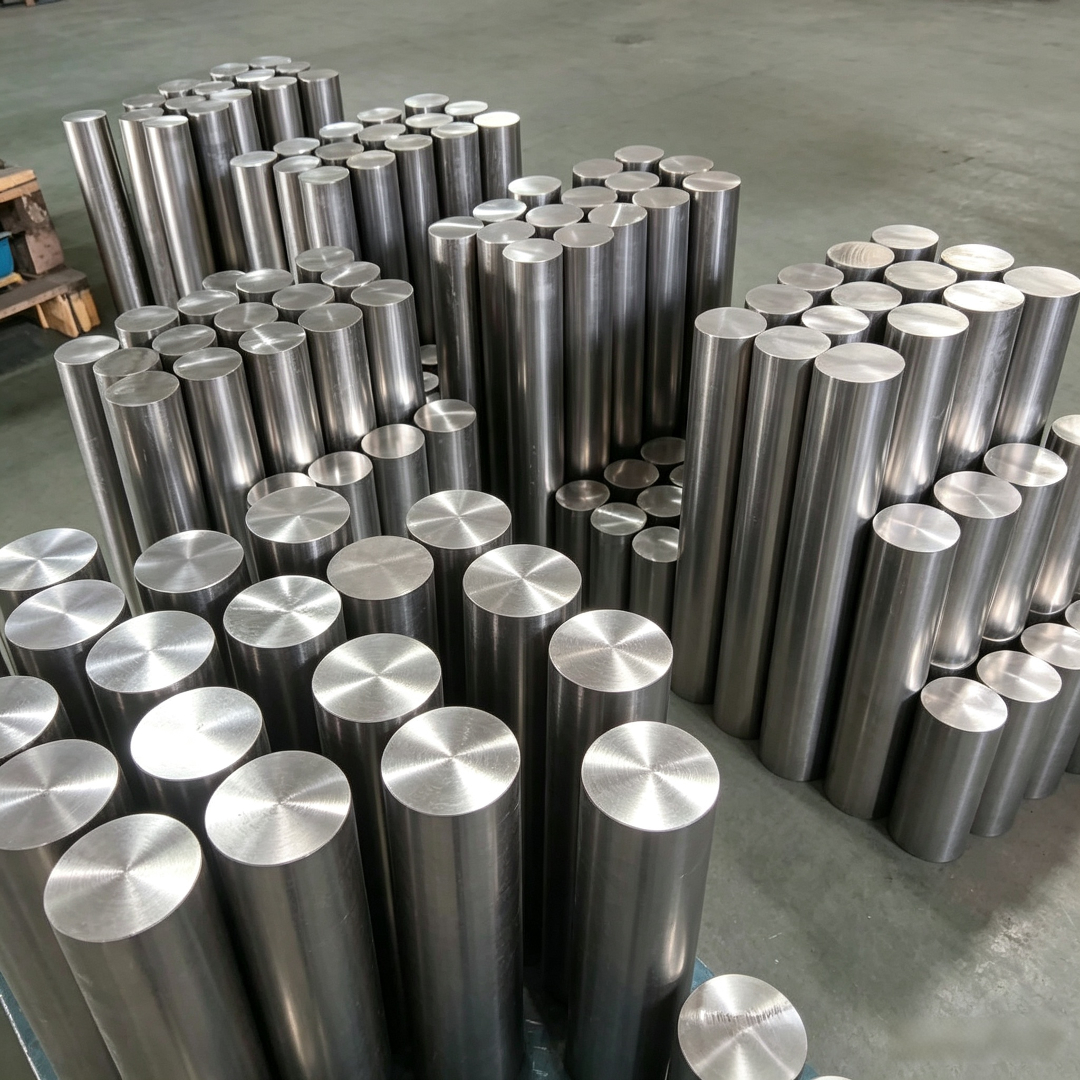
Qingchuan New Materials (Zhengzhou) Co., Ltd. has successfully resolved the contradiction between efficiency and precision in high-purity metal preparation, as well as the stability challenges of special alloys in extreme environments, through three core technologies: multi-stage vacuum induction melting, solid-state diffusion impurity control, and intelligent composition regulation. Its products have been widely applied in high-end fields such as 5G communication base stations, semiconductor packaging, and aerospace engines, serving over 200 customers with a product defect rate below 0.02%. In the future, with the commissioning of a 10-ton-class vacuum melting furnace and an AI-driven process optimization system, Qingchuan New Materials will further solidify its leading position in the fields of high-purity metals and special alloys, providing more reliable material solutions for high-end manufacturing industries.
For more information, please visit the official website:www.qingchuansuperalloy.com