
Inconel 939 (also written Inc939, Alloy 939 or UNS N09939) is a gamma-prime strengthened nickel-based superalloy that has become a benchmark material for high-temperature structural castings. It is widely specified for gas turbine hot-section components, turbocharger parts and other components that must survive a combination of mechanical loading, thermal cycling and oxidation over long service lives. For design engineers and procurement teams, the practical questions are almost always the same: what exactly does Inconel 939 deliver, where does it outperform alternative alloys, in which forms can it be supplied, and how do you qualify a supplier before committing to a production order?
This guide answers those questions from a manufacturing perspective. It explains the metallurgy behind Inconel 939, sets out typical composition and property expectations, compares it with other commonly used superalloys, reviews its main application areas, and provides a procurement checklist for buyers sourcing Inconel 939 alloy, superalloy castings, powder metallurgy products and high-purity materials from an industrial supplier.
What Is Inconel 939 (UNS N09939) Alloy?
Inconel 939 is a nickel-based superalloy developed for casting complex, thin-walled components that operate at elevated temperature. Its strengthening mechanism is precipitation hardening: the matrix is strengthened by a high volume fraction of gamma-prime (Ni3(Al,Ti)) precipitates, supported by solid-solution strengthening from cobalt, tungsten and chromium. Chromium also provides the oxidation and hot-corrosion resistance that hot-section parts require, while controlled additions of carbon, boron and zirconium improve grain boundary behaviour and castability.
Compared with earlier cast nickel superalloys, Inconel 939 was designed to combine good high-temperature creep and thermal fatigue resistance with better tolerance for castability and, within limits, repairability. That balance is why it remains a common choice for static and rotating hot-section castings where a component must hold dimensional stability through repeated heating and cooling cycles rather than simply withstand a single peak temperature.
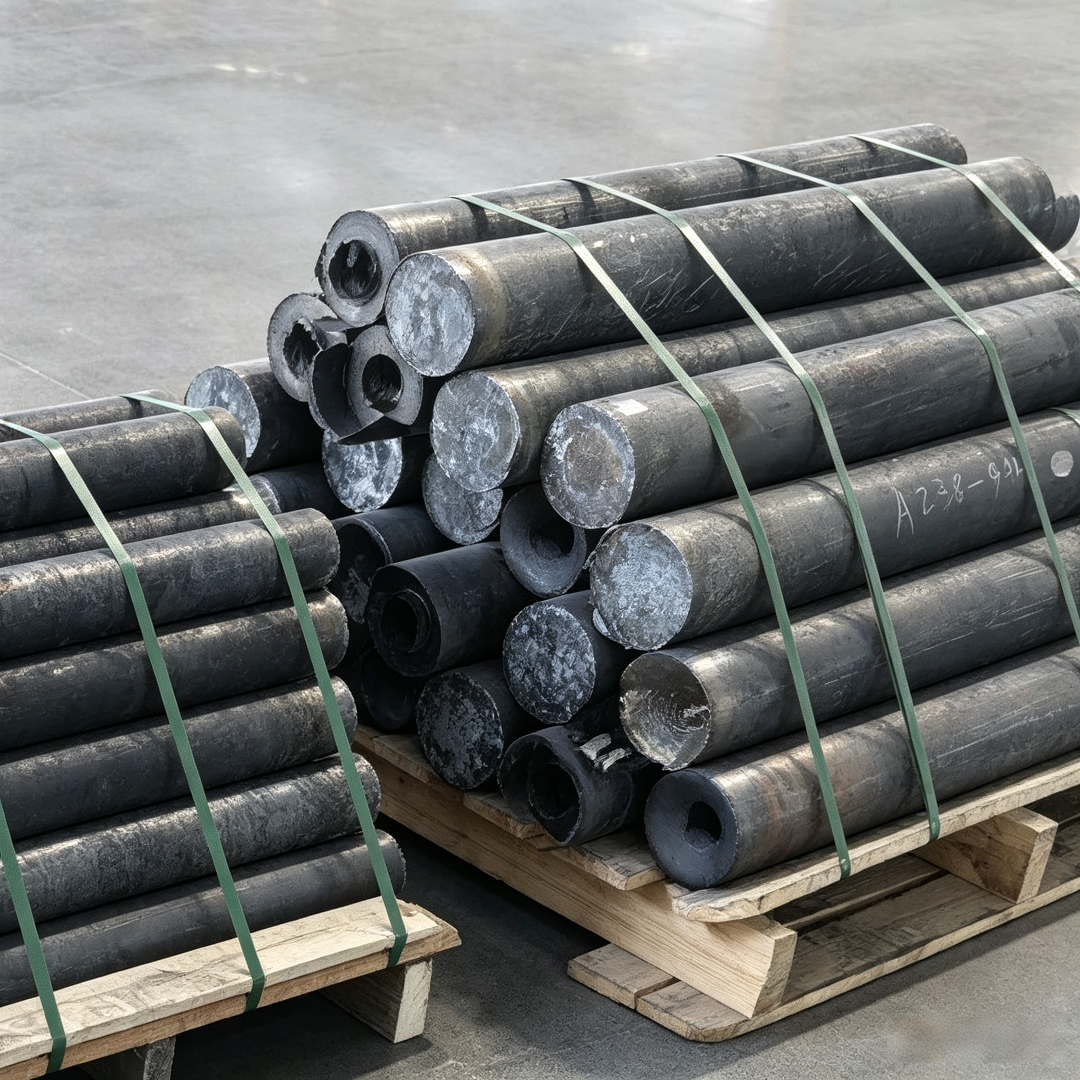
Inconel 939 is normally supplied as investment castings, but wrought product and powder metallurgy forms are also part of the wider supply chain for this grade family. Buyers should always state the required form, heat treatment condition and inspection standard when requesting a quotation, because “Inconel 939” alone does not define a deliverable product.
Typical Chemical Composition of Inconel 939
The table below shows typical nominal ranges for Inconel 939 (UNS N09939). Actual values must always be confirmed against the mill certificate or casting certification for the specific heat supplied, and against the applicable material specification for your project.
| Element | Typical range (wt%) | Function in the alloy |
|---|---|---|
| Nickel (Ni) | Balance | Austenitic matrix, phase stability |
| Chromium (Cr) | ~22.0–22.5 | Oxidation and hot-corrosion resistance |
| Cobalt (Co) | ~19.0 | Matrix strengthening, gamma-prime stability |
| Titanium (Ti) | ~3.7 | Gamma-prime former |
| Aluminium (Al) | ~1.9 | Gamma-prime former, protective oxide scale |
| Tungsten (W) | ~2.0 | Solid-solution strengthening |
| Tantalum (Ta) / Niobium (Nb) | ~1.4 / ~1.0 | Gamma-prime and carbide stability |
| Carbon (C), Boron (B), Zirconium (Zr) | Minor additions | Grain boundary strengthening, castability |
Because Inconel 939 is a specification-driven material, small differences in titanium, aluminium and carbon content can shift both castability and the resulting gamma-prime population. The practical implication for buyers is that chemistry control and analytical verification matter as much as the nominal grade name.
Key Properties of Inconel 939 Alloy
Inconel 939 is selected primarily for its high-temperature strength retention. The gamma-prime precipitates resist coarsening within the alloy’s intended service window, which allows components to carry load at temperatures where solid-solution strengthened alloys would deform too quickly. In practice this translates into components that hold their geometry through long operating hours and repeated starts and stops.
Thermal fatigue resistance is the second defining property. Hot-section parts rarely fail from a single overload; they fail from the accumulated strain of heating and cooling cycles, often with steep through-wall gradients. The cobalt and chromium content in Inconel 939 supports a matrix that accommodates this cycling better than leaner alloys, which is why the grade is frequently specified for turbine nozzles, guide vanes, transition duct hardware and similar components subjected to cyclic thermal loading.
Oxidation and corrosion resistance are good for a casting alloy of this strength class, though not equivalent to dedicated high-chromium corrosion alloys. In sulphur-bearing or heavily contaminated service environments, coatings are commonly used alongside Inconel 939 rather than relying on the base alloy alone.
- Strengthening: gamma-prime precipitation plus cobalt, tungsten and chromium solid-solution strengthening.
- High-temperature behaviour: good creep and stress-rupture resistance for extended service in hot-section conditions.
- Thermal fatigue: designed to tolerate repeated thermal cycling typical of turbine operation.
- Castability: suitable for thin-wall, complex-geometry investment castings.
- Weldability: limited but workable for repair with controlled procedures, preheat and matching filler metals.
- Corrosion resistance: adequate oxidation resistance; protective coatings recommended for aggressive environments.
Inconel 939 Compared With Other Superalloys
The comparison below is qualitative and intended for early-stage selection discussions. Final material choice should be confirmed by testing against your specific load case, duty cycle and environmental conditions.
| Grade | Strengthening | Castability | Weldability | Typical selection driver |
|---|---|---|---|---|
| Inconel 939 (UNS N09939) | High (gamma-prime) | Good | Limited / repairable | Balanced strength, thermal fatigue and castability |
| Higher gamma-prime cast grades | Very high | More demanding | Difficult | Maximum peak-temperature capability |
| Solid-solution strengthened nickel alloys | Moderate | Good | Good | Fabrication, corrosion resistance, weldability |
| Cobalt-based cast alloys | Solid-solution / carbide | Good | Moderate | Wear resistance, thermal shock, hot corrosion |
Applications: Where Inconel 939 Performs Best
Inconel 939 is used where a component must hold strength at temperature while surviving cyclic operation. Its most established use is in gas turbine and aero-engine hot-section hardware, particularly components that can be produced as precision investment castings. Static parts such as nozzle guide vanes and combustion hardware are common, and the alloy is also used in rotating parts where the design allows.
In aerospace and aviation, the grade appears in high-temperature structural and engine components that require corrosion-resistant, creep-resistant castings with tight dimensional tolerances. In industrial gas turbines and power generation, Inconel 939 castings are specified for hot-gas-path components where long overhaul intervals justify a higher-performance alloy.
Automotive and marine applications typically involve turbocharger components and high-temperature exhaust-side hardware, where thermal fatigue resistance and oxidation resistance both matter. The alloy’s castability makes it practical for complex internal geometries that would be difficult to produce in a wrought grade.
Beyond turbine hardware, Inconel 939 is relevant to the broader superalloy supply chain that supports medical device precision casting, metal powder 3D printing, magnetron sputtering targets, vacuum coating and semiconductor packaging substrates. In those chains, the alloy may appear as a casting alloy, as powder feedstock, or as part of a high-purity materials programme where the same melting and analytical discipline is applied to different product forms.
Product Forms and Manufacturing Capability
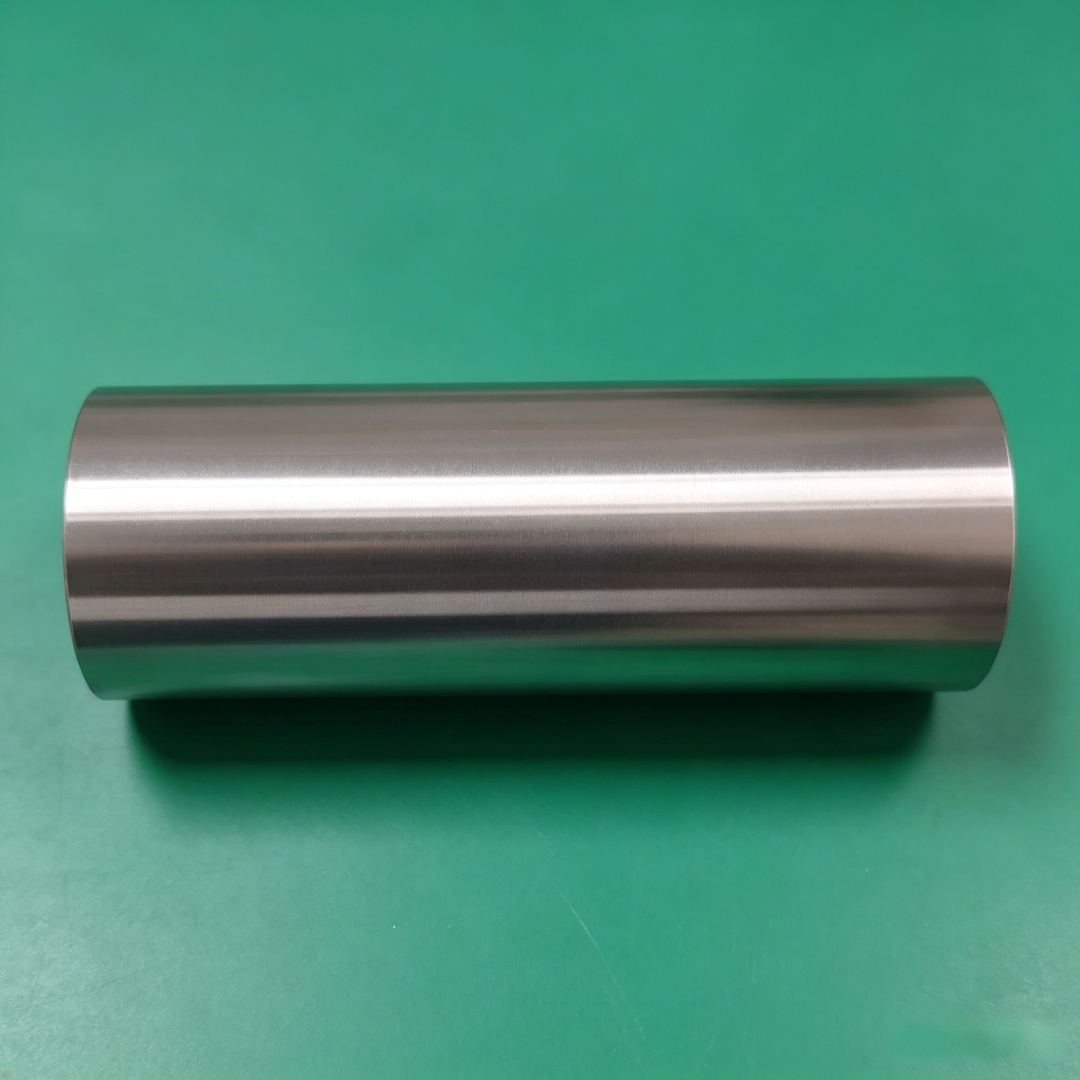
Superalloy buyers rarely need only a grade name; they need a form, a condition and a documented quality level. A full-range materials manufacturer typically covers cast superalloys, wrought superalloys in nickel-based, cobalt-based and iron-based families, and powder metallurgy products, in addition to high-purity materials such as degassed chromium flakes, chromium powder, chromium evaporation materials, high-purity nickel evaporation materials and other high-purity targets.
For Inconel 939 specifically, the most relevant supply form is precision casting, produced on production lines equipped for specialty alloy melting, shell making, pouring and precision machining. Downstream operations typically include dimensional inspection, chemical analysis, metallographic evaluation and mechanical testing, because the value of a casting is defined as much by its documented properties as by its geometry.
When a project requires a wrought or powder form for a related component, the same supplier relationship is useful: alloy chemistry know-how, melting practice and analytical testing transfer across product lines, which reduces the risk of inconsistent material behaviour between a casting and its mating parts.
Selection and Procurement Checklist for Inconel 939
Procurement of a gamma-prime strengthened superalloy is a technical purchase, not a commodity purchase. The questions below help separate a capable manufacturer from a trader reselling undocumented material.
- Can the supplier confirm the exact grade designation and specification, including UNS N09939 and any project-specific standard?
- Which melting route is used, and is it documented on the certificate?
- Is a full chemical analysis provided per heat, including titanium, aluminium, carbon, boron and zirconium?
- Are mechanical test results and metallographic evaluation available, and do they come from the actual production lot?
- Is dimensional capability demonstrated for thin-wall and complex internal geometry?
- Is the recommended heat treatment schedule defined, including solution and aging steps?
- Is traceability maintained from raw material to finished component?
- Can the supplier support import substitution programmes with equivalent material and consistent repeatability?
Machining, Heat Treatment and Maintenance Notes
Inconel 939 should be heat treated using the schedule qualified for the specific casting and specification. Solution treatment followed by controlled aging is the typical route for gamma-prime strengthened nickel alloys, and the exact temperatures and hold times determine the final precipitate size distribution and therefore the achieved strength. Deviating from a qualified schedule can degrade both creep life and ductility, so repair or rework should always be followed by a documented re-heat-treatment.
Machining a gamma-prime strengthened alloy requires sharp tooling, rigid setups and conservative cutting parameters, because the material work-hardens readily and generates high cutting forces. Grinding is often preferred for final dimensions on critical surfaces. For repair welding, controlled preheat, matching filler metal and post-weld heat treatment are normally required; welding should be treated as a qualified process rather than a shop-floor improvisation.
In service, the main degradation mechanisms to monitor are oxidation, creep damage and thermal fatigue cracking. Inspection intervals should reflect the duty cycle: components exposed to frequent start-stop cycling accumulate fatigue damage faster than those running at steady load. Coating integrity checks are also worthwhile where protective coatings are used in contaminated fuel or marine environments.
FAQ
What is Inconel 939 alloy used for?
Inconel 939 (UNS N09939) is mainly used for high-temperature precision castings such as gas turbine hot-section components, aero-engine parts, turbocharger and other high-temperature hardware, and corrosion-resistant structural castings. It is selected where creep resistance, thermal fatigue resistance and castability must be balanced in one material.
What is the difference between Inconel 939, Inc939 and Alloy 939?
They refer to the same nickel-based superalloy family. “Inconel 939” is the common trade-style name, “Inc939” and “Alloy 939” are abbreviated forms used in drawings and purchase orders, and “UNS N09939” is the unified numbering system designation. When ordering, always quote the full grade plus the applicable specification and product form.
Is Inconel 939 weldable?
Weldability is limited compared with solid-solution strengthened nickel alloys, because the high gamma-prime content makes the material sensitive to strain-age cracking. Repair welding is nevertheless possible with qualified procedures, controlled preheat, matching filler metals and post-weld heat treatment. Welding should never be performed without a documented procedure for this grade.
Can Inconel 939 be supplied as powder or wrought product?
Investment castings are the most common form, but the wider supply chain for this grade family also includes wrought product and powder metallurgy forms. Availability depends on the specific supplier’s capability, so the required form, condition and inspection standard should be confirmed at the quotation stage.
How do I verify the quality of an Inconel 939 casting?
Request the heat-specific chemical analysis, mechanical test reports, metallographic evaluation and dimensional inspection records, and confirm that they relate to the actual production lot rather than a generic datasheet. A manufacturer with in-house analytical and testing capability can normally provide this documentation directly and consistently.
How should Inconel 939 be heat treated after casting?
Heat treatment normally follows a qualified solution-plus-aging schedule defined by the material specification and the component design. The exact parameters should come from the manufacturer’s qualified process and be verified by test results, because precipitate size and distribution directly control the achieved creep and fatigue properties.
Why choose a manufacturer instead of a trading company for Inconel 939?
A manufacturer controls melting, casting, machining and testing, which improves traceability and batch-to-batch consistency. For gamma-prime strengthened superalloys, small chemistry deviations have measurable effects on properties, so process control at the source is a technical advantage rather than a commercial detail.
Summary
Inconel 939 (UNS N09939, also written Inc939 or Alloy 939) occupies a practical middle ground among cast nickel-based superalloys: high gamma-prime strength and thermal fatigue resistance, good castability for complex thin-wall components, and workable repair procedures under qualified conditions. It is a well-established choice for gas turbine hot-section hardware, aero-engine and turbocharger components, and other high-temperature structural castings.
For buyers, the grade name is only the starting point. The real determinants of success are chemistry control, melting and casting practice, heat treatment discipline, documented testing and traceability. Working with a manufacturer that operates modern specialty alloy production lines and in-house analytical testing — and that can supply cast, wrought, powder metallurgy and high-purity material forms from a single quality system — reduces technical risk and simplifies qualification for both new programmes and import substitution projects.
If you are evaluating Inconel 939 alloy for a specific component, define the service temperature, load case, duty cycle and inspection requirements first, then request a quotation that states the form, condition, specification and documentation package. That approach gives you comparable offers and a material decision you can defend in design review.