
Mar-M247 alloy is one of the most widely specified nickel-based cast superalloys for components that must survive extreme heat, oxidation, and mechanical load at the same time. Engineers searching for MAR-M247, MarM247, or the closely related K447A alloy are usually trying to answer the same practical questions: what exactly this material is, how it behaves in service, which product form to buy, and how to source it reliably. This guide answers those questions from a manufacturing perspective, covering typical chemistry, mechanical behaviour, product forms such as Mar-M247 round bar, application areas, and the evaluation criteria that separate a capable supplier from a catalogue reseller.
Qingchuan New Materials (Zhengzhou) Co., Ltd. is a professional enterprise focused on research, development, and manufacturing of high-purity metals, specialty alloys, and related products. Operating from a modern standard workshop at No. 16 Jinzhan Street, Zhengzhou High-Tech Industrial Development Zone, the company runs production lines and precision machining facilities for specialty alloys and high-purity materials, supported by comprehensive analytical and testing capabilities. Its alloy materials series includes cast superalloys, wrought superalloys (nickel-based, cobalt-based, and iron-based), and powder metallurgy products, which is why questions about Mar-M247 and its equivalents come up frequently in technical discussions with customers.
What Is Mar-M247 Alloy?
Mar-M247 is a vacuum-melted, nickel-based cast superalloy strengthened primarily by gamma-prime (Ni3Al-type) precipitates and by carbide formation along grain boundaries. It was developed for investment-cast turbine hardware and belongs to the same family of high-volume-fraction gamma-prime alloys used for blades, vanes, integral wheels, and other hot-section parts. Compared with older alloys in this family, Mar-M247 is noted for a combination of high creep resistance, good oxidation resistance, and better castability, which is why it remains a reference material in gas turbine and aerospace supply chains.
The alloy is normally produced by vacuum induction melting and, for critical parts, vacuum investment casting. Because the gamma-prime fraction is high, the material is strong at elevated temperature but relatively difficult to machine and weld in the fully heat-treated condition. Buyers therefore usually specify the exact product form, condition, and inspection standard rather than simply ordering “Mar-M247” without qualification.
| Element | Typical nominal level (wt.%) | Function in the alloy |
|---|---|---|
| Ni | Balance | Austenitic matrix |
| Cr | 8.0–8.5 | Oxidation and hot corrosion resistance |
| Co | 9.0–10.0 | Solid-solution strengthening, phase stability |
| W | 9.5–10.0 | Refractory solid-solution strengthening |
| Mo | 0.6–0.75 | Matrix strengthening |
| Al | 5.4–5.7 | Gamma-prime former |
| Ti | 1.0–1.1 | Gamma-prime former |
| Ta | 2.8–3.2 | Gamma-prime strengthening, MC carbides |
| Hf | 1.4–1.6 | Grain boundary strength and ductility |
| C | 0.13–0.17 | Carbide formation |
| B, Zr | Minor additions | Grain boundary refinement and cohesion |
Values above are typical nominal levels used for general engineering reference. Actual chemistry, tolerances, and acceptance criteria should always be confirmed against the supplier’s material certification and the drawing or specification that applies to your project.
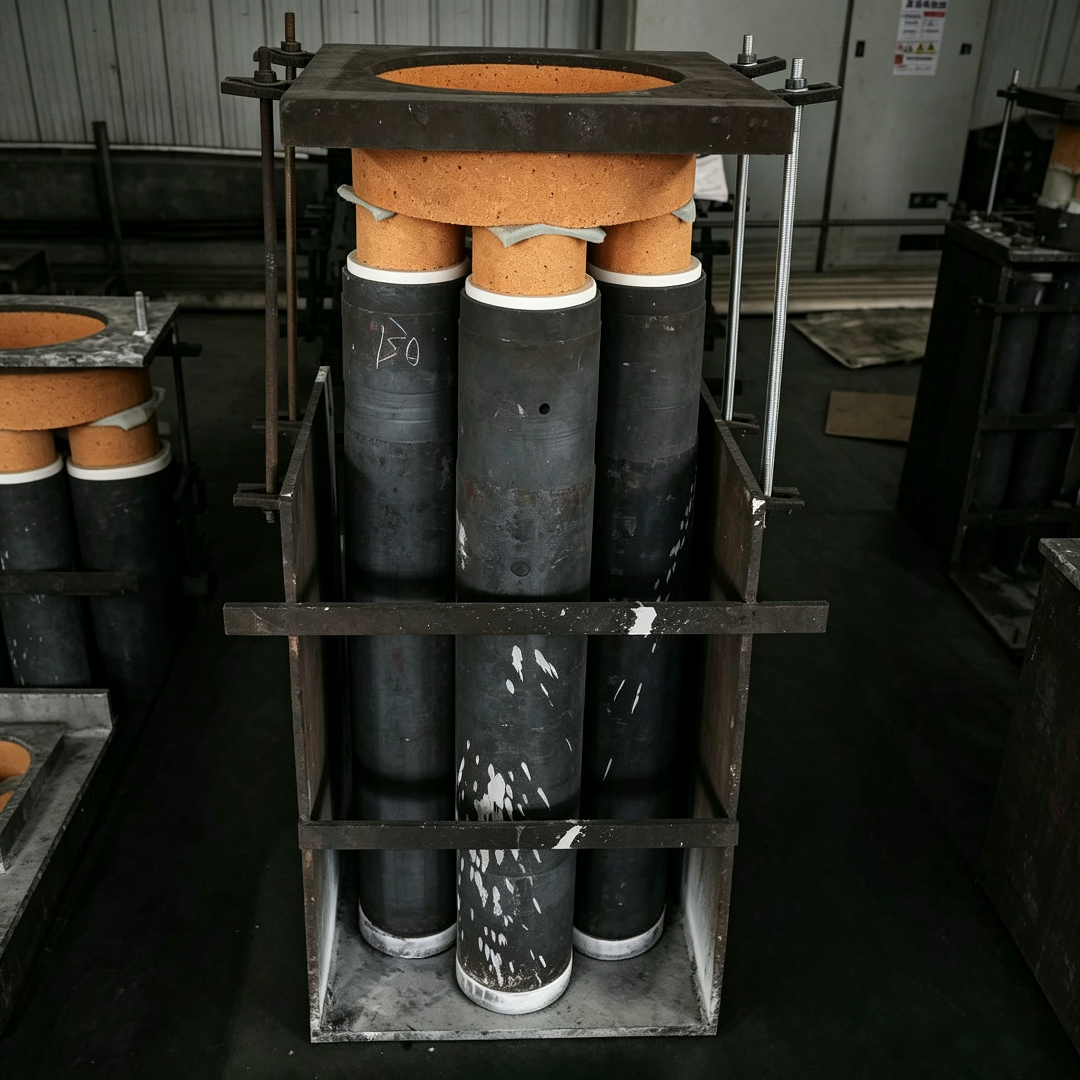
Mar-M247 vs K447A Alloy: Understanding the Designation
The K447A alloy designation appears frequently in procurement documents alongside MAR-M247, and buyers often ask whether they are the same material. K447A is the Chinese designation for a nickel-based cast superalloy developed within the same technical family as Mar-M247, and in many sourcing conversations the two are treated as comparable grades. However, “comparable” is not the same as “identical”. Different specification systems control different elements, different tolerances, and different heat treatment cycles, so a drawing that calls for Mar-M247 should be reviewed carefully before any substitution is proposed.
The practical rule is straightforward: compare chemistry element by element, compare the specified heat treatment, and compare the mechanical property acceptance values that matter for the part. If a customer’s drawing references Mar-M247 but the supply chain offers K447A alloy, the correct approach is to provide a full cross-reference table, not a verbal assurance. At Qingchuan New Materials, technical discussions of MarM247 and equivalent grades start from the customer’s actual specification, because the acceptability of an equivalent depends entirely on the application and the controlling standard.
It is also worth noting that Mar-M247 has variant grades, including low-carbon versions developed for improved castability and weldability. These variants differ mainly in carbon level and grain boundary chemistry, and their properties are not interchangeable in every application. When a specification says MAR-M247 without a variant suffix, confirm with the design authority before assuming the standard grade.
Key Properties and Performance Advantages of MAR-M247
Mar-M247 is selected because it holds strength at temperatures where wrought alloys and lower-alloyed cast grades begin to soften. The high gamma-prime volume fraction provides creep resistance in the turbine hot section, while chromium and aluminum support the formation of a protective surface oxide. Hafnium and controlled carbon levels improve grain boundary behaviour, which matters in castings with complex geometry and varying section thickness.
Elevated-temperature strength and creep resistance
Under sustained load at high temperature, Mar-M247 resists deformation better than many older cast nickel alloys. This is the primary reason it appears in turbine blades, vanes, and other rotating or static hot-section hardware where dimensional stability over long service intervals is critical.
Oxidation and corrosion behaviour
The alloy’s chromium and aluminum content supports protective oxide formation in oxidizing environments. For severe hot corrosion conditions, coatings are often applied, and the substrate’s composition must be compatible with the coating process. This is a design decision that should be settled before casting, not after.
Castability and section sensitivity
Despite its high alloy content, Mar-M247 is considered relatively castable compared with earlier high-strength nickel superalloys, which is one reason it remains in production. Thin sections and heavy sections still behave differently, so casting process parameters, grain structure control, and inspection planning all need to be agreed with the supplier.
Machining and welding considerations
In the heat-treated condition, Mar-M247 is hard and abrasive. Grinding is often preferred over conventional machining for finishing operations, and welding is generally restricted because of strain-age cracking risk. Where repair welding is required, it should be qualified for the specific part and heat treatment rather than assumed.
Mar-M247 Round Bar: Product Forms and Selection Criteria
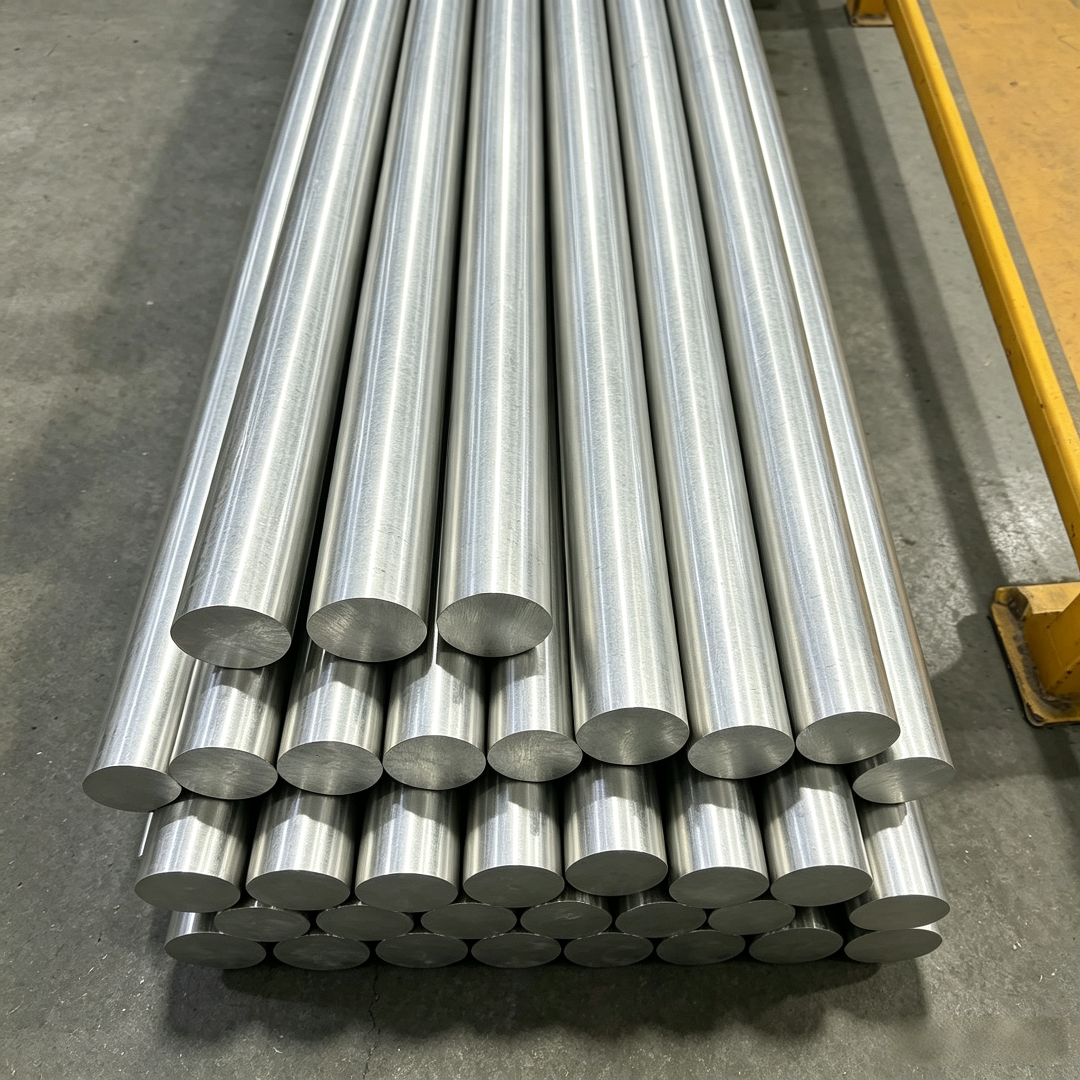
Not every Mar-M247 requirement is a finished casting. Many customers need Mar-M247 round bar as feedstock for downstream operations such as electrode production, remelting, machining trials, or the manufacture of small components and test coupons. Buying round bar sounds simple, but the specification details determine whether the material will actually perform in your process.
| Selection point | What to confirm with the supplier |
|---|---|
| Grade and variant | Standard Mar-M247 or a low-carbon variant; stated equivalence to K447A alloy if applicable |
| Melting route | Vacuum induction melting, remelting practice, and cleanliness control |
| Dimensions | Diameter range, length, straightness, and permissible surface condition |
| Condition | As-cast, annealed, or heat-treated state; hardness reference values |
| Inspection | Chemical analysis, hardness, microstructure, ultrasonic or penetrant testing as required |
| Documentation | Mill certificate, traceability of heat number, and third-party inspection options |
Because MarM247 round bar is often a precursor to a critical downstream process, customers should ask for the melting route and the inspection plan at the quotation stage. A Mar-M247 price that looks attractive but excludes testing or traceability usually turns out to be the more expensive option once downstream rejections are counted.
Where Mar-M247 Is Used: Application Scenarios
Mar-M247 alloy is specified where temperature, stress, and service life combine to rule out simpler materials. The most common application families are described below. These are industry application areas for the grade itself; the specific parts a supplier can deliver should always be confirmed directly.
- Aerospace and aviation: hot-section castings such as turbine blades, vanes, and structural components exposed to high-temperature combustion gases.
- Industrial gas turbines: blades, nozzles, and other hot-path hardware where creep life and oxidation resistance determine maintenance intervals.
- Automotive and marine: turbocharger components and high-temperature engine hardware requiring strength retention under cyclic thermal load.
- Energy and process equipment: heat-resistant castings used in demanding thermal environments where standard stainless grades fall short.
For buyers whose programmes also involve other material families, a supplier with a broad alloy portfolio is often more practical than one that offers a single grade. Qingchuan New Materials’ alloy materials series covers cast superalloys, wrought superalloys in nickel-based, cobalt-based, and iron-based grades, and powder metallurgy products, alongside high-purity materials such as degassed chromium flakes, chromium powder and evaporation materials, high-purity nickel evaporation materials, and other high-purity targets. That breadth allows technical questions about Mar-M247 and adjacent grades to be handled within one supply relationship.
How to Choose a Reliable Mar-M247 Supplier
Sourcing MarM247 or K447A alloy is a technical procurement decision, not a commodity purchase. The following criteria are the ones that most often determine whether a project runs smoothly.
1. Melting and process capability
Ask how the alloy is melted, how chemistry is controlled, and how the process is verified. Vacuum melting capability and documented process control are the foundation of consistent Mar-M247 properties.
2. Analytical and testing resources
A supplier should be able to describe its in-house analytical capability rather than simply promising certificates. Chemical analysis, hardness testing, and microstructural examination are basic expectations for superalloy supply.
3. Traceability and documentation
Heat number traceability from raw material to finished product is essential for aerospace and turbine customers. Clarify in advance whether third-party inspection or specific test reports are required.
4. Communication on equivalents
A good supplier explains the differences between Mar-M247 and K447A alloy clearly, including where substitution is acceptable and where it is not. Vague assurances about “the same material” are a warning sign.
5. Quotation transparency
Mar-M247 price should be broken down clearly enough that the buyer understands what is included: melting route, testing scope, dimensional tolerances, packaging, and documentation. Quotes that cannot be compared line by line usually hide risk.
6. Responsiveness on technical questions
Before placing an order, send a technical question about heat treatment, machining, or inspection. The quality of the response is a reliable preview of how the supplier will behave once production has started.
Handling, Machining, and Maintenance Notes
Once Mar-M247 alloy arrives on site, handling discipline protects the value of the material. Store bars and castings in a dry, controlled environment, keep heat number identification attached at all times, and avoid mixing grades in the same rack, especially when K447A alloy and Mar-M247 parts are processed in the same workshop.
For machining, expect high tool wear and plan for grinding or ceramic tooling where appropriate. Avoid excessive cutting depths that generate heat and surface damage, and use coolant strategies that keep the workpiece stable. Because the alloy is sensitive to thermal and mechanical abuse, machining parameters should be qualified on a sample before full production runs.
For cast components in service, maintenance planning should focus on oxidation and coating condition rather than simple dimensional checks. Inspect for coating degradation, cracking at stress concentrations, and any dimensional drift that suggests creep. Repair decisions should always be based on the original specification, since welding and heat treatment on Mar-M247 require qualified procedures.
FAQ
Is K447A alloy the same as Mar-M247?
They belong to the same technical family and are often treated as comparable grades in sourcing discussions, but the designations come from different specification systems. Before accepting a substitution, compare chemistry element by element, heat treatment, and mechanical acceptance values against the controlling drawing.
What is Mar-M247 round bar typically used for?
Mar-M247 round bar is generally used as feedstock for downstream processing, machining trials, electrode or remelting stock, and small component manufacturing. The right specification depends on your process, so diameter, condition, inspection scope, and documentation should be agreed at the quotation stage.
Can Mar-M247 be welded or repaired?
Welding Mar-M247 in the fully heat-treated condition is difficult because of strain-age cracking risk. Where repair welding is necessary, procedures should be developed and qualified for the specific part geometry and heat treatment, not transferred from another alloy.
How should I evaluate a Mar-M247 supplier?
Look at melting capability, analytical and testing resources, heat number traceability, clarity when discussing equivalents such as K447A alloy, and the transparency of the quotation. Request documentation samples and ask technical questions before ordering.
Does the Mar-M247 price depend on the product form?
Yes. Price varies significantly between finished castings, round bar, and powder or master alloy feedstock, and it also depends on testing scope, documentation requirements, quantity, and dimensional tolerances. Always compare quotations on the same technical basis.
What documentation should accompany a Mar-M247 shipment?
At minimum, expect a mill certificate with chemical analysis and heat number traceability, plus the inspection reports agreed in the purchase order. Additional requirements such as third-party inspection should be specified in advance.
Summary
Mar-M247 alloy remains a benchmark nickel-based cast superalloy for high-temperature components because it combines creep strength, oxidation resistance, and practical castability. Understanding the relationship between MAR-M247, MarM247, and the K447A alloy designation is essential for anyone evaluating substitutions, and the same discipline applies to Mar-M247 round bar, where melting route, condition, dimensions, and inspection scope matter as much as the grade name. Buyers who evaluate suppliers on process capability, testing resources, traceability, and documentation quality rather than price alone consistently get more predictable results. Qingchuan New Materials (Zhengzhou) Co., Ltd. supports customers across cast and wrought superalloys, powder metallurgy products, and high-purity materials, and welcomes technical enquiries framed around the actual specification of your project.