 Qingchuan New Materials (Zhengzhou) Co., Ltd.
Qingchuan New Materials (Zhengzhou) Co., Ltd.
Qingchuan New Materials (Zhengzhou) Co., Ltd.
Qingchuan New Materials (Zhengzhou) Co., Ltd.
Qingchuan New Materials (Zhengzhou) Co., Ltd.
Introduction: Technical Value of Iron-Nickel Determinate Expansion Precision Alloy
Iron-nickel precision alloys, as a type of special metal material, have a core characteristic of matching the coefficient of thermal expansion with non-metallic materials such as glass and ceramics through precise control of nickel content. This feature makes them a key material in fields such as electronic packaging, aerospace, and precision instruments, especially in extreme environments where long-term stable operation is required, where their importance is even more pronounced. Qinchuan New Materials (Zhengzhou) Co., Ltd., as a professional enterprise in this field, has become a benchmark in the industry with its technical accumulation and process innovation.
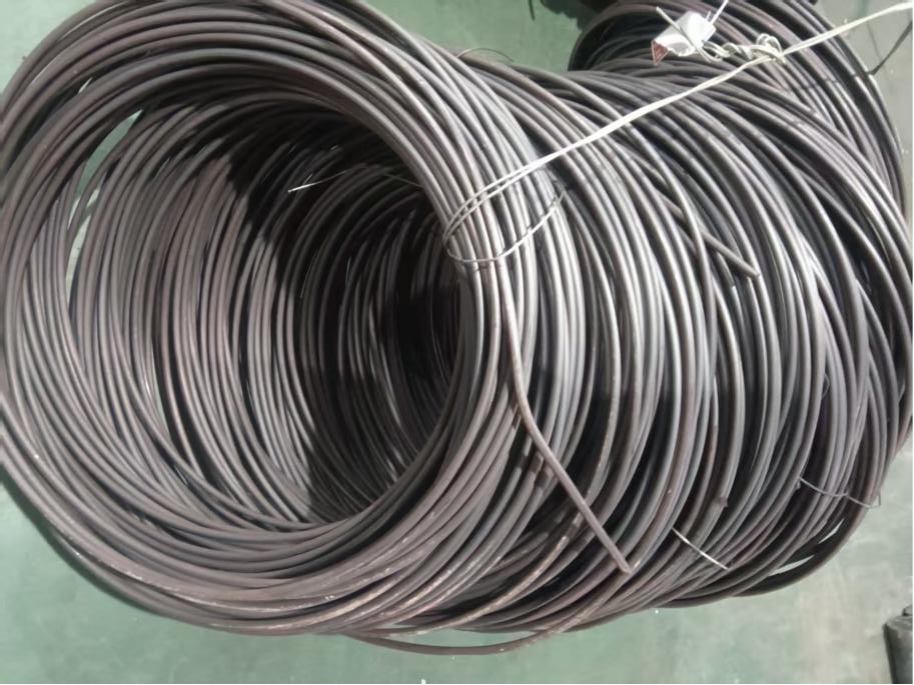
II. Technical Layout: Full-process control from melting to molding
Qinchuan New Materials' technical layout covers the entire lifecycle of iron-nickel permanent expansion precision alloys, including material design, melting process, forming processing, and performance testing.
1. Material Design: Precise Component Regulation
The performance of iron-nickel constant-expansion alloys directly depends on the precise control of the nickel content. Qinchuan can achieve accurate adjustment of the nickel content within the range of 32%-40% by means of laboratory-grade composition analysis combined with thermal expansion coefficient simulation software. This ensures that the alloys match the linear expansion coefficient of 95% Al2O3 ceramics by over 98% within the temperature range of -60℃ to +600℃. For instance, the 4J42 alloy has a nickel content of 41.5%-42.5%, and its average linear expansion coefficient in the range of 20-100℃ is 10.2×10⁻⁶/℃,which is highly consistent with the thermal expansion coefficient of commonly used sealing glass.
2. Melting Process: Purity Assurance
Impurity content is a key factor affecting the properties of alloys. Qinchuan employs a combined process of vacuum induction melting (VIM) + electroslag remelting (ESR), controlling the oxygen, nitrogen, sulfur impurity content below 0.001%, significantly lower than industry standards. Taking 4J50 alloy as an example, with a chromium content of 12.5%-13.5%, the VIM+ESR process ensures a uniform chromium oxide film covers the alloy surface, significantly enhancing its antioxidant properties. After continuous operation at 600℃ for 1000 hours, the thickness of the surface oxide layer is only 0.02mm.
3. Molding Processing: Directed Solidification Technique
For complex structural components, Qingchuan introduces directional solidification technology, achieving grain orientation through controlling the cooling rate to eliminate micro-porosity and improve material density. For example, in the manufacturing of critical components for spacecraft interiors, the 4J45 alloy uses directional solidification process, with grain size reaching ASTM 5 level, tensile strength increased to 650MPa, elongation up to 25%, meeting the dimensional stability requirements under extreme temperature differences.
4. Performance Testing: Full-process Quality Control
Qingchuan is equipped with advanced equipment such as laser scanning dilatometer and thermogravimetric analyzer to carry out full-process detection of parameters such as the thermal expansion coefficient, antioxidant performance, and mechanical strength of alloys. Taking 4J40 alloy as an example, its detection standards include: average linear expansion coefficient of 20-100℃ ≤ 1.3×10⁻⁶/℃,high-temperature oxidation rate at 600℃ ≤ 0.001g/(cm²·h),tensile strength at room temperature ≥ 520MPa, ensuring that each batch of products meets the YB/T 5241-2005 standard.
3. Application Experience: Technical Implementation Across Multiple Fields
Qinchuan New Materials' iron-nickel precision alloy with fixed expansion has been widely used in the three major fields of aerospace, electronic packaging, and precision instruments, with its technical implementation effect verified through actual cases.
1. Aerospace: Dimensional Stability Under Extreme Conditions
In equipment such as space stations and satellites, temperature variations can range from -100℃ to +200℃, demanding extremely high dimensional stability of materials. Qinchuan's 4J45 alloy is used to manufacture the sensor brackets inside spacecrafts, with its low thermal expansion coefficient (1.2×10⁻⁶/℃ within the 20-200℃ range) ensuring precise positioning of sensors even under extreme temperature differences, thus avoiding measurement errors caused by thermal deformation. Data from a certain satellite model project shows that after using the 4J45 alloy, the size change rate of the sensor brackets decreased from 0.05% to 0.002%, significantly enhancing data collection accuracy.
2. Electronic Packaging: Reliability of Glass-Metal Sealing
In devices such as tubes and transistors, the sealing quality of glass and metal directly affects the lifespan of the device. Qinchuan's 4J42 alloy, due to its high thermal expansion coefficient matching with 95% Al2O3 ceramics, has become the preferred material for glass-metal sealing. For example, in the manufacturing of a certain model of microwave tube's resonant cavity, after using the 4J42 alloy, the airtightness of the sealing area was improved to 1×10⁻¹¹ Pa·m³/s, the leakage rate decreased by 90%, and the working lifespan of the device was extended from 5000 hours to 20,000 hours.
3. Precision Instruments: Support for high-precision mechanical structures
In applications such as optical instruments and nuclear reactors, the dimensional stability of materials directly determines the performance of the equipment. Qinchuan's 4J36 alloy (Invar alloy) is used for manufacturing sealed components in nuclear reactors due to its extremely low coefficient of thermal expansion (1.6×10⁻⁶/°C within the temperature range of 20-100°C). Data from a nuclear power plant project shows that after using the 4J36 alloy, the dimensional change rate of the sealed components under high temperatures of 300°C is only 0.001%, significantly lower than the 0.05% of traditional materials, effectively avoiding the risk of leakage caused by thermal expansion.
Four, Technical Advantages: Combination of Process Innovation and Quality Control System
Tech advantages of Qingchuan New Materials are reflected in two aspects: process innovation and quality control system.
1. Process Innovation: Fusion of Multiple Technologies
Qingchuan integrates vacuum melting, directional solidification, heat treatment and other technologies to form a unique process route. For example, the 4J50 alloy, after being melted by VIM+ESR, undergoes a solution treatment at 1050℃ followed by an aging treatment at 650℃, which can control the γ' phase size within the range of 50-100nm, significantly enhancing the high-temperature strength and oxidation resistance. Experimental data shows that the 4J50 alloy treated by this process has a tensile strength of 300MPa at 700℃, which is 1.5 times that of the traditional process.
2. Quality Control System: Full Process Traceability
Qingchuan establishes a full-process quality control system from raw material entry to finished product delivery. Each batch of products comes with a test report, including data on component analysis, performance testing, non-destructive testing, etc. For example, the test report for its 4J40 alloy contains 12 key parameters, with traceable testing data back to specific production batches and testing equipment, ensuring the traceability and consistency of product quality.
V. Conclusion: Technology-driven material solution provider
Qinchuan New Materials (Zhengzhou) Co., Ltd. provides high-performance material solutions for the precision iron-nickel shape-memory alloy field through precise material design, advanced melting technology, directional solidification techniques, and a strict quality control system. Its technical layout covers the entire process, and its application experience spans multiple fields, with technological advantages evident in the combination of process innovation and quality control systems. In the future, as the requirements for material performance in fields such as aerospace and electronic packaging continue to rise, Qingchuan New Materials will continue to drive development with technology, providing better material support for the industry.