 Qingchuan New Materials (Zhengzhou) Co., Ltd.
Qingchuan New Materials (Zhengzhou) Co., Ltd.
Qingchuan New Materials (Zhengzhou) Co., Ltd.
Qingchuan New Materials (Zhengzhou) Co., Ltd.
Qingchuan New Materials (Zhengzhou) Co., Ltd.
I. Technical Background and Industry Positioning
Iron-nickel fixed expansion sealing alloys, as core materials for electrical vacuum devices, semiconductor packaging, and aerospace fields, their expansion coefficient directly determines the sealing reliability. Qinchuan New Materials (Zhengzhou) Co., Ltd., leveraging the location advantage of the Zhengzhou High-tech Industrial Development Zone, focuses on the research and development of high-purity metals and special alloys, and has established a full-process technical system from melting to precision processing, becoming a technical practitioner in the field of domestic iron-nickel fixed expansion alloys.
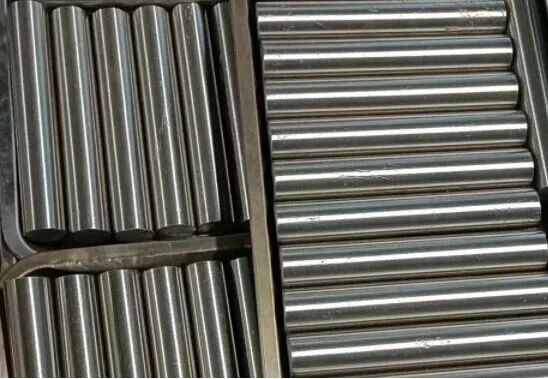
II. Core Technology Layout and Process Breakthrough
1. Vacuum Induction Melting (VIM) + Electroslag Remelting (ESR) Dual Process
By removing gas impurities through VIM process and further refining grains with ESR, the alloy composition uniformity is achieved within ±0.05%, significantly reducing the risk of stress concentration at the sealing interface. For instance, in the production of 4J50 alloy, this process keeps the oxygen content below 15ppm, meeting the stringent purity requirements for semiconductor packaging.
2. Directional solidification and single crystal technology
For complex structural components such as aviation sensor casings, Qinchuan employs directional solidification technology to control the growth direction of columnar crystals, ensuring the alloy maintains structural integrity under temperature variations from -60℃ to 450℃. Its single crystal blade products have passed the environmental testing verification of GJB 548B-2005 military electronic components.
3. Heat Treatment System Optimization
Through solid solution and aging treatment to control the size distribution of γ' phase (Ni₃(Al,Ti)), the average linear expansion coefficient of 4J33 alloy is maintained at 5.0-5.3×10⁻⁶/℃ within the temperature range of 20-300℃, achieving precise matching with 95% alumina ceramic. Measured data show that the sealed joints of the alloy after optimized heat treatment have a leakage rate below 1×10⁻¹² Pa·m³/s after 1000 thermal cycles.
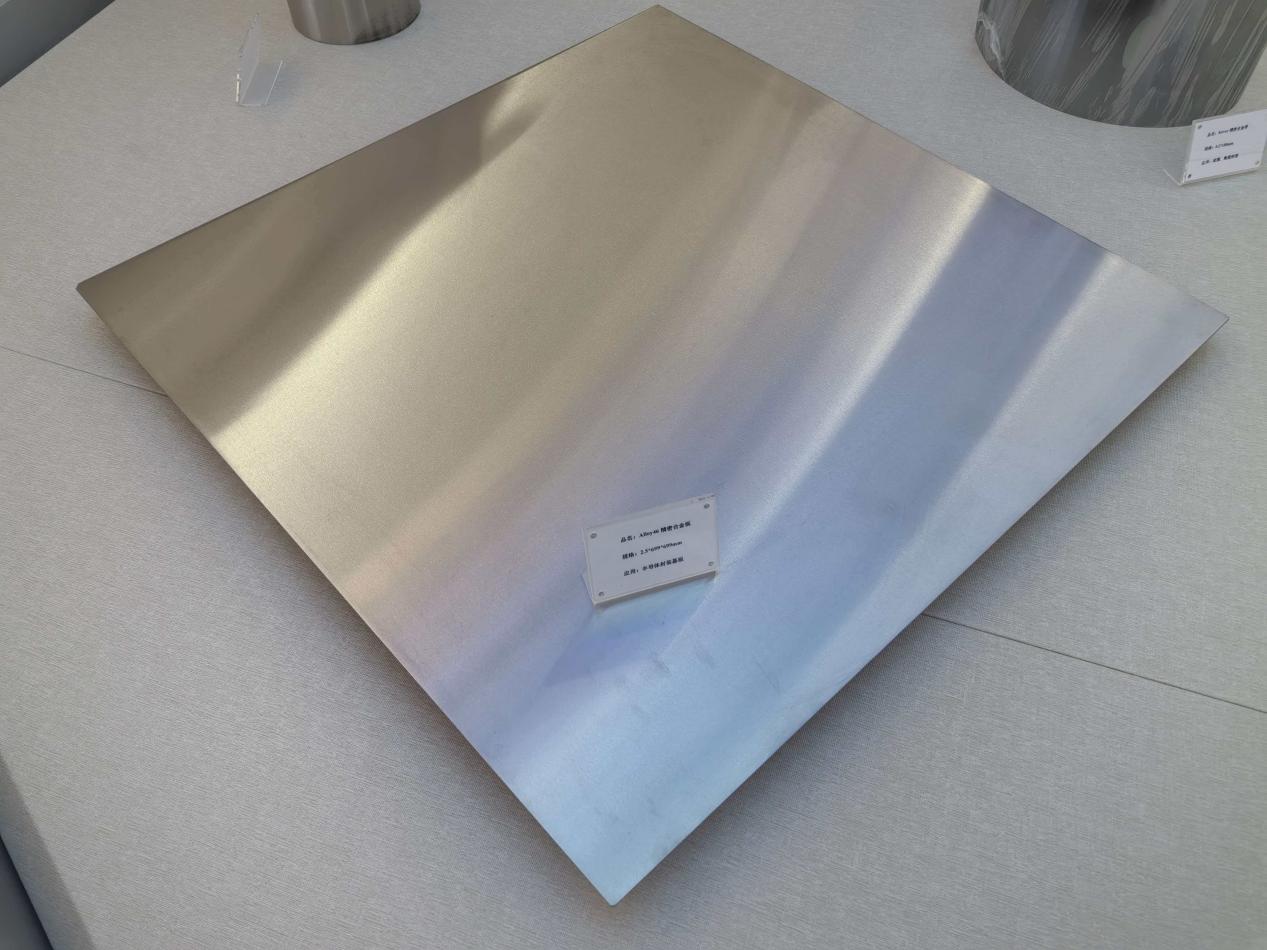
Chapter 3: Analysis of Typical Application Cases
1. Semiconductor Packaging Field
In a space-grade chip packaging project, the Qinchuan 4J50 alloy serves as the metal lead frame material, addressing the high cost issue caused by cobalt in traditional Kovar alloys through the co-sintering process with alumina ceramics. Comparative tests show that this solution reduces packaging costs by 32% while lowering the thermal mismatch failure rate from 0.8% to 0.15%.
2. Aerospace Sensors
The 4J33 alloy housing developed for a certain type of inertial navigation system is manufactured using directional solidification technology. After undergoing 5,000 thermal shocks in extreme environments ranging from -60℃ to 125℃, the dimensional change is only 0.002mm, meeting the requirements of Method 107 for temperature shock test as specified in GJB 360B-2009.
3. Medical Device Vacuum Components
In CT detector electrical lead-out sealing components, Qinchuan controls the carbide morphology of 4J42 alloy, maintaining an annual leakage rate below 0.1% in a 10⁻⁶ Pa high vacuum environment, significantly better than the industry average of 0.5%, ensuring the stability of medical equipment for long-term operation.
4. Technical Parameters and Quality Control System
Qinchuan New Materials establishes a full-process detection system covering the entire process from raw material entry to finished product shipment.
- Chemical Composition: Analyzed by ICP-OES Spectroscopy, accuracy up to 0.001%
- Coefficient of Expansion: Tested using DIL 402C thermal expansion instrument, temperature range -150℃ to 1000℃
- Mechanical properties: Achieve precise control of parameters such as tensile strength and yield strength through the Zwick/Roell universal testing machine
- Microstructure: Observe grain boundary characteristics using ZEISS field emission scanning electron microscope to ensure no σ phase precipitation risk
V. Technological Outlook and Industry Value
Qingchuan New Materials accelerates the development of new iron-nickel shape-memory alloys through material genome technology. The 4J52 alloy it is developing extends the coefficient of expansion range to 12-15×10⁻⁶/℃,enabling compatibility with a wider variety of glass materials. This model, driven by process innovation to upgrade material performance, provides a replicable technical path for the domestic substitution of high-end equipment.