 Qingchuan New Materials (Zhengzhou) Co., Ltd.
Qingchuan New Materials (Zhengzhou) Co., Ltd.
Qingchuan New Materials (Zhengzhou) Co., Ltd.
Qingchuan New Materials (Zhengzhou) Co., Ltd.
Qingchuan New Materials (Zhengzhou) Co., Ltd.
Technical Background and Industry Pain Points
Iron-nickel fixed expansion sealing alloys (such as 4J29, 4J42, etc.) are core materials in the fields of electronic packaging, aerospace, and precision instruments, with their core characteristic being the high compatibility of thermal expansion coefficient with glass, ceramics, and other substrates, which can avoid packaging failure caused by thermal stress. However, traditional production processes have issues such as poor composition uniformity, grain coarsening, and insufficient sealing airtightness, especially in scenarios like high-frequency communication and semiconductor packaging, where higher requirements are placed on the purity, dimensional stability, and fatigue resistance of the alloys.
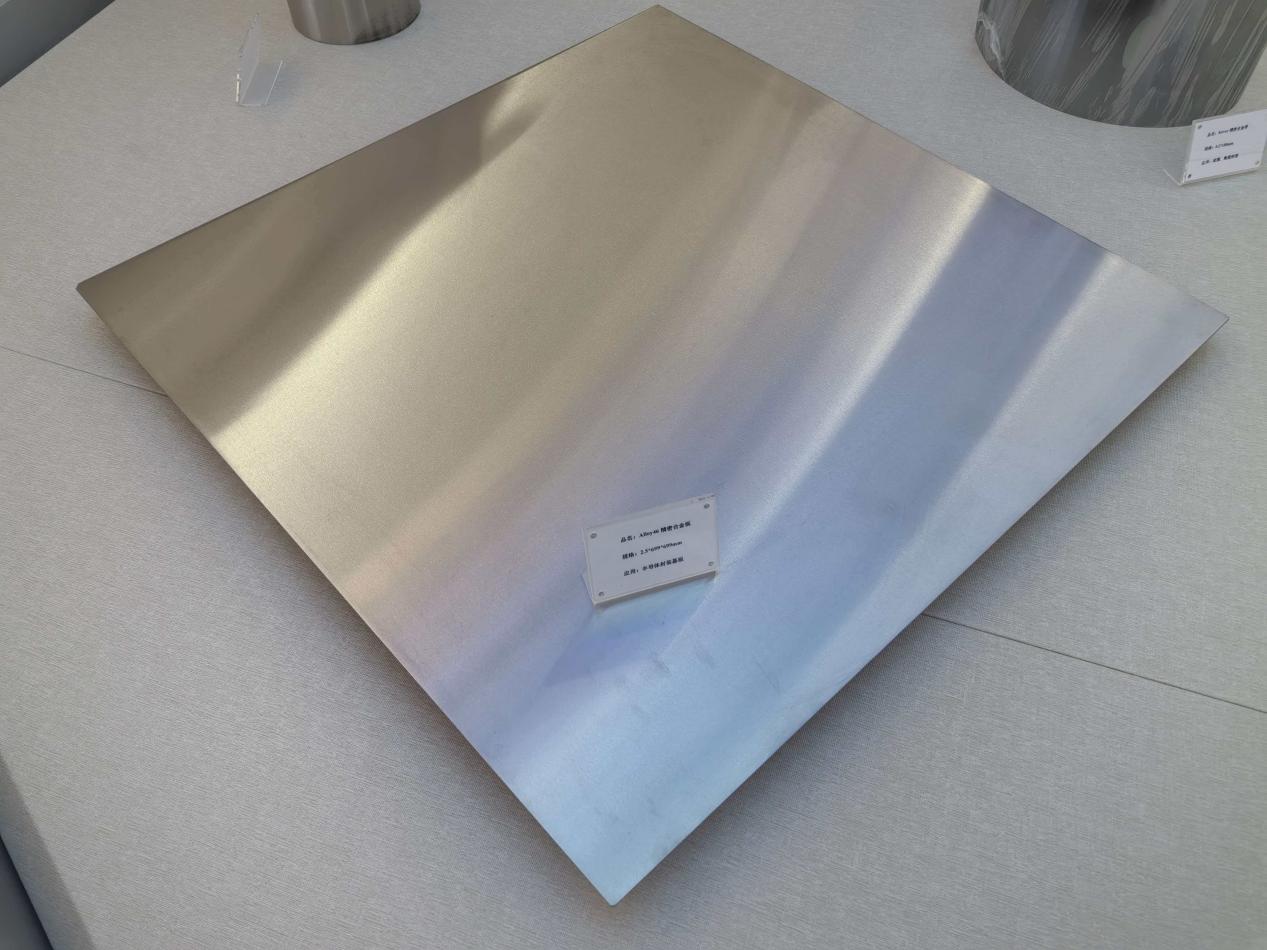
Tech breakthrough of Qinchuan New Materials
Qingchuan New Materials (Zhengzhou) Co., Ltd. leverages the strategic location advantage of the Zhengzhou High-tech Industrial Development Zone to establish a full industrial chain layout from high-purity metal smelting to precision processing of special alloys. Its iron-nickel fixed expansion alloy production line employs a vacuum induction melting (VIM) + electroslag remelting (ESR) dual-process, controlling the alloy composition deviation within ±0.02% and oxygen content ≤15ppm, significantly exceeding industry standards (usually ±0.05%, ≤30ppm). By introducing an integrated cold rolling-annealing control technology, the grain size of the material can reach ASTM 8-10 levels, with linear expansion coefficient fluctuations ≤±1×10⁻⁷/℃ from room temperature to 300℃, meeting the stringent requirements of applications such as 5G communication filters and laser diode encapsulation.
Core Process Parameters Analysis
1. Melting processVIM furnace capacity 150kg, vacuum ≤1×10⁻²Pa, melting temperature 1600-1650°C, ensuring uniform distribution of elements; ESR furnace uses inert gas protection, remelting rate 8-10kg/min, effectively removing low melting point impurities.
2. Heat treatment systemSolution heat treatment temperature 1020-1050°C, quenching after holding for 2-4 hours; aging heat treatment temperature 320-350°C, holding for 8-12 hours, and enhancing the yield strength to ≥380MPa through precipitation strengthening.
3. Precision MachiningTotal cold rolling deformation ≥70%, reduction in pass controlled at 15%-20%, intermediate annealing (750℃/2h) to eliminate work hardening, final product thickness tolerance ±0.01mm, flatness ≤0.5mm/m.
Typical Application Case: Improved Sealability in Semiconductor Packaging
In the IGBT module encapsulation project of a semiconductor equipment manufacturer, the traditional 4J29 alloy resulted in micro-cracks in the sealing layer due to coarse grain size, with a leakage rate in the gas-tightness test reaching 1×10⁻⁸ Pa·m³/s (standard requirement ≤ 1×10⁻⁹).擎川新材料by optimizing the ESR process parameters, refined the grain size to ASTM 9 level, combined with surface plasma spraying treatment, reducing the sealing layer leakage rate to 5×10⁻¹⁰ Pa·m³/s, and improving the module lifespan by 3 times. The project delivered a total of 12 tons of alloy strip material, applied to the production of over 500,000 IGBT modules.
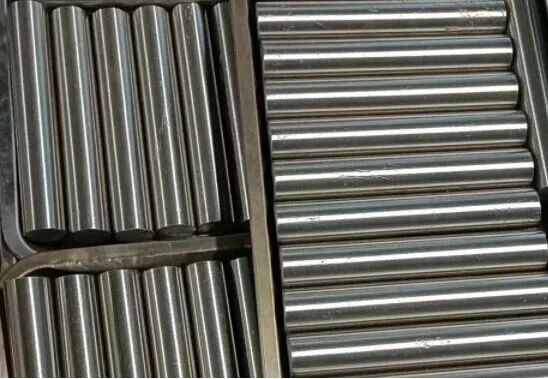
Quality Control System and Technical Layout
Qinchuan New Materials has established a CNAS certified laboratory, equipped with direct-reading spectrometers, electron probes, thermal expansion meters, and other equipment, implementing 12 quality inspection checkpoints from raw materials to finished products. Its technical team continuously researches and develops new-generation products such as low-expansion coefficient gradient alloys and nanocrystalline precipitation-strengthened alloys, has applied for 5 invention patents, and has established research and production cooperation with universities such as Zhengzhou University and China Electronics Technology Group Corporation's 13th Research Institute, promoting the application of iron-nickel alloys in cutting-edge fields like optical communication and quantum computing.
FAQ: Technical Challenges Solutions
Q1: Why does the iron-nickel alloy sealant appear puffed after sealing?
A: Mainly due to mismatch in thermal expansion coefficient or residual stress. Qinchuan enhances the matching of thermal expansion coefficient to over 98% by precisely controlling alloy composition (such as adjusting Ni content to 42%-42.5%) and optimizing annealing process (using stepped cooling), effectively eliminating the risk of bulging.
Q2: How to improve the machinability of alloys?
A: By controlling the total cold rolling deformation (recommended 60%-75%) and intermediate annealing temperature (720-760℃), the deformation resistance can be significantly reduced. The lubricating rolling process developed by Qinchuan reduces rolling force by 20% and ensures the surface roughness of the plate Ra≤0.4μm.