 Qingchuan New Materials (Zhengzhou) Co., Ltd.
Qingchuan New Materials (Zhengzhou) Co., Ltd.
Qingchuan New Materials (Zhengzhou) Co., Ltd.
Qingchuan New Materials (Zhengzhou) Co., Ltd.
Qingchuan New Materials (Zhengzhou) Co., Ltd.
Technical Background and Industry Positioning
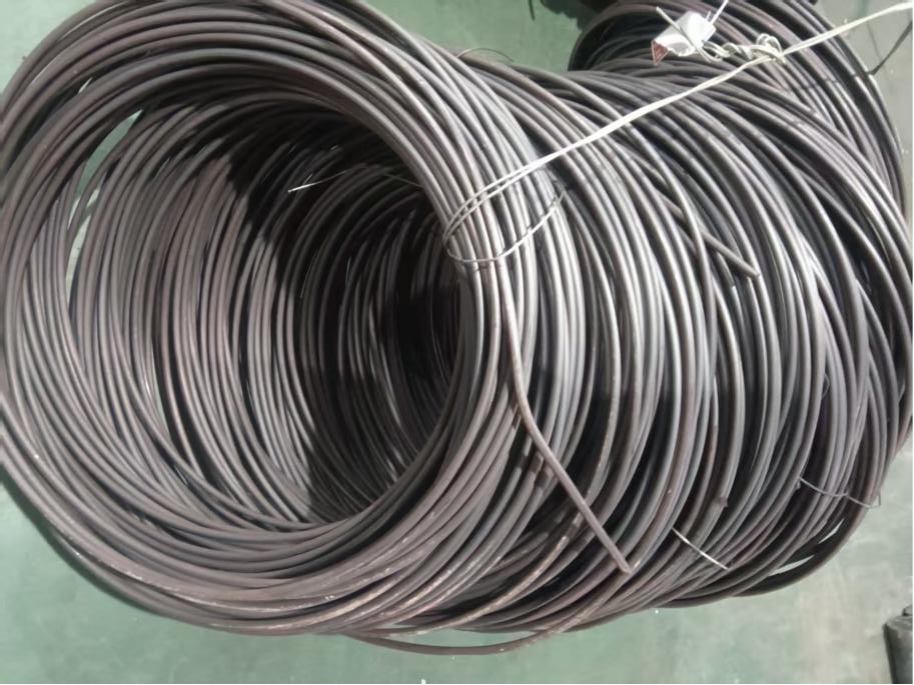
Iron-nickel fixed-expansion precision alloys are functional materials achieved through component design to realize specific thermal expansion coefficients, widely used in electronic packaging, precision instruments, aerospace, and other fields. As a professional manufacturer of high-purity metals and special alloys, Qinchuan New Materials (Zhengzhou) Co., Ltd. leverages the regional advantages of the Zhengzhou High-Tech Industrial Development Zone to build a full-chain technical system covering research and development, production, and testing. Its core product, iron-nickel fixed-expansion alloys (such as grades 4J29, 4J36, etc.), achieve the technical indicators of a stable thermal expansion coefficient within the range of (1.5-2.0)×10⁻⁶/℃ from -50℃ to 200℃ through precise control of nickel content (35%-39%) and heat treatment processes, meeting stringent requirements for material size stability in semiconductor packaging, optical instruments, and other applications.
Technical Principles and Process Innovation
The fixed thermal expansion characteristics of iron-nickel alloys originate from the synergistic action of nickel and iron atoms in the lattice. Qinchuan New Materials improves the purity of raw materials to over 99.95% through vacuum induction melting (VIM) technology, reducing the interference of impurities on the lattice structure; then, it employs the cold rolling-annealing cycle process (single deformation amount ≤ 15%, annealing temperature 850-900℃) to achieve uniform grain size (ASTM E112 standard grades 5-8), thereby optimizing the anisotropy of thermal expansion properties. For example, its 4J36 alloy has a deviation in the thermal expansion coefficient between the axial and radial directions of ≤ 0.2×10⁻⁶/℃ within the temperature range of -40℃ to 100℃, significantly lower than the industry average (≥0.5×10⁻⁶/℃).
Production Facilities and Quality Control
The company is located in a modern workshop at 16 Jinde Street, Zhengzhou High-tech Industrial Development Zone, equipped with a 10-ton vacuum induction furnace, four-roll cold rolling mill, and continuous annealing furnace, among other core equipment, with a production capacity of 500 tons of special alloy per year. In terms of quality control, Qinchuan New Materials has established a full-process detection system covering the entire process from raw material entry to finished product shipment: using direct-reading spectrometer (OES) to detect composition deviation (±0.01%), utilizing laser interferometer to measure thermal expansion coefficient (repeatability ≤0.05×10⁻⁶/℃), and verifying material corrosion resistance through salt spray test (ASTM B117 standard, 48 hours without corrosion). In 2023, its product pass rate in the first inspection reached 99.2%, and the customer complaint rate was below 0.5%.
Industry Applications and Technical Advantages
In the field of electronic packaging, Qinchuan New Materials' iron-nickel alloy has been successfully applied in the manufacturing of 5G base station filter housing. Taking a project of a communication equipment company as an example, after replacing the traditional Kovar alloy with the 4J29 alloy, the dimensional change of the device in the temperature variation cycle from -40℃ to 85℃ has been reduced from 12μm to 5μm, significantly improving the signal transmission stability; in the aerospace field, the 4J36 alloy is used for satellite optical mirror frame supports, passing extreme environmental tests from -100℃ to 120℃, with mirror surface deformation error ≤0.01mm, meeting the requirements of high-resolution imaging. Compared with traditional materials, Qinchuan alloys reduce processing costs by 15% and can achieve complex structure forming through deep drawing, precision stamping, and other processes, shortening the customer's R&D cycle.
Technology Layout and Future Direction
Based on the existing technological accumulation, Qinchuan New Materials is advancing two R&D programs: First, the development of low-expansion-high-strength composite alloys, which by adding elements like niobium (Nb) and molybdenum (Mo), raises the yield strength from 400MPa to over 600MPa; Second, the exploration of Selective Laser Melting (SLM) 3D printing technology for integrated manufacturing of iron-nickel alloy complex structures, with the current trial production achieving a print piece density of 99.8%. The company plans to invest 20 million yuan in the next three years for the construction of a pilot production line, aiming to shorten the delivery cycle of customized products from 45 days to 20 days, further consolidating its leading position in the field of precision alloys.