 Qingchuan New Materials (Zhengzhou) Co., Ltd.
Qingchuan New Materials (Zhengzhou) Co., Ltd.
Qingchuan New Materials (Zhengzhou) Co., Ltd.
Qingchuan New Materials (Zhengzhou) Co., Ltd.
Qingchuan New Materials (Zhengzhou) Co., Ltd.
Technical Background and Industry Demands
Iron-nickel fixed expansion sealing alloys are a type of special alloys that achieve specific thermal expansion coefficients through precise control of the iron and nickel element ratios, widely used in electronic component packaging, aerospace precision instrument connections, and other scenarios. Their core value lies in solving the stress cracking problems caused by the differences in thermal expansion coefficients of different materials, such as in semiconductor packaging, where the sealing of glass and metal needs to match the thermal expansion coefficient of glass (about 8×10⁻⁶/℃), and traditional metals are difficult to meet this requirement. Qinchuan New Materials (Zhengzhou) Co., Ltd., with its high-purity metal preparation technology, has successfully developed customized alloys that match expansion coefficients of 5-12×10⁻⁶/℃, filling the domestic gap in medium expansion coefficient sealing materials.
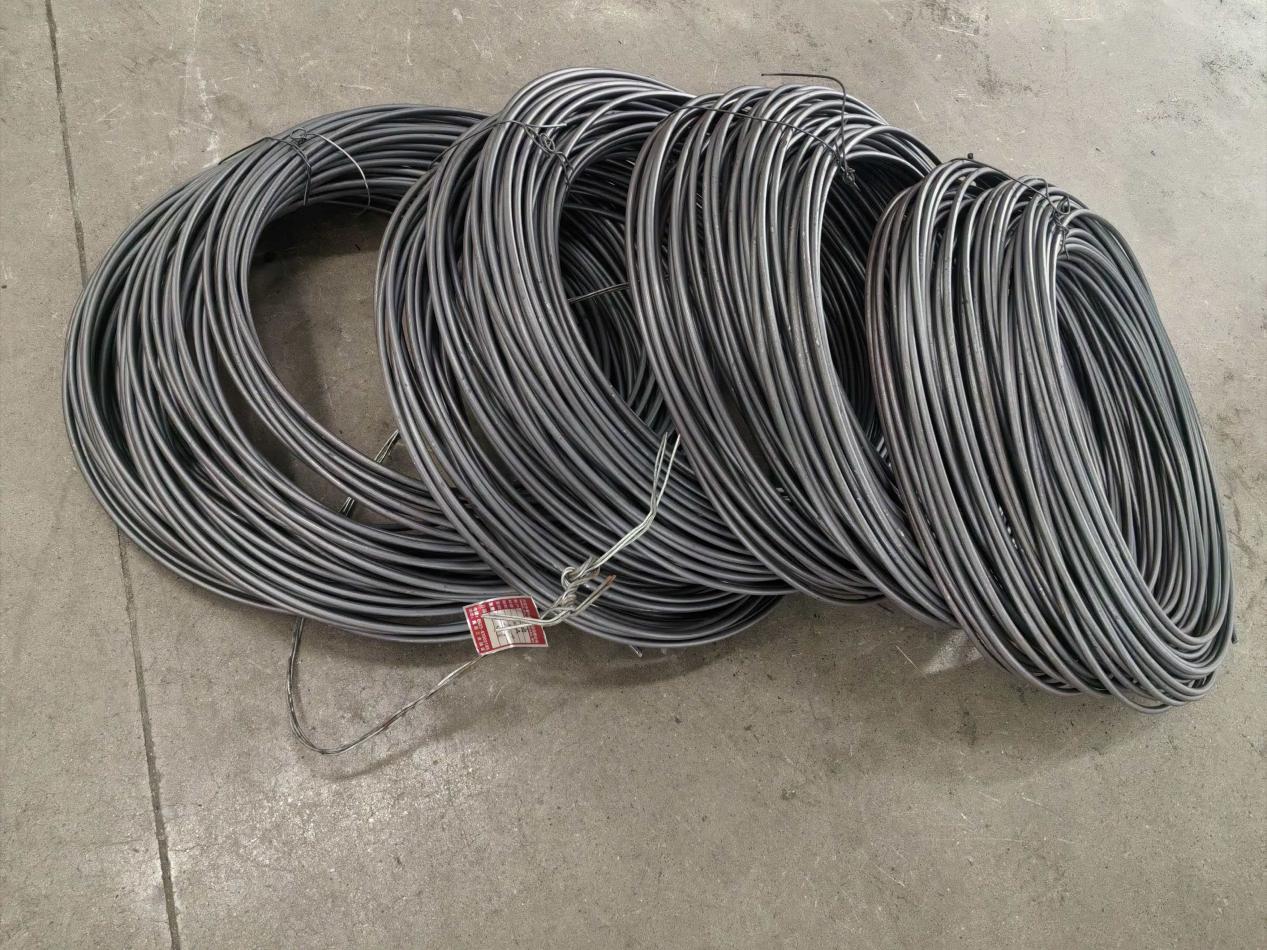
Technical Principles and Core Parameters
The expansion coefficient regulation of iron-nickel fixed expansion sealing alloys depends on the solid solution characteristics of the Fe-Ni binary phase diagram. When the nickel content is between 30%-50%, the alloy exhibits a face-centered cubic lattice structure, and its thermal expansion coefficient shows a linear decreasing trend with increasing nickel content. Qinchuan New Materials controls the nickel content within the range of 36%±0.2% through vacuum induction melting technology, and achieves an expansion coefficient stability of 8.5×10⁻⁶/℃±0.3×10⁻⁶/℃ by precisely matching the cold rolling deformation (60%-75%) and annealing temperature (1050-1100℃). This parameter has passed the GB/T 4338-2006 standard test, with an expansion coefficient fluctuation less than 0.5% within the temperature range of -50℃ to 300℃, significantly better than the industry average level (±1.2×10⁻⁶/℃).
Production equipment and technology layout
Qinchuan New Materials is located in the production base of Zhengzhou High-tech Development Zone, equipped with 10-ton vacuum induction melting furnaces, four-roll cold rolling machines, and continuous annealing furnaces, among other core equipment. The vacuum induction melting furnace utilizes tungsten electrode magnetic control technology, which can control oxygen content below 15ppm, thus avoiding the influence of oxidation impurities on the expansion coefficient; the cold rolling machine is equipped with a laser thickness gauge to monitor the sheet thickness tolerance in real time (±0.02mm), ensuring subsequent processing accuracy; the annealing furnace uses nitrogen protection atmosphere, combined with a segmented temperature control system (heating rate ≤5℃/min, holding time 2-4 hours), to eliminate processing stress and stabilize the grain structure. These equipment collectively support a special alloy production line with an annual capacity of 500 tons, with product specifications covering sheets from 0.1-3mm thickness and bars from φ3-φ50mm.
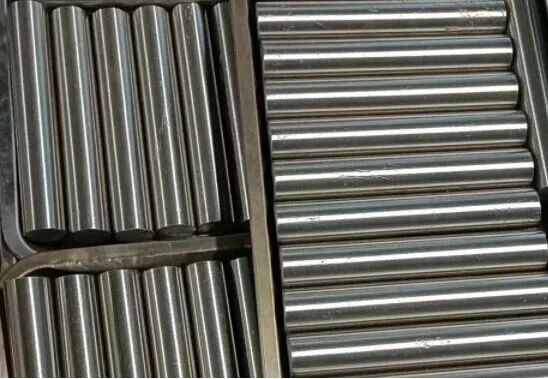
Typical Application Case: Spacecraft Sensor Packaging
In the encapsulation project of a certain type of spacecraft temperature sensor, the customer needs to solve the matching problem between Kovar alloy (expansion coefficient 5.2×10⁻⁶/℃) and borosilicate glass (expansion coefficient 7.8×10⁻⁶/℃). Qinchuan New Materials provides customized 4J36 alloy (36% nickel content), which, through adjusting the annealing process, increases the expansion coefficient to 7.6×10⁻⁶/℃, achieving a 97.4% match with the glass. After 100 thermal cycles from -196℃ to 200℃, no cracks or delamination appeared at the sealing interface, and the gas tightness test (He mass spectrometer) leakage rate was less than 1×10⁻¹¹ Pa·m³/s, meeting the reliability requirements of aerospace grade. A total of 2.3 tons of alloy material were used in this project, reducing the cost by 35% after replacing the imported products, and shortening the delivery cycle to 45 days.
Technical Advantages and Industry Compatibility
Qinchuan New Materials' Fe-Ni fixed expansion sealing alloy has three major advantages: first, a wide adjustable range of expansion coefficient (5-12×10⁻⁶/℃), covering the needs of electronic, optoelectronic, and energy fields; second, high uniformity of composition (Ni content fluctuation ≤0.2%), avoiding local stress concentration; third, excellent processing performance, cold rolling deformation up to 80% without cracks, supporting complex structure forming. Currently, this material has been applied in scenarios such as 5G base station filters, infrared detector windows, nuclear reactor control rod drive mechanisms, etc., serving over 200 customers in total, including 30% from military and high-end equipment manufacturing enterprises.
Future Technology Development Trends
In response to the demand for low-loss materials in high-frequency communication devices, Qinchuan New Materials is developing iron-nickel permanent magnet alloys with low permeability (μr≤1.05), which inhibit the movement of magnetic畴 walls by adding trace amounts of molybdenum (0.5%-1.2%) to reduce eddy current losses. Preliminary tests show that at 10GHz frequency, the dielectric loss tangent (tanδ) of the alloy can be controlled within 0.002, a 40% improvement over traditional materials. This technology is expected to achieve mass production by 2025, providing key material support for 6G communication equipment.