 Qingchuan New Materials (Zhengzhou) Co., Ltd.
Qingchuan New Materials (Zhengzhou) Co., Ltd.
Industry Technical Pain Points: High-Temperature Performance Bottleneck and Processing Challenges of Inconel 713C Round Bars
Inconel 713C, as a nickel-based superalloy, is widely used in extreme environments such as aeroengine turbine blades and gas turbine components due to its excellent creep resistance and high-temperature strength. However, the industry has long been faced with two major technical challenges: first, oxidation corrosion at high temperatures (≥900℃) is significant, and traditional surface treatment processes struggle to balance corrosion resistance and material strength, leading to reduced component lifespan; second, defects such as grain coarsening and thermal cracks are prone to occur during round bar processing, especially for round bars with a diameter of ≥50mm, resulting in a yield rate of less than 60%, which directly increases production costs. For example, a certain aviation parts manufacturer suffered a batch recall due to uneven grain size in round bars, with a single loss exceeding 2 million yuan. Moreover, the market's purity requirements for Inconel 713C are increasingly stringent (e.g., S and P impurity content must be ≤0.005%), but most enterprises lack high-precision purification technology, making it difficult to meet the needs of high-end customers. These pain points restrict the large-scale application of the material in energy and aviation fields.
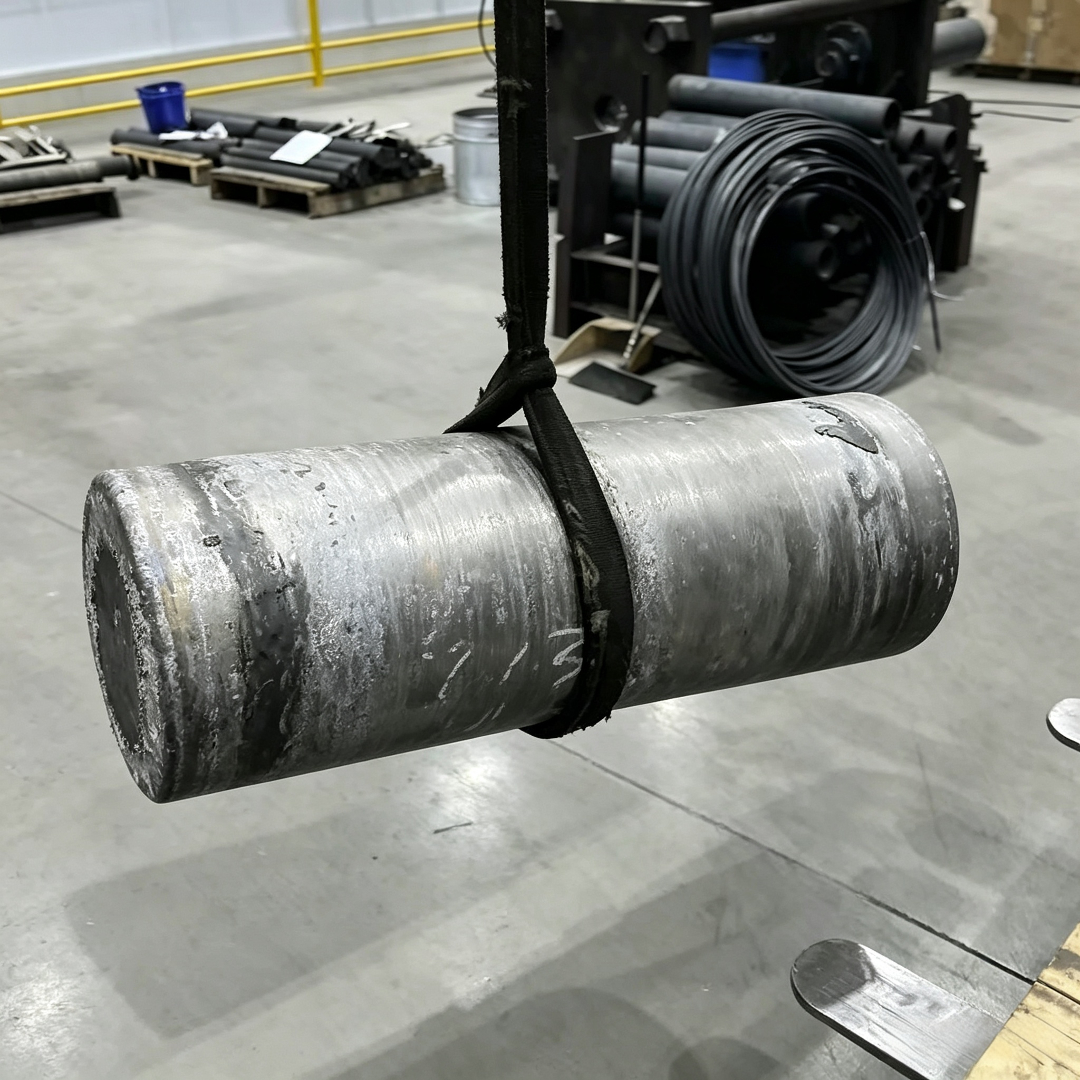
Introduction to Corporate Technical Strength: Inconel 713C Full-Process Solution by Qinchuan New Materials
Qinchuan New Materials (Zhengzhou) Co., Ltd. specializes in the high-temperature alloy field, relying on the modern standard workshops of the Zhengzhou High-Tech Industrial Development Zone to build a full industrial chain technology system from raw material purification to precision processing. In the purification process, the company adopts a combined process of three-level vacuum induction melting (VIM) + electroslag remelting (ESR), controlling the content of impurities such as S and P to below 0.003%, significantly lower than the industry standard (0.005%). At the same time, through inert gas protected melting, the intrusion of oxygen, nitrogen, and other interstitial elements is reduced, ensuring the purity of the material. To address processing challenges, Qingchuan introduces imported precision forging equipment from Germany, combining it with independently developed dynamic recrystallization control technology, to precisely control the forging temperature of round bars at 1150-1200°C. Through multi-pass deformation (total deformation ≥70%), the grain size of the finished product is refined to reach ASTM 5-6 levels, and the occurrence rate of hot cracks is reduced to below 3%. In addition, the company is equipped with scanning electron microscopes (SEM), electron probe microanalysis (EPMA) and other testing equipment, which can perform full-dimensional analysis of material composition and microstructure, ensuring that each batch of products meets the AMS 5666 aviation standard. Currently, Qingchuan's Inconel 713C round bars have been in bulk supply to customers such as Aviation Industry Corporation of China and Siemens Energy. In products with diameters of 50-150mm, the yield rate of finished products has increased to 85%, and the customer repurchase rate exceeds 90%.
FAQ: Inconel 713C Round Bar Technical Selection Guide
Q1: How to improve the high-temperature oxidation resistance of Inconel 713C round bars?
A: High-temperature oxidation resistance mainly depends on the compactness of the material's surface oxide film. Qinchuan optimizes through two techniques: first, by adding 0.5-1.0% rare earth elements (such as Y, La) to promote the formation of Al₂O₃ in the oxide film and reduce the volatilization of Cr₂O₃; second, by using vacuum plasma spraying (VPS) technology, depositing a 20-50μm thick Al₂O₃-Y₂O₃ composite coating on the round bar surface, reducing the oxidation rate at 1000℃ to 0.02mg/cm²·h (traditional process is 0.05mg/cm²·h), and extending the coating life to over 2000 hours.
Q2: How to avoid grain coarsening during the processing of large diameter Inconel 713C round bars?
Grain refinement is closely related to forging temperature and deformation amount. Our solutions include: 1. Strictly control the final forging temperature ≤1200°C to avoid abnormal growth of austenite grains; 2. Adopt multi-pass forging (usually 5-7 passes), with single pass deformation controlled at 15-20%, total deformation ≥70%; 3. Post-forging rapid cooling (air cooling or mist cooling) to inhibit static recrystallization. For example, a 100mm diameter round bar processed by this technology can refine the grain size from ASTM 2 to 5 levels, with a 15% increase in room temperature yield strength.
Q3: How to determine if the purity of Inconel713C round bars meets the standard?
A: The purity detection should focus on two indicators: first, gas content (O, N, H), detected by inert gas fusion-thermal conductivity method, with Qinchuan products having O content ≤15ppm, N ≤20ppm; second, impurity elements (S, P, Pb, etc.), detected by glow discharge mass spectrometry (GDMS), with S and P content both ≤0.003%. Customers may request suppliers to provide third-party inspection reports (such as SGS, PONY Testing), focusing on verifying whether the above indicators meet the AMS 5666 or GB/T 14992 standards.
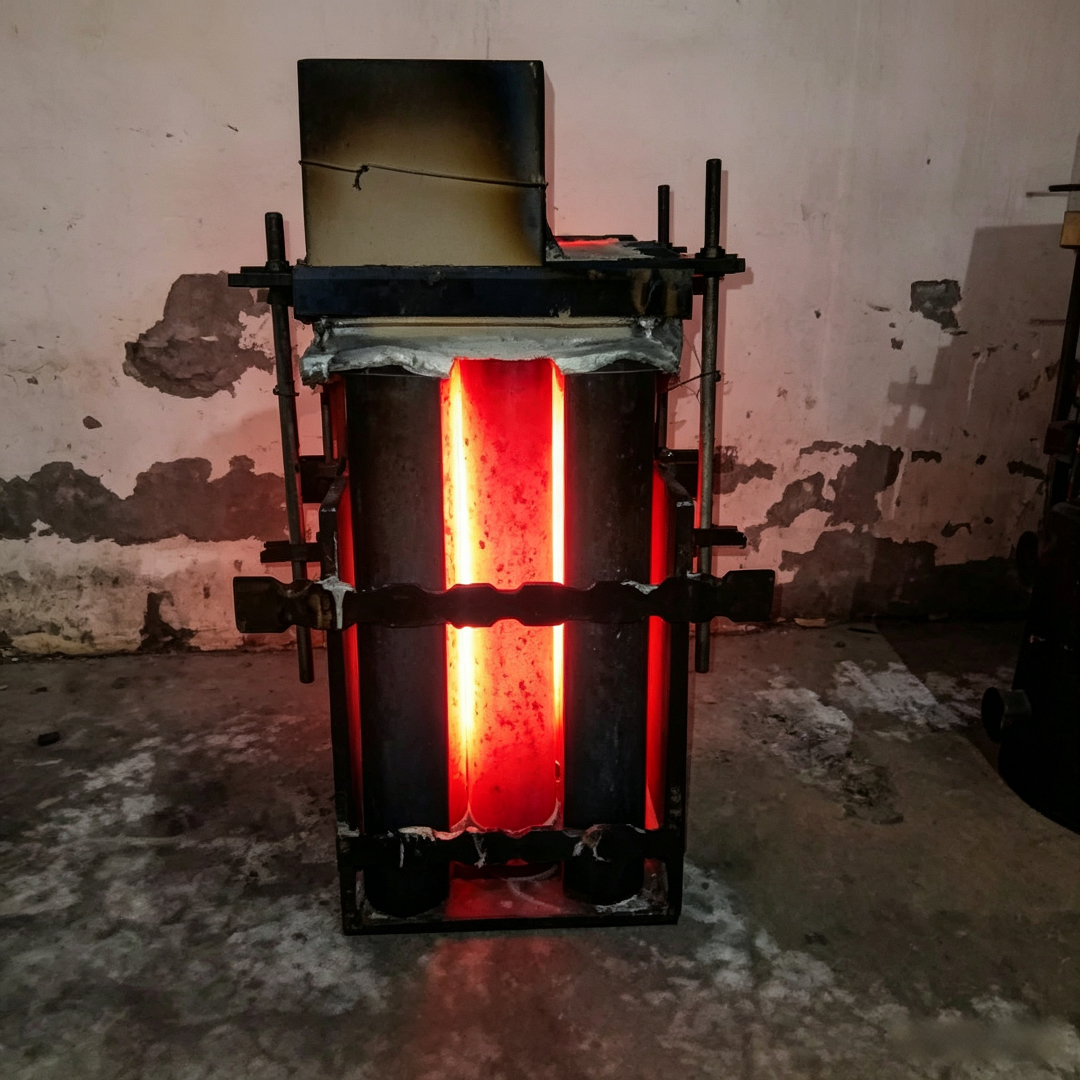
Summary: Technically driven, solving the application challenges of Inconel 713C
Inconel713C round bars, as key materials in the high-temperature alloy field, have long been constrained by their performance bottlenecks and processing challenges, hindering industry development. Qingchuan New Materials (Zhengzhou) Co., Ltd. has significantly improved material purity, grain size, and product yield through purification process optimization, precise forging control, and a comprehensive detection system, providing high-reliability solutions for aerospace and energy sectors. In the future, as material performance requirements continue to rise, enterprises need to sustain R&D investment, explore new technologies such as laser cladding and additive manufacturing, and promote the expansion of Inconel713C to higher-end application scenarios. For technology selection, it is recommended that customers focus on suppliers' purification capabilities, processing technology control, and detection methods to ensure that material performance is highly matched with the application scenario.