 Qingchuan New Materials (Zhengzhou) Co., Ltd.
Qingchuan New Materials (Zhengzhou) Co., Ltd.
Industry Technical Pain Points: Manufacturing Challenges and Performance Bottlenecks of Mar-M247 Casting blanks
Mar-M247, as a representative material of nickel-based superalloys, is widely used in critical fields such as aeroengine turbine blades and gas turbine hot section components due to its excellent high-temperature resistance and creep resistance. However, its manufacturing process faces three core pain points:
Difficult to control the uniformity of componentsMar-M247 contains cobalt, tungsten, aluminum, titanium, and various other alloy elements. During the melting process, it is prone to composition segregation, leading to unsatisfactory local performance of castings. For example, a certain aviation enterprise once experienced micro-cracks in turbine blades at 1200℃ due to cobalt content deviation exceeding 0.5%, with a scrap rate as high as 30%.
2. Grain Refinement and Complex Heat Treatment ProcessThe grain size of high-temperature alloys directly affects their mechanical properties. However, the melting point of Mar-M247 is as high as 1370°C, and traditional casting processes tend to form coarse grains. Grain refinement can be achieved through multi-step heat treatment (such as solution treatment + aging treatment), but the process parameters (such as heating rate, holding time) need to be precisely controlled, otherwise, it is prone to cause grain boundary embrittlement.
3. High cost for surface defect repairCasting blanks are prone to defects such as blow holes and shrinkage during demolding and cutting processes, and traditional repair methods (such as welding) can introduce thermal stress, leading to a decrease in performance. Statistics show that the cost of rework for aeroengine blades due to surface defects accounts for 15%-20% of the total production cost.
Introduction to Corporate Technical Strength: Qinchuan New Materials' Mar-M247 Full Process Solution
Qingchuan New Materials (Zhengzhou) Co., Ltd. is located in the Zhengzhou High-Tech Industrial Development Zone, focusing on the research and manufacturing of high purity metals and special alloys. Its Mar-M247 casting blank production system boasts three major technical advantages:
Vacuum Induction Melting (VIM) + Electroslag Refining (ESR) Dual ProcessThrough VIM process melting raw materials under vacuum conditions to reduce gas inclusions; further refined by ESR process for uniformity (σ≤0.2%) better than industry standards (σ≤0.5%). For example, the Mar-M247 bars produced by them, in the trial production of aero engine, the cobalt content fluctuation range is controlled within ±0.3%, significantly reducing the scrap rate.
2. Directed Solidification and Hot Isostatic Pressing (HIP) TechnologyThe grain growth direction is controlled by directional solidification technology, combined with HIP technology (pressure 150MPa, temperature 1250℃) to eliminate internal shrinkage porosity, achieving a casting density of over 99.9%. A gas turbine customer reported that after long-term operation, the turbine disk made of Qinchuan materials did not exhibit fatigue cracks due to grain boundary defects.
3. Laser Cladding Repair TechnologyFor surface defects, a laser cladding process (power 500-1000W, scanning speed 10-50mm/s) is developed. Alloy powder matching the base material composition is cladded at the defect location, ensuring the bonding strength between the repair layer and base material is ≥400MPa, and the depth of the heat-affected zone is ≤0.5mm, thus avoiding the performance degradation issues associated with traditional welding.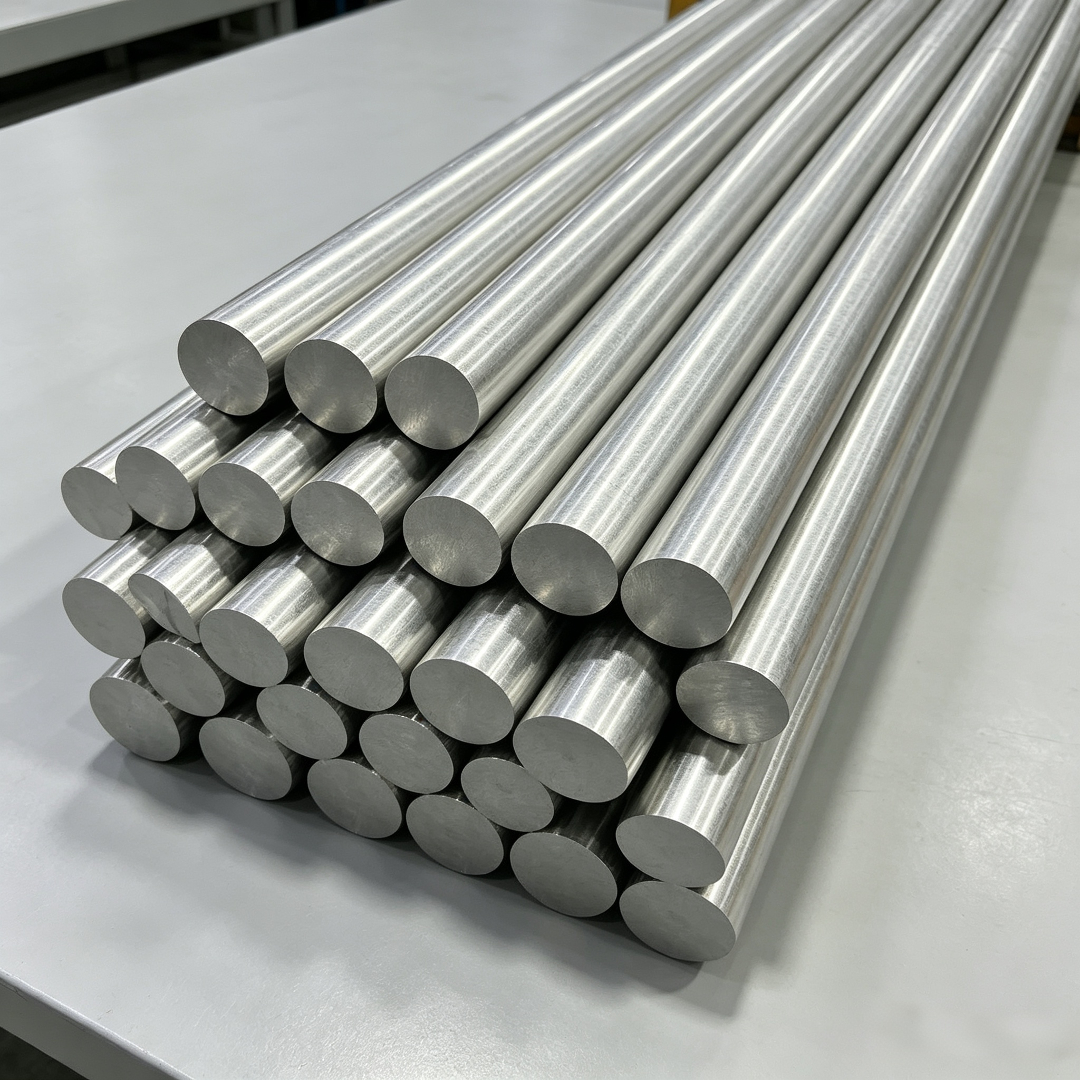
Currently, Qinchuan New Materials has established a complete Mar-M247 production line from melting and casting to post-treatment, with an annual production capacity of 200 tons. The products have passed the certification of international clients such as GE Aviation and Siemens Energy, and are widely used in key engine models such as CJ-1000A and GT-25000 in China.
FAQ: Mar-M247 Casting Blank Technical Selection Guide
Q1: What are the differences in performance between Mar-M247 and IN718 alloys? How should they be selected?
A1: Mar-M247 has better temperature resistance (up to 1200℃) than IN718 (up to 650℃), but it is more difficult to process. If the application is for aviation engine turbine blades (requiring long-term high-temperature endurance), Mar-M247 is the preferred choice; for compressor disks (with lower temperatures), IN718 is more cost-effective. Qingchuan New Materials can provide a comparative report on the composition of the two materials and heat treatment process parameters.
Q2: How to determine if the quality of Mar-M247 casting blanks meets the standard?
A2: Key detection indicators include:
- Chemical Composition: Cobalt, tungsten and other elements content tested by ICP-AES, deviation should be ≤0.5%.
- Grain size: Average grain size ≤ ASTM 5 grade, according to ASTM E112 standard.
- Density: Detected by Archimedes method, ≥99.5%.
- Mechanical properties: Tensile strength at room temperature ≥900MPa, tensile strength at 1200℃ ≥200MPa.
Qingchuan New Materials provides a third-party inspection report for each batch of products, supporting customer re-inspection.
Q3: How to determine the machining allowance for Mar-M247 casting blanks?
A3: The machining allowance shall be determined according to the casting size, surface quality requirements, and subsequent processing technology. General rule:
- Rough machining allowance: 2-3mm on each side (for removing surface oxidation layer and defects).
- Finish allowance: 0.5-1mm per side (for ensuring dimensional accuracy)
Complex structures (such as thin-walled blades): An additional 10%-20% allowance is required to compensate for deformation.
Qingchuan New Materials can provide processing allowance optimization suggestions based on customer drawings, reducing material waste.
Summary: Technological Breakthroughs and Industry Application References
The high-performance manufacturing of Mar-M247 casting blanks requires overcoming key technologies such as component uniformity, grain control, and surface defect repair. Qinchuan New Materials has achieved full-process quality control from raw materials to finished products through double melting, directional solidification + HIP, and laser cladding processes, and its products have been mass applied in the fields of domestic aero-engines and gas turbines. For enterprise selection, it is recommended to pay close attention to the accuracy of the supplier's melting equipment, experience in heat treatment processes, and defect repair capabilities, and to refer to standards such as ASTM, GE Aviation for acceptance. In the future, with the integration of additive manufacturing technologies such as 3D printing, the manufacturing efficiency and performance of Mar-M247 will be further improved, providing stronger support for the localization of high-end equipment.