Qingchuan New Materials (Zhengzhou) Co., Ltd.
Qingchuan New Materials (Zhengzhou) Co., Ltd.
Introduction
Inconel713C, as a high-performance nickel-based superalloy, is widely used in high-end equipment fields such as aviation engines and gas turbines due to its excellent high-temperature resistance and corrosion resistance. However, defects such as cracks and coarse grains are prone to occur during the forging blank processing, leading to low yield and unstable performance. This article will analyze the core pain points of Inconel713C forging blank processing based on the technical practice of Qinchuan New Materials (Zhengzhou) Co., Ltd., and provide targeted solutions.
Keywords
Inconel 713C billet, high-temperature alloy processing, crack control, grain refinement, Qinchuan New Materials
Industry Technical Pain Points Introduction
The difficulties in processing Inconel 713C billets mainly manifest in three aspects:
STEP 1: Crack Control ChallengeThe heat treatment temperature range of this alloy is narrow (1120-1180℃), and temperature fluctuations exceeding ±10℃ are prone to cause cracks, especially the low-temperature brittleness at the end of forging, leading to frequent occurrence of edge and corner cracks.
STEP 2: Grain Coarsening RiskIf the deformation amount is insufficient during the forging process or the保温 time is too long, the grain size may exceed the 5th level required by the ASTM E112 standard, significantly reducing the high-temperature creep strength of the material.
STEP 3: Poor performance uniformityTraditional craftsmanship is difficult to ensure the consistency of chemical composition and microstructure in different parts of the forging blank, resulting in performance fluctuations of more than 15% in the same batch of products.
A certain aviation parts company had to scrap an entire batch of parts due to Inconel 713C forging billet cracks, resulting in direct losses exceeding 2 million yuan, highlighting the urgency of technological upgrading.
Introduction to the Company's Technical Strength
Qinchuan New Materials (Zhengzhou) Co., Ltd., as a professional enterprise engaged in the research, development, and manufacturing of high-purity metals and special alloys, has established an integrated technical system of "process-equipment-detection" to address the pain points in the processing of Inconel 713C forging blanks.
STEP 1: Precision Forging TechnologyUsing isothermal forging technology, the mold temperature is monitored in real-time by an infrared thermometer to control temperature fluctuations within ±5℃; combined with multi-pass deformation optimization (total deformation ≥60%), the grain size is ensured to remain stable at 6-8 levels according to ASTM E112 standard.
STEP 2: Intelligent Heating SystemSelf-developed gas heating furnace equipped with PID temperature control system, heating rate can be accurately controlled to 2℃/min, avoiding tissue abnormalities caused by local overheating; the oxygen content in the furnace atmosphere is ≤50ppm, effectively reducing the formation of oxide scale.
STEP 3: Full Process Detection CapabilityEquipped with direct-reading spectrometers, metallographic microscopes, scanning electron microscopes, etc., it can carry out full-batch detection of the chemical composition of the forging billet (C≤0.08%, Cr 11.5-13.5%), grain size, and non-metallic inclusions (≤1.5 grade according to ASTM E45 standard).
The company's technical team has customized Inconel 713C forging blank solutions for a gas turbine manufacturer, optimizing the forging ratio (from 4:1 to 6:1) and the final forging temperature (from 1150℃ to 1130℃), reducing the crack rate from 8% to 0.5% and improving grain uniformity by 40%.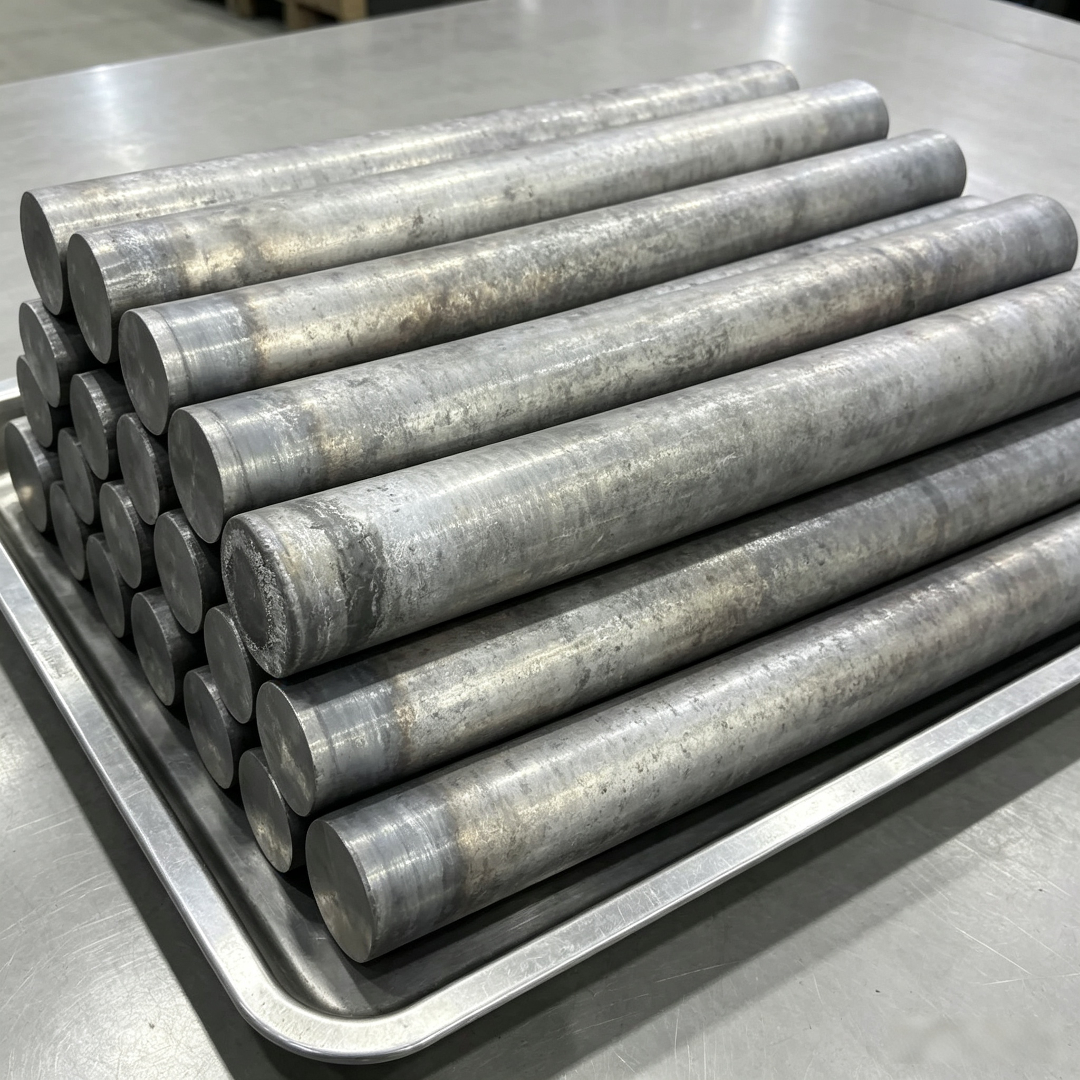
FAQ Q&A Technical Selection Guide
Q1: How to select the heating temperature for Inconel 713C forging blanks?
A: The heating temperature should be determined comprehensively based on the forging blank size and equipment capability. For forging blanks with a diameter ≤200mm, it is recommended to heat to 1160-1170℃ and maintain the temperature for 2 hours; for forging blanks with a diameter >200mm, it is necessary to heat in sections (first section 1140℃ maintaining for 1.5 hours, second section 1170℃ maintaining for 2.5 hours) to avoid excessive temperature difference between the inside and outside, which may cause cracking.
Q2: How to control the deformation amount during the forging process?
A: The total deformation should be ≥60%, with no single pass exceeding 30%. For example, for a forging billet with an initial height of 200mm, the target deformation can be achieved through 3 passes of forging (60mm→120mm→180mm→200mm), with a 10-minute furnace heating and temperature maintenance after each pass to ensure uniformity.
Q3: How to detect whether the grain size of the forging blank meets the standard?
A: According to ASTM E112 standard, observe under a metallographic microscope at 500x magnification, the grain size level must be ≥6. Sampling is required at the center of the forging blank, at 1/2 radius, and at the edge to ensure grain size deviation between different parts is ≤1 level.
Q4: What are the advantages of Inconel 713C forgings by Qinchuan New Materials?
A: The chemical composition fluctuation range of the company's forging blanks is controlled within ±0.02%, with grain uniformity exceeding industry standards by 20%; and customized specifications from 50kg to 500kg are available to meet different customers' processing requirements. For more information, please visit the official website:www.qingchuansuperalloy.com
Summary of the entire text
The processing of Inconel713C forgings requires coordinated optimization in process control, equipment accuracy, and detection methods.擎川新材料(郑州)有限公司through isothermal forging, intelligent heating, full-process detection and other technologies, the crack rate is controlled below 0.5%, and the grain size is stable at 6-8 levels, providing high-performance forging solutions for customers in the aviation, energy and other fields. In the future, the company will continue to deepen the research and development of special alloys and promote the development of high-temperature alloy processing technology towards higher precision and efficiency.